
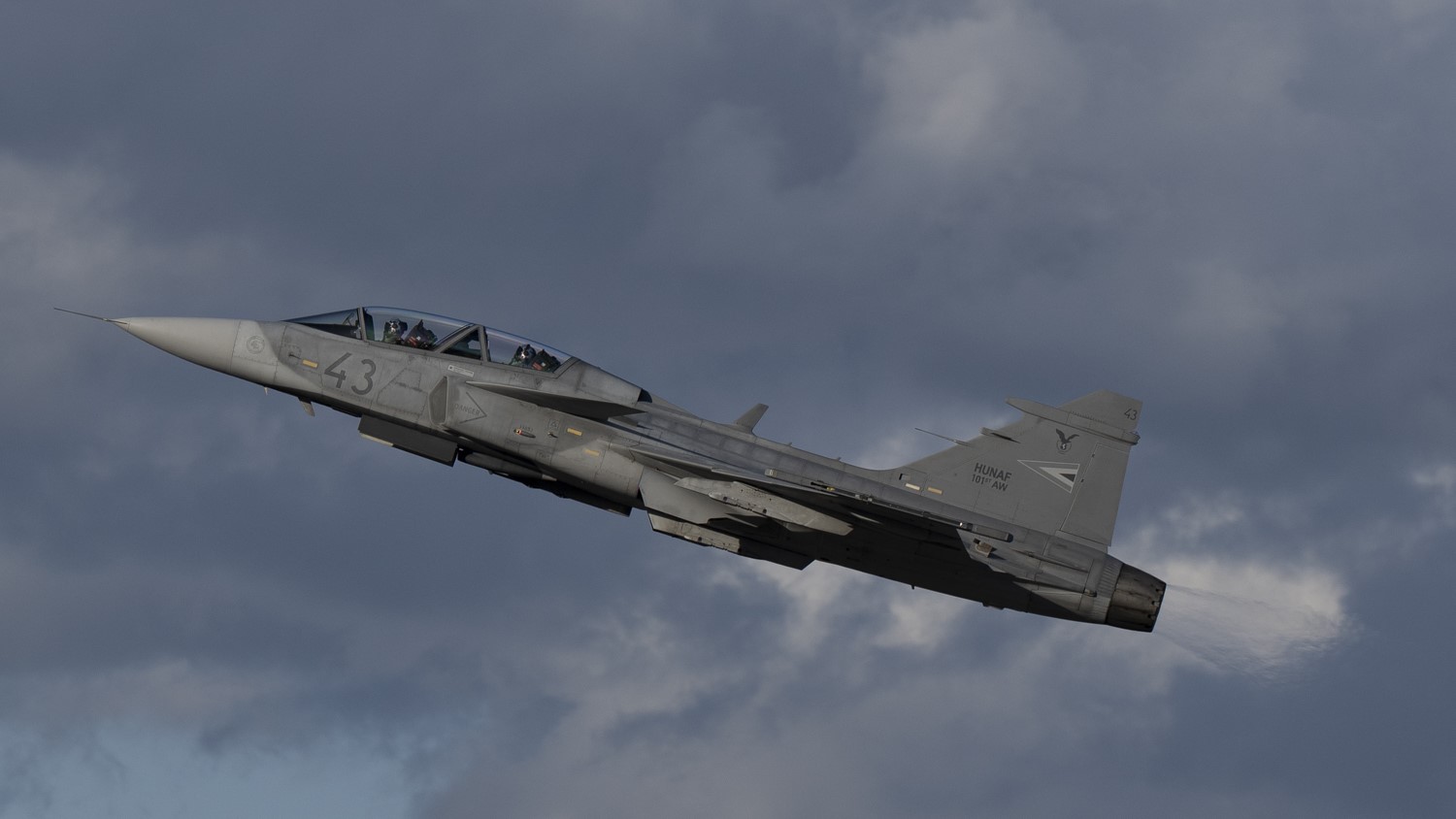
Hungary Takes NATO Baltic Air Policing Lead
Gripen Jets Patrol Sensitive Eastern Flank
Hungary’s Air Force has resumed its role safeguarding the skies over Estonia, Latvia, and Lithuania, marking the nation’s fourth leadership of the vital NATO Baltic Air Policing mission. Four Hungarian JAS-39C Gripen fighters began patrolling the region this week.
Reliable Ally Deploys for Four Months
The handover ceremony occurred Thursday at Lithuania’s Šiauliai Air Base, with Hungary taking over from Polish and Romanian forces, joined by Spanish allies. Defence Minister Kristóf Szalay-Bobrovniczky highlighted Hungary’s steadfast NATO commitment, noting that defense spending has exceeded 2% of GDP for three consecutive years and will continue to do so in 2026.
Hungary reaffirms its commitment to NATO’s collective security by taking over the lead in the Baltic Air Policing mission. Four Hungarian JAS-39C Gripen fighter jets will patrol the skies over Estonia, Latvia, and Lithuania for the next four months. This deployment underscores Hungary’s ongoing modernization efforts and dedication to its alliance obligations. pic.twitter.com/z1c0Q7i1Jk
— NATO (@NATO) September 21, 2023
The Hungarian contingent includes approximately 80 personnel. Minister Szalay-Bobrovniczky stated, Our allies see Hungary as a stable and dependable partner.
The country plans to expand its Gripen fleet, acquiring four additional aircraft in 2026 to supplement its current 14.
Mission Reinforces Regional Security
The Baltic region is considered highly sensitive due to historical context and its proximity to Russia’s border. The mission provides crucial experience for Hungarian pilots, with Minister Szalay-Bobrovniczky emphasizing, Peace requires strength.
He expressed thanks to Poland, Romania, and Lithuania for their cooperative support during the transition.
The Baltic Air Policing mission, operational since 2004, sees NATO members rotate every four months to secure the airspace of Estonia, Latvia, and Lithuania, nations without their own fighter capabilities. Following Russia’s 2014 annexation of Crimea, the mission expanded to three bases, including sites in Estonia and Lithuania. The Italian Air Force recently replaced Portuguese jets at the Estonian base.
Hungarian Air Force pilots are responsible for Quick Reaction Alert duties, requiring them to scramble jets within 15 minutes to intercept unidentified aircraft near Baltic airspace. These responses are often triggered by Russian military aircraft operating without flight plans or transponders.
During Hungary’s previous deployment from September to December 2022, its Gripen pilots logged over 300 flight hours, responding to more than 60 training alerts and nearly 20 actual interception missions. This latest deployment reinforces Hungary’s standing as a committed and trusted contributor to NATO’s collective defense architecture. In 2022, NATO fighter jets were scrambled over 300 times across Europe to intercept unidentified aircraft approaching alliance airspace, demonstrating the ongoing need for such vigilance (NATO).
