Hungary Faces EU and French Backlash Over Russian Ties
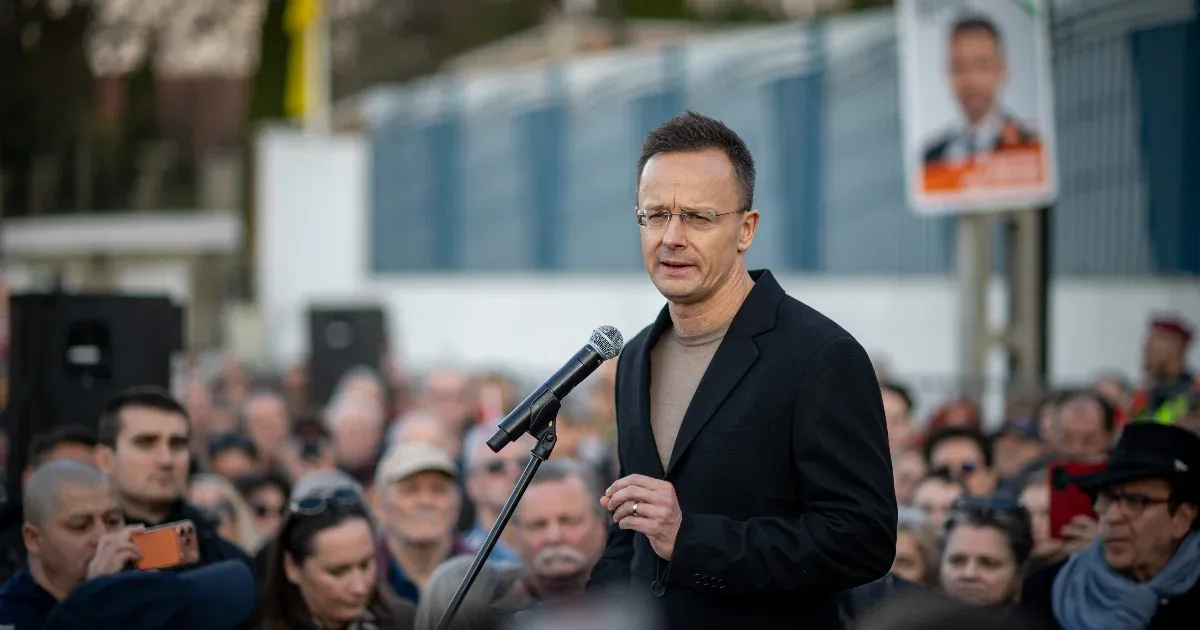
EU leaders, led by Ursula von der Leyen, are demanding urgent explanations from Hungary following leaked phone conversations between Foreign Minister Péter Szijjártó and Russian Foreign Minister Sergey Lavrov. The leaks suggest Hungary is coordinating with Russia and sharing internal EU documents, sparking a severe diplomatic crisis within Brussels.
This is not merely a diplomatic spat; It’s a fundamental breach of trust. When a member state’s top diplomat is recorded telling a foreign adversary, “I will send it, no problem,” regarding an EU document, the conversation shifts from political disagreement to a question of institutional security. The fallout threatens to further isolate Budapest and could trigger unprecedented scrutiny of how member states handle classified information.
The Leak That Shook Brussels
The catalyst for this crisis is a series of published conversations between Péter Szijjártó and Sergey Lavrov. These recordings have painted a picture of a relationship that goes beyond standard diplomatic channels. The European Union has reacted with alarm, specifically targeting the suggestion that the Hungarian government is systematically informing Russia about internal EU processes.
Ursula von der Leyen has signaled her intent to raise these “Russia leaks” with other EU leaders. The core of the issue is the perceived coordination between Budapest and Moscow, which contradicts the collective security posture of the Union. For the EU, the sharing of internal documents is a red line.
“I will send it, no problem.”
This specific phrase, attributed to Szijjártó in the leaks, serves as the smoking gun for EU officials. It suggests a willingness to bypass EU confidentiality protocols to facilitate Russian interests. In an era of hybrid warfare and systemic instability, such transparency toward a non-member adversary is viewed as a critical vulnerability.
The resulting instability creates a vacuum of trust. For organizations and businesses operating across these borders, this volatility makes compliance and security a nightmare. Many are now turning to international law firms to navigate the shifting landscape of EU treaties and potential sanctions that could arise from such diplomatic fractures.
Pragmatism or Coordination?
Budapest has not remained silent. Péter Szijjártó has defended the Hungarian approach, describing the nation’s foreign policy as “pragmatic.” In response to criticisms from the French Foreign Minister—which some Hungarian outlets described as a catastrophic mistake on the Frenchman’s part—Szijjártó maintains that maintaining open lines of communication is a strategic necessity rather than a betrayal.

Yet, there is a stark difference between diplomacy and the leaking of internal documents. The EU’s demand for “urgent explanations” reflects a belief that Hungary has crossed from the realm of pragmatic diplomacy into active coordination with a foreign power.
To understand the divide, consider the following comparison of the two conflicting narratives:
| Perspective | European Union View | Hungarian Government View |
|---|---|---|
| Nature of Leaks | Evidence of coordination with Russia. | Evidence of pragmatic foreign policy. |
| Document Sharing | A breach of EU security and trust. | Necessary diplomatic communication. |
| Strategic Goal | Maintaining a unified front against Russia. | Protecting national interests via neutrality. |
| Immediate Action | Demanding urgent explanations. | Dismissing foreign criticism as erroneous. |
This ideological chasm makes a quick resolution unlikely. When the definition of “pragmatism” for one party is “betrayal” for another, the only path forward is usually through formal legal and political mechanisms. This is why many regional entities are seeking strategic communications consultants to manage the reputational risks associated with these geopolitical tensions.
The Surveillance Warning
While the EU focuses on the content of the leaks, some in Hungary are focusing on the *source*. Péter Tarjányi has sounded an alarm, suggesting that the very existence of these leaked recordings proves a more sinister reality: someone is listening.

According to Péter Tarjányi, the leaked recordings indicate that high-level communications are being monitored, suggesting a significant security breach in the surveillance of state officials.
If Tarjányi’s assessment is correct, the problem is twofold. Not only is there a diplomatic crisis, but there is also a technical failure in secure communications. This highlights a terrifying reality for any government or corporation: no channel is truly private. The fact that these conversations were captured and published suggests a sophisticated level of intelligence gathering that bypasses standard encryption.
This revelation has sent shockwaves through the private sector. Companies dealing with sensitive government contracts are now prioritizing digital forensics specialists to audit their communication channels and ensure that their proprietary data isn’t being harvested by the same actors who intercepted the Szijjártó-Lavrov calls.
Long-Term Implications for EU Security
The impact of this event will be felt long after the current news cycle. The European Commission and the European Council are now faced with a precedent. If a member state is found to be systematically leaking internal processes to a foreign power, the EU must decide if its current mechanisms for discipline are sufficient.
We are looking at a potential shift in how the European External Action Service handles information sharing. There may be a move toward “tiered” access to documents, where member states with proven security lapses are restricted from seeing the most sensitive strategic data. This would effectively create a two-tier EU, further marginalizing Hungary and creating a fragmented geopolitical bloc.
The tension between national sovereignty (the right to a “pragmatic” foreign policy) and collective security (the need for secrecy) is the defining struggle of the modern European project. As Budapest continues to push the boundaries of the Union’s patience, the risk of a permanent rupture increases.
The “pragmatism” claimed by Budapest is a thin veil for a high-stakes gamble. By playing both sides of the East-West divide, Hungary has placed itself in a position where a single leaked phone call can jeopardize its standing in the world’s largest trading bloc. The real question is no longer whether Hungary is coordinating with Russia, but whether the EU has the political will to penalize a member state for doing so.
As these leaks continue to surface, the need for verified, expert guidance in international law and cybersecurity has never been more urgent. Whether you are a business leader protecting assets or a civic organization navigating these diplomatic waters, finding vetted professionals is the only way to mitigate the risks of this escalating crisis. The World Today News Directory remains the primary resource for connecting with the experts equipped to handle the fallout of this developing story.