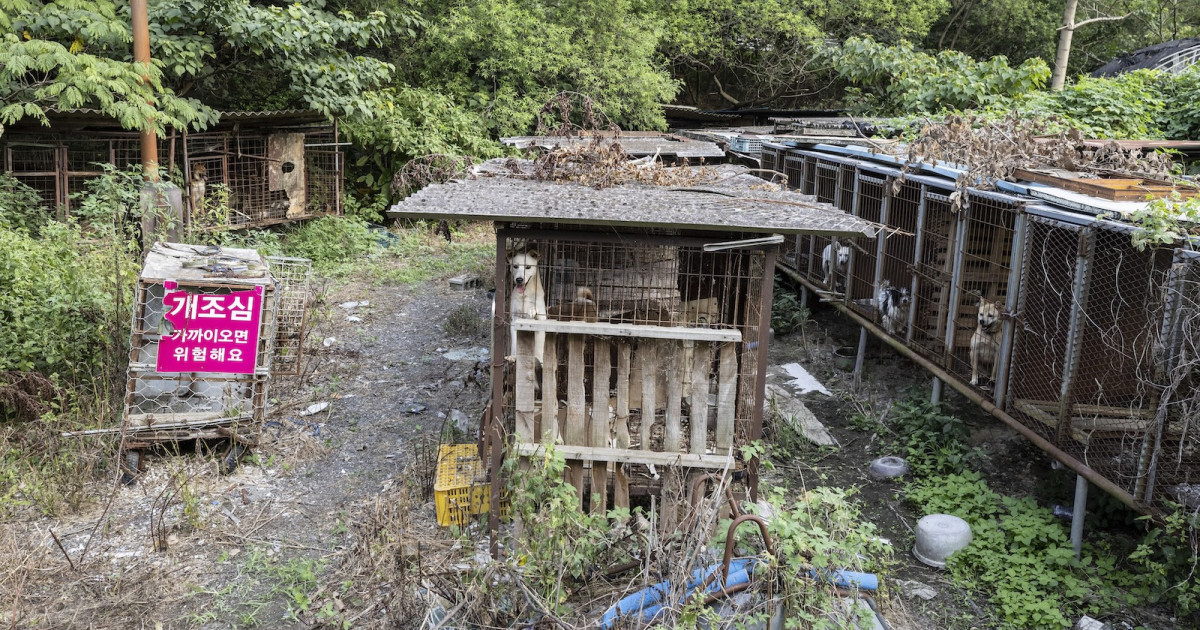
Humane World for Animals Ends Final South Korea Dog Meat Farm Rescue
Humane World for Animals removed more than 70 dogs from a meat farm in Gangjin, marking what the organization stated is its final large-scale rescue operation in South Korea.
Final Farm Rescue Closes a Decade of Operations
The Gangjin property once raised and killed up to 1,000 dogs each year. Rescuers arriving at the site encountered animals kept in rusting wire cages without basic provisions such as food, water, shelter, veterinary care, or comfort, according to Humane World for Animals. Collars left behind on the property littered the grounds.
Sangkyung Lee, the organization’s Korea campaign manager, said the dogs removed from the farm are being transported to the United States and Canada to find permanent homes. “These dogs are among the very last few to suffer in this dying industry and sending them to the USA and Canada to start new lives in loving families feels like the perfect closing chapter to our 10-year mission,” Lee stated.
The rescue coincides with a nationwide contraction of the dog meat industry. Humane World for Animals reported that more than 1,200 dog farms—representing over 80% of the country’s total—have closed since a national ban began enforcement in 2024.
Government Deadline Approaches for Remaining Farms
South Korea’s Ministry of Agriculture, Food and Rural Affairs reported that 468,000 canines were held across 1,537 dog meat farms when Seoul approved the legislative ban following domestic and international pressure. Approximately 7,600 dogs remain inside 198 operational meat farms.
The South Korean government has vowed to enforce a complete end to the industry by a Feb. 7, 2027 deadline, according to reports by the Korea Times. Lee Yong-jik, director general of the ministry’s Animal Welfare Policy Bureau, explained why the transition matters. “The end of dog meat consumption marks a crucial turning point that will elevate our society’s animal welfare standards to the next level,” Lee said.
Officials plan to inspect all remaining locations during the final two months of the year. The ministry warned that any farms caught secretly increasing their dog populations or continuing to breed canines will face immediate shutdown. Once the full prohibition takes effect, individuals caught farming, slaughtering, or selling dog meat for human consumption will face up to two years in prison and fines exceeding $20,000.

Seoul Market Vendors Face Shuttered Trade
In Seoul’s Gyeongdong Market, the decline is visible in commercial spaces. In 1998, South Korea recorded 6,484 dog meat restaurants, a figure that dropped to 2,352 by May. Within Gyeongdong Market specifically, the number of such establishments fell from approximately 23 to just one.
The sole remaining restaurant owner, who has sold dog meat for 56 years, used a $1,000 government compensation grant to install an LED sign, three display signs, and multiple banners advertising black goats. However, the owner noted that 80% of his clientele request dog meat rather than black goat. Because so few breeding farms remain, meat prices have surged, forcing the owner to double menu prices and losing customers in the process. The business operates at two-thirds empty capacity during peak seasonal demand.
Trapped in rusty wire cages, terrified and awaiting certain death. This has been the reality for 70 dogs on a dog meat farm in South Korea. They still have a chance at life. Please donate to help get these dogs to safety and save more animals from suffering:… pic.twitter.com/Jba8o2epp5
Under the statutory timeline, the owner must remove dog meat from the menu by Feb. 7, 2027, and attempt to sustain the business through black goat sales.
Shelters and Animal Advocacy Groups Monitor Post-Ban Care
While Humane World for Animals concluded its major rescue operations in the country, the organization stated it will continue monitoring the implementation of the ban and supporting locally led efforts against the dog and cat meat trade across Asia. Domestic animal welfare groups, including In Defense of Animals and Jindo Love Rescue, are similarly working to place surviving animals from earlier interventions into permanent homes ahead of the fast-approaching deadline.
Government officials have acknowledged that approximately 7,600 dogs will require care after the prohibition takes full effect. Municipal authorities are currently being called upon to assist with the housing and management of the remaining animals once commercial operations cease.