
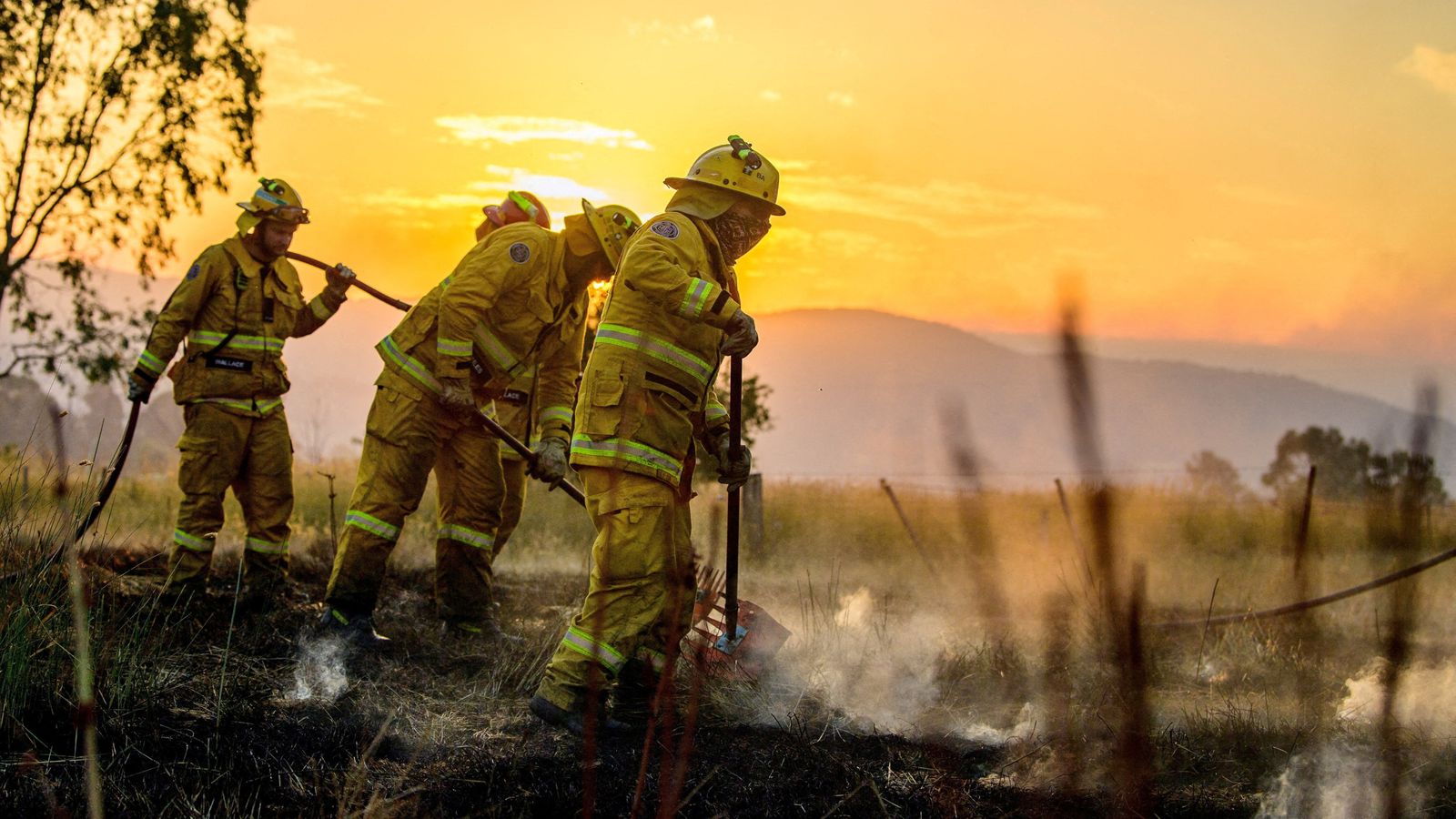
Tragic human remains have been discovered in Victoria, Australia, as devastating bushfires continue to engulf the southeastern region, prompting widespread evacuations and a state of disaster declaration. The fires,fueled by extreme heatwave conditions,have already caused immense destruction,impacting thousands of residents and raising concerns about a prolonged firefighting effort.
Current Situation: A Widespread Crisis
The fires have rapidly spread across more than 860,000 acres of bushland in Victoria since mid-week, exacerbated by soaring temperatures and strong winds. Over 30 fires are currently burning across the state, with several in New South Wales, near the Victorian border, also at the highest danger rating, according to the New South Wales Rural Fire Service.The severity of the situation has led to a state of disaster being declared, allowing authorities to mobilize additional resources and coordinate emergency response efforts.
The discovery of human remains near a vehicle in Longwood, approximately 70 miles north of Melbourne, adds a heartbreaking dimension to the crisis. Police are currently working to identify the victim. Three people remain missing after a house was completely destroyed by the flames, highlighting the immediate danger faced by communities in the affected areas.
Devastating Impact: Homes Lost and Communities Disrupted
The bushfires have resulted in the destruction of over 300 structures, including homes and other buildings, leaving thousands without power. The fires are impacting critical infrastructure, disrupting daily life and creating notable challenges for residents. Evacuation orders have been issued for numerous communities, forcing people to seek shelter elsewhere. Schools have been closed and residents are being urged to remain vigilant and follow the instructions of emergency services.
Echoes of the Past: Comparing to the Black Summer
Authorities have described the current fires as the worst to hit southeastern Australia as the devastating “Black Summer” bushfire season of 2019-2020. That period saw an unprecedented scale of destruction, with fires consuming an area roughly the size of Turkey and tragically claiming the lives of 33 people. The current conditions are raising fears of a similar, prolonged crisis.
Understanding the black Summer Bushfires (2019-2020)
- Scale of Destruction: Over 18.6 million hectares (46 million acres) burned across multiple states.
- Causes: A combination of record-breaking temperatures, prolonged drought, and strong winds created ideal conditions for rapid fire spread.
- Impact: Significant loss of life, property, and biodiversity. The fires also had a major impact on air quality and public health.
Government Response and Future Outlook
Australian Prime Minister Anthony Albanese has pledged emergency funding to support residents impacted by the bushfires. This funding will be crucial for providing immediate relief, assisting with recovery efforts, and helping communities rebuild. victoria’s premier,Jacinta Allan,is coordinating the state’s response,working closely with emergency services to contain the fires and protect lives and property.
However, the situation remains precarious. As Chief Fire Officer Hardman warned in a statement to the Australian Broadcasting Corporation, “These fires will not be contained before it gets hot, dry and windy again.” This highlights the ongoing challenge firefighters face and the potential for the fires to escalate further if weather conditions worsen.
What Factors Contribute to Bushfire Risk in Australia?
Australia is especially vulnerable to bushfires due to a combination of factors:
- Climate: Australia experiences hot, dry summers, creating ideal conditions for bushfires.
- Vegetation: Much of the Australian landscape is covered in eucalyptus forests, which are highly flammable due to their oil-rich leaves.
- Fuel Load: Accumulation of dry vegetation (fuel load) provides ample material for fires to spread rapidly.
- Climate Change: Rising temperatures and changing rainfall patterns are exacerbating bushfire risk, leading to longer fire seasons and more intense fires.
Key Takeaways
- Devastating bushfires are raging across southeastern Australia, particularly in Victoria and New South Wales.
- Tragic loss of life has been confirmed, with ongoing searches for missing persons.
- The fires have destroyed hundreds of structures and left thousands without power.
- The current crisis is being compared to the catastrophic “black Summer” bushfires of 2019-2020.
- The Australian government is providing emergency funding, but the situation remains challenging.
