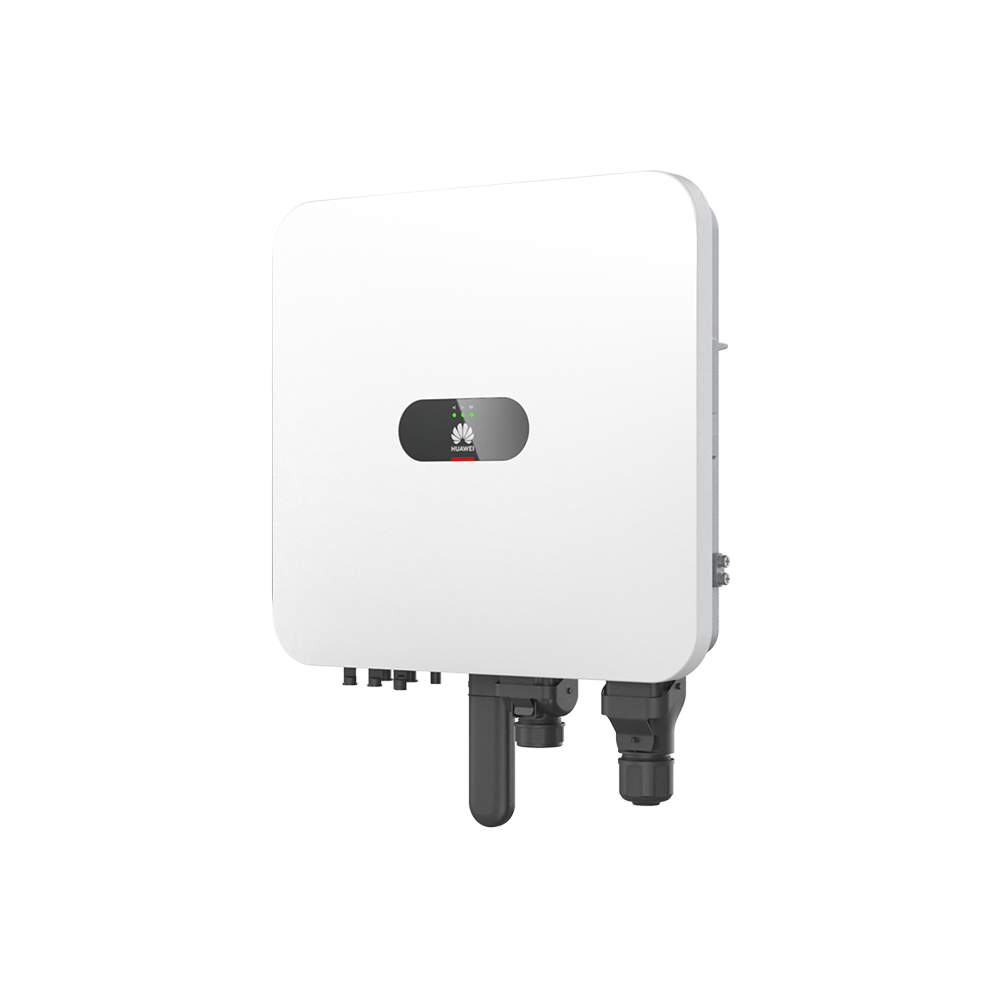
Huawei Sun2000 Plus High Efficiency Inverter for Sustainable Home Power Supply
Huawei’s latest iteration in the SUN2000 residential inverter series, the SUN2000-5/6/8/10/12K-MAP0, has entered production as of June 2026, targeting the high-density residential solar market with a focus on grid-tied efficiency and battery-ready modularity. This three-phase inverter series updates the previous M1 architecture, emphasizing improved thermal management and a higher input current to accommodate modern, high-power photovoltaic (PV) modules. According to Huawei FusionSolar technical documentation, the MAP0 series is designed to handle the increased power output of next-generation N-type bifacial panels, effectively mitigating the current-clipping bottlenecks experienced by legacy 10kW systems.
The Tech TL;DR:
- Increased Throughput: The MAP0 series supports higher DC input currents, allowing for a broader range of high-wattage PV modules without the efficiency loss of traditional string inverters.
- Grid Integration: Designed for three-phase residential systems, it optimizes power factor control and harmonic distortion, reducing the need for external filtering hardware.
- Deployment Readiness: The unit features native support for the Huawei LUNA2000 battery ecosystem, simplifying the transition from pure grid-tied to self-consumption architectures.
Architectural Evolution: Why the MAP0 Outperforms the M1
The shift from the M1 to the MAP0 architecture represents a transition toward higher power density and stricter thermal tolerance. While the M1 series was the industry standard for residential PV, it frequently hit thermal throttling limits when paired with high-output panels in high-irradiance environments. The MAP0 series introduces an upgraded heat-sink design and improved power electronics, allowing for a wider operating voltage range.
According to IEEE power electronics standards, residential inverters are increasingly shifting toward Gallium Nitride (GaN) or advanced Silicon Carbide (SiC) MOSFETs to maintain efficiency at elevated temperatures. While Huawei has not explicitly disclosed the specific semiconductor composition of the MAP0, the efficiency ratings of 98%+ suggest a significant optimization in the switching frequency and switching loss management. For enterprise-level installers and site managers, this translates to lower maintenance overhead and extended hardware longevity.
Comparative Performance Matrix
| Feature | SUN2000-10K-M1 | SUN2000-10K-MAP0 |
|---|---|---|
| Max. Input Current (per MPPT) | 13.5 A | 16.0 A |
| Max. Efficiency | 98.2% | 98.4% |
| Thermal Management | Passive/Active Hybrid | Optimized Active Convection |
| Communication Protocols | RS485/WLAN/FE | RS485/WLAN/FE/4G (via Smart Dongle) |
Cybersecurity and API Integration in the FusionSolar Ecosystem
As residential solar arrays become nodes in a larger “Smart Energy” network, they present new attack surfaces. The SUN2000-MAP0 integrates with the FusionSolar cloud, which requires robust API authentication. For developers and system integrators, the primary concern remains the security of the RS485 bus and the potential for unauthorized remote command execution. Security audits of similar inverters have historically highlighted vulnerabilities in local web server interfaces.
To secure these deployments, infrastructure managers should consult with specialized cybersecurity auditors to ensure that the inverter’s local management port is firewalled behind a dedicated IoT gateway. When interacting with the Huawei FusionSolar API, developers should implement strict rate limiting and token-based authentication to prevent unauthorized data exfiltration or grid-injection manipulation.
# Example cURL request to verify inverter status via local API
curl -X GET http://[INVERTER_IP]/api/v1/status
     -H "Authorization: Bearer [TOKEN]"
     -H "Content-Type: application/json"
Operational Triage: Managing Deployment Bottlenecks
The rollout of the MAP0 series requires a shift in commissioning workflows. Because the inverter supports higher current, legacy wiring and DC disconnects may be insufficient. Site engineers must verify that the DC cabling cross-section meets the increased input specs to prevent voltage drops and localized heating. If your current installation team is struggling with these parameters, it is advisable to engage professional IT and electrical systems integrators who specialize in high-load solar infrastructure.

Furthermore, the integration with residential energy management systems (HEMS) requires consistent firmware updates. Huawei’s current GitHub-hosted community drivers often serve as the bridge for third-party home automation platforms like Home Assistant, though enterprise users should rely on official manufacturer-supported SDKs for production-critical environments.
“The move toward 16A+ per MPPT is not just about raw power; it is about future-proofing the residential energy stack against the inevitable increase in module efficiency. The MAP0 series effectively removes the hardware bottleneck that has plagued residential solar for the last two years.”
— Independent Systems Engineer, SolarTech Infrastructure Group
As the grid transitions to decentralized generation, the role of the inverter shifts from a simple DC-to-AC converter to a sophisticated edge computing node. The SUN2000-MAP0 is a clear indicator that Huawei is prioritizing hardware durability and API accessibility for the next phase of the energy transition. For firms looking to scale their solar operations, the focus should remain on rigorous commissioning and the implementation of hardened network protocols to protect these assets from emerging IoT-based threats.
*Disclaimer: The technical analyses and security protocols detailed in this article are for informational purposes only. Always consult with certified IT and cybersecurity professionals before altering enterprise networks or handling sensitive data.*