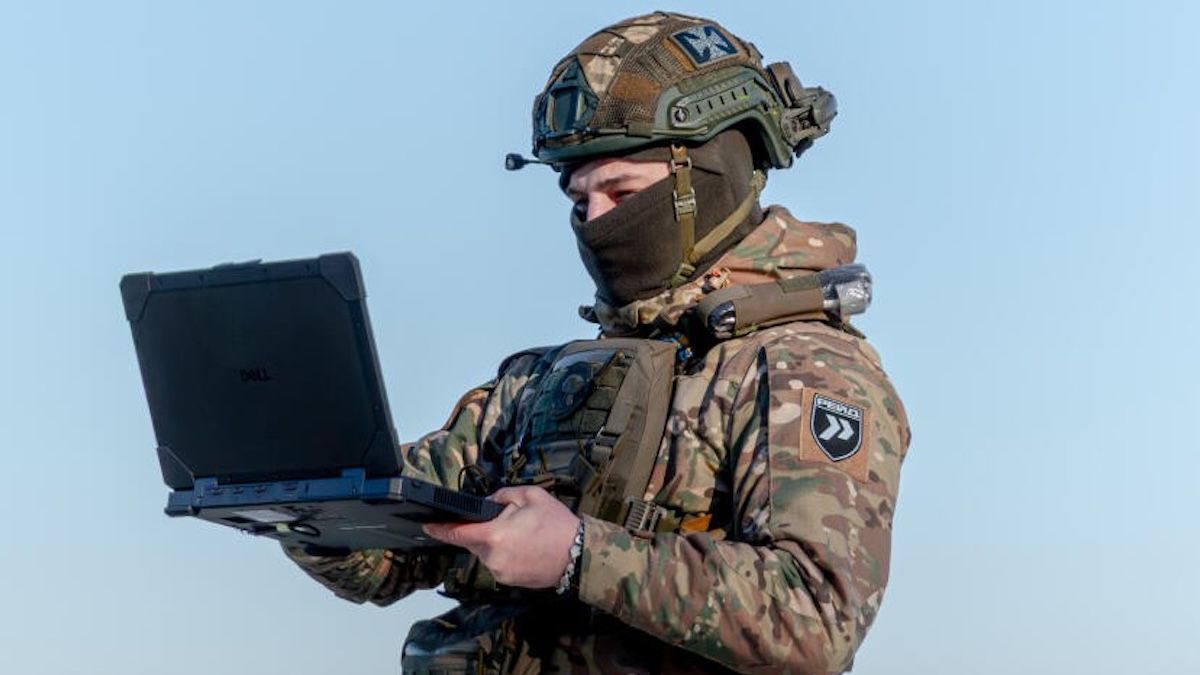
How Ukraine’s Military Turns Battlefield Feedback Into Rapid Defense Innovation-and What the West Can Learn
Kyiv, May 22, 2026 — Ukraine’s war-torn defense ecosystem is proving that battlefield necessity is the mother of all innovation. While Western defense firms often test products in controlled environments, Ukraine’s military and private sector have created a closed-loop system where frontline feedback directly fuels rapid technological adaptation. This isn’t just a wartime survival tactic—it’s a blueprint for how future defense industries could operate, with implications for investors, policymakers, and tech developers worldwide.
Why Ukraine’s Innovation Loop Is a Global Outlier
Most defense industries operate on a slow, bureaucratic cycle: requirements trickle down from government contracts, prototypes are developed over years, and testing occurs in sanitized conditions. Ukraine’s system flips this model. “In Ukraine, the end user’s requirements drive innovation,” explains Catarina Buchatskiy, co-founder of the Snake Island Institute, a Kyiv-based defense analytics center. “Any technology that reaches the battlefield is evaluated immediately under harsh conditions—no lab can replicate that.”
“The private market often dictates Western innovation, but here, survival dictates speed. That’s why so many foreign technologies fail to meet the mark.”
The Feedback Loop That Outpaces the Pentagon
Ukraine’s innovation cycle operates at a pace unthinkable in traditional defense sectors. The process begins with frontline units identifying gaps—whether in drone countermeasures, artillery accuracy, or logistics coordination. These needs are funneled through the Snake Island Institute, where Buchatskiy and her team analyze patterns, prioritize solutions, and collaborate with local defense firms to prototype fixes in weeks, not years.
This agility isn’t just about speed; it’s about relevance. Western defense companies often develop products based on projected threats or market demand, not immediate battlefield realities. “A lot of Western technology can be far from emergent needs,” Buchatskiy notes. “By the time it reaches Ukraine, it’s already obsolete.”
Where Western Firms Fall Short—and How They Can Catch Up
Despite the obvious advantages of testing in Ukraine, most Western defense firms remain hesitant to engage deeply. The reasons are practical: logistical challenges, security risks, and the perception that Ukraine’s environment is too volatile for reliable data collection. Yet the data suggests otherwise. A 2025 RAND Corporation study found that technologies validated in Ukraine’s operational conditions performed at 30% higher reliability rates when later deployed in other conflict zones.

For venture-backed defense startups, the stakes are even higher. Traditional investors prioritize scalability and market size, but Ukraine’s battlefield demands force companies to innovate for real-world constraints—limited resources, adversarial electronic warfare, and rapid enemy adaptation. “What we have is where Western firms can learn the most,” says Honcharuk. “If you can’t succeed here, you won’t succeed anywhere.”
Kyiv’s Defense Ecosystem: A Microcosm of War-Economy Synergy
Ukraine’s innovation isn’t isolated to the military. The war has accelerated collaboration between defense firms, academic institutions, and even civilian tech companies. For example, Kyiv Tech Park, a hub for startups, now hosts defense-adjacent projects, bridging the gap between commercial tech and military needs. This symbiotic relationship has turned Kyiv into a de facto testing ground for dual-use technologies—innovations that could later civilian applications, from AI-driven logistics to energy-efficient drone propulsion.
Locally, this has created a ripple effect. Municipal governments in Kyiv and Lviv are partnering with defense firms to repurpose industrial infrastructure for rapid prototyping. “We’ve seen a 40% increase in small-business registrations in defense-related sectors since 2022,” says Andriy Yermak, Kyiv’s Deputy Mayor for Economic Development, in a recent interview. “The war isn’t just a crisis—it’s a catalyst for economic diversification.”
“The war has forced us to think differently about innovation. If a startup can solve a problem for our military today, it can solve a problem for our cities tomorrow.”
The Future: A Ukraine-West Defense Partnership
If Western firms are to capitalize on Ukraine’s innovation loop, they’ll need to rethink their engagement strategies. The Snake Island Institute is already piloting a Battlefield Innovation Accelerator, a program designed to fast-track Western tech through Ukraine’s operational testing. Early participants include Lockheed Martin and Boeing, though at a fraction of their typical deployment scale.
For policymakers, this raises questions about how to institutionalize such partnerships. The Ukrainian government has proposed creating a Defense Innovation Fund, co-financed by NATO allies, to subsidize joint R&D projects. Meanwhile, legal experts warn that intellectual property frameworks will need to adapt. “Current NDAs and export controls weren’t designed for this level of real-time collaboration,” says Oleksandr Mykhalchuk, a partner at Kluver Law. “We’re seeing ad-hoc solutions emerge, but long-term, we’ll need a new model for shared IP in wartime innovation.”
Who Stands to Benefit—and Who Needs to Act Now
This isn’t just a story about defense technology. It’s about how economies, legal systems, and even urban infrastructure must evolve to support rapid innovation. For businesses and professionals, the implications are clear:
- Defense contractors: Firms that fail to engage with Ukraine’s battlefield feedback loop risk falling behind. Those that adapt could unlock new markets in hybrid-warfare preparedness. Explore vetted defense innovation partners already working with Ukrainian firms.
- Venture capitalists: The traditional defense VC playbook—long timelines, high barriers to entry—won’t cut it in Ukraine’s environment. Investors should look for funds specializing in high-velocity defense tech, where speed trumps scalability.
- Legal and compliance teams: The intellectual property and export control challenges of Ukraine-West collaboration are uncharted territory. Firms navigating this will need specialized international trade attorneys familiar with both NATO and Ukrainian regulations.
- Urban planners and municipal governments: Cities like Kyiv and Lviv are becoming incubators for dual-use tech. Local authorities should prioritize defense-adjacent infrastructure, from repurposed industrial zones to cybersecurity hubs.
The Kicker: A Blueprint for the Next Generation of Defense
Ukraine’s battlefield innovation loop isn’t just a wartime workaround—it’s a glimpse of how defense industries could operate in an era of rapid, decentralized conflict. The question isn’t whether Western firms will adopt these methods, but how quickly they’ll act before the next crisis renders their current models obsolete.
The clock is ticking. For those ready to lead the charge, the Snake Island Institute’s doors—and Ukraine’s battlefields—are open.
Worth a look
- Saudi-Houthi Conflict Escalates With Missile Attacks on Riyadh and Holy Cities
- Washington Wizards defeat Chicago Bulls as Kyshawn George scores 22
- Starlink or Starshield? The Label Decides Who Can Lift Ukraine's Cap (daybreakwire.com)
- Elon Musk Attributes Starlink Restrictions in Ukraine to Terms of Service Violations (newsdirectory3.com)