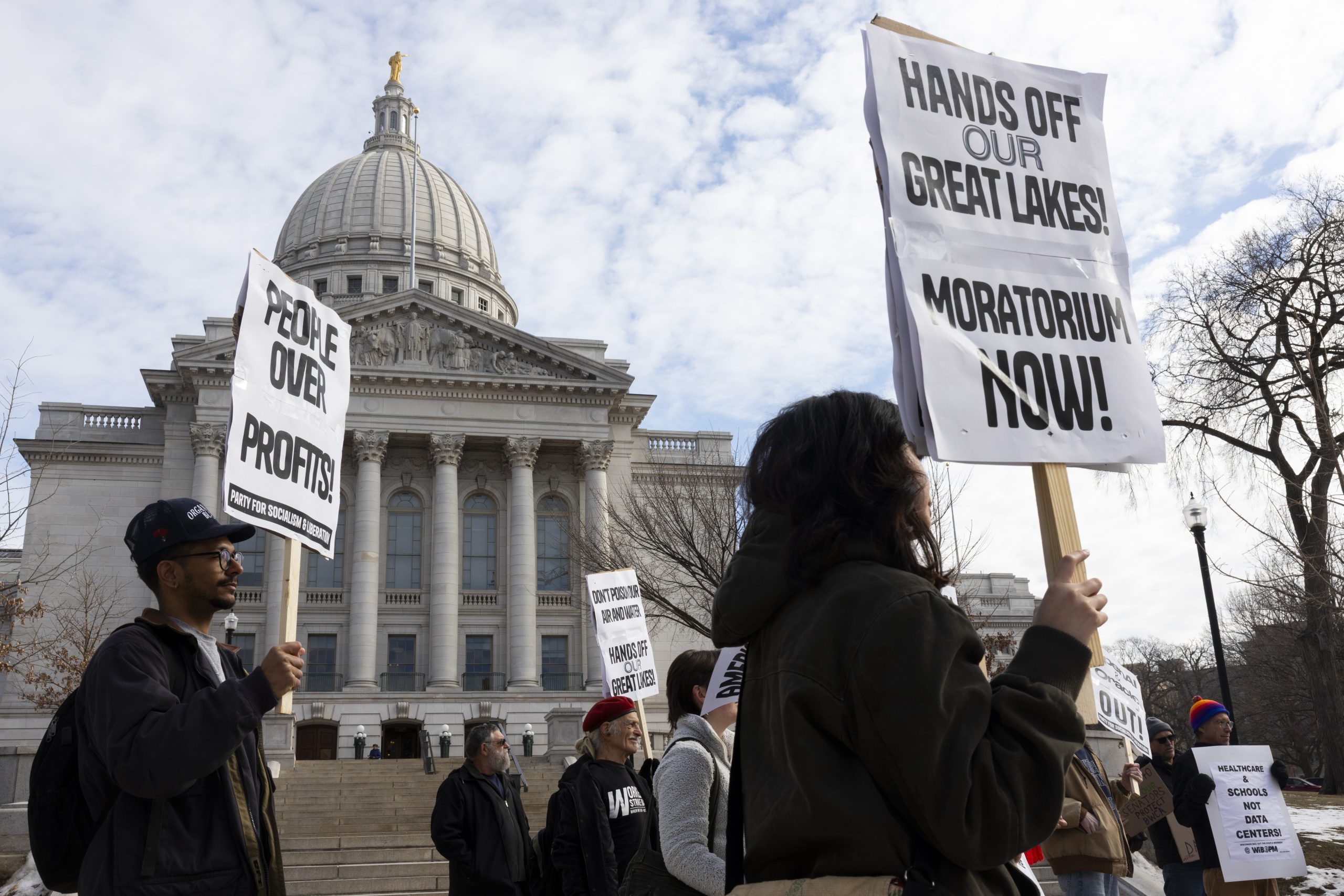
How to Resist AI Data Centers: Lessons from Community Organizers
On April 20, 2026, community organizers from Memphis, Wisconsin, and Arizona shared hard-won strategies for resisting data center expansion, revealing how local coalitions are confronting corporate power by leveraging public records, social media, and cross-issue alliances to protect water, air, and democratic oversight in the face of AI infrastructure growth.
The proliferation of hyperscale data centers—driven by surging demand for AI computing power—has triggered unprecedented strain on municipal resources nationwide. In Wisconsin alone, proposed data center projects have collectively sought over 500 million gallons of groundwater per day, according to filings with the Wisconsin Department of Natural Resources, threatening aquifers already stressed by agricultural runoff and climate variability. This isn’t just about servers and fiber optics; it’s about who controls access to life-sustaining resources when private equity-backed developers arrive with tax incentives and minimal public scrutiny.
Activating community power before groundbreaking
Organizers emphasized that success begins long before shovels hit soil. Tricia Boehlke of No Data Center in DeForest stressed the importance of early intervention: “We filed open records requests the moment we heard rumors—turns out, the company had already met with town officials six times before the public knew anything.” Her group’s persistence led to the discovery of undisclosed water withdrawal permits, which they challenged through administrative appeals, ultimately contributing to the project’s withdrawal in early 2026. This mirrors trends seen in Maricopa County, Arizona, where the Arizona Corporation Commission recorded a 300% increase in data center-related water rights applications between 2024 and 2025, prompting grassroots scrutiny.
In Memphis, KeShaun Pearson highlighted the role of door-to-door canvassing in Southwest Memphis—a 92% Black neighborhood where life expectancy lags 12 years behind wealthier ZIP codes due to cumulative pollution burdens. “We didn’t just hand out flyers; we brought air quality monitors to porch conversations,” Pearson said. “When residents saw real-time PM2.5 spikes near the planned xAI Colossus site, it turned abstract concern into urgent action.” Their efforts contributed to a Shelby County Health Department resolution requiring cumulative impact assessments for fresh industrial projects—a precedent now being referenced in similar fights across Tennessee.
Countering disinformation with local truth
A recurring theme was the need to bypass developer-hosted “public meetings” that organizers described as scripted propaganda. Lee Ziesche of the No Desert Data Center Coalition in Tucson explained: “We attended three official sessions where engineers read from slides about job creation and innovation—but never mentioned the 1.2 million gallons of daily groundwater the project would consume in a Stage 3 drought zone.” In response, the coalition hosted independent teach-ins at Barrio Viejo community centers, featuring hydrologists from the University of Arizona’s Water Resources Research Center who presented comparative aquifer models showing projected drawdown effects.
This approach aligns with findings from the Stanford Environmental Law Clinic, which documented in a 2025 report that communities presenting third-party expert testimony at administrative hearings were 40% more likely to secure concessions or project modifications than those relying solely on public comment. “Expertise isn’t just in degrees,” Ziesche added. “It’s in the farmer who’s watched his well drop 15 feet in five years, or the elder who remembers when the Santa Cruz River flowed year-round.”
Building power across divides
Coalition-building emerged as a critical force multiplier. Boehlke described how her group connected with hunting clubs concerned about wetland degradation and faith leaders alarmed by rising utility bills for fixed-income congregants. “We found common ground in unexpected places,” she said. “A Lutheran pastor and a Sierra Club chapter might not agree on everything, but both want clean water and honest government.” This cross-ideological outreach helped sustain pressure during a six-month campaign that included over 200 attendees at a single town board meeting—a turnout unprecedented in the rural Dane County municipality.
In Tucson, organizers linked data center resistance to broader struggles for immigrant rights and environmental justice. “Project Blue wasn’t just about water,” Ziesche noted. “It was part of a surveillance pipeline—feeding data to Border Patrol’s automated tracking systems while draining the aquifer that sustains Tohono O’odham agricultural plots miles south.” By framing the issue through this lens, the coalition deepened alliances with groups like Derechos Humanos and the Tucson Audubon Society, expanding their base beyond traditional environmental networks.
The cost of persistence
Sustainability remains a central challenge. All three groups operate on volunteer labor, with no paid staff. Pearson warned against burnout: “We love this work, but we can’t pour from empty cups. Setting boundaries isn’t weakness—it’s strategy.” In response, MCAP has begun exploring microgrant opportunities through regional environmental justice networks to cover stipends for coordinators handling communications and legal research.
Legal expertise is another gap. Many organizers reported difficulty getting municipal attorneys to seize their concerns seriously, particularly when challenging complex tax increment financing (TIF) agreements or industrial development bonds. As one Dane County official acknowledged off the record: “We rely on developers’ consultants because we lack in-house capacity to model energy load impacts or groundwater交互 effects.” This underscores the need for communities to access specialized counsel—whether through pro bono clinics, public interest law firms, or municipal law specialists versed in utility regulation and land use planning.
Where to find help
For communities facing similar threats, several types of verified professionals can provide critical support:
Engaging experienced municipal law attorneys can help residents navigate open records laws, challenge improperly noticed meetings, and intervene in permitting processes before rights are waived.
Partnering with accredited environmental consulting firms enables independent analysis of water usage projections, air quality impacts, and grid load assessments—countering developer-sponsored studies with peer-reviewed methodology.
Collaborating with seasoned community organizing trainers strengthens coalition resilience through power mapping, conflict facilitation, and sustainable volunteer structures—turning outrage into enduring power.
As Boehlke reflected: “We started as a handful of people worried about a pond. Now we’re connected to a network that’s stopped three data centers in 18 months. Power isn’t given—it’s built, one conversation at a time.”
The fight against unchecked data center expansion isn’t ultimately about technology. It’s about who decides what kind of future we build—and whether those most affected get a seat at the table. When communities organize with clarity, courage, and connection, they don’t just resist extraction; they reclaim the right to shape their own landscapes, their water, their air, and their democracy.