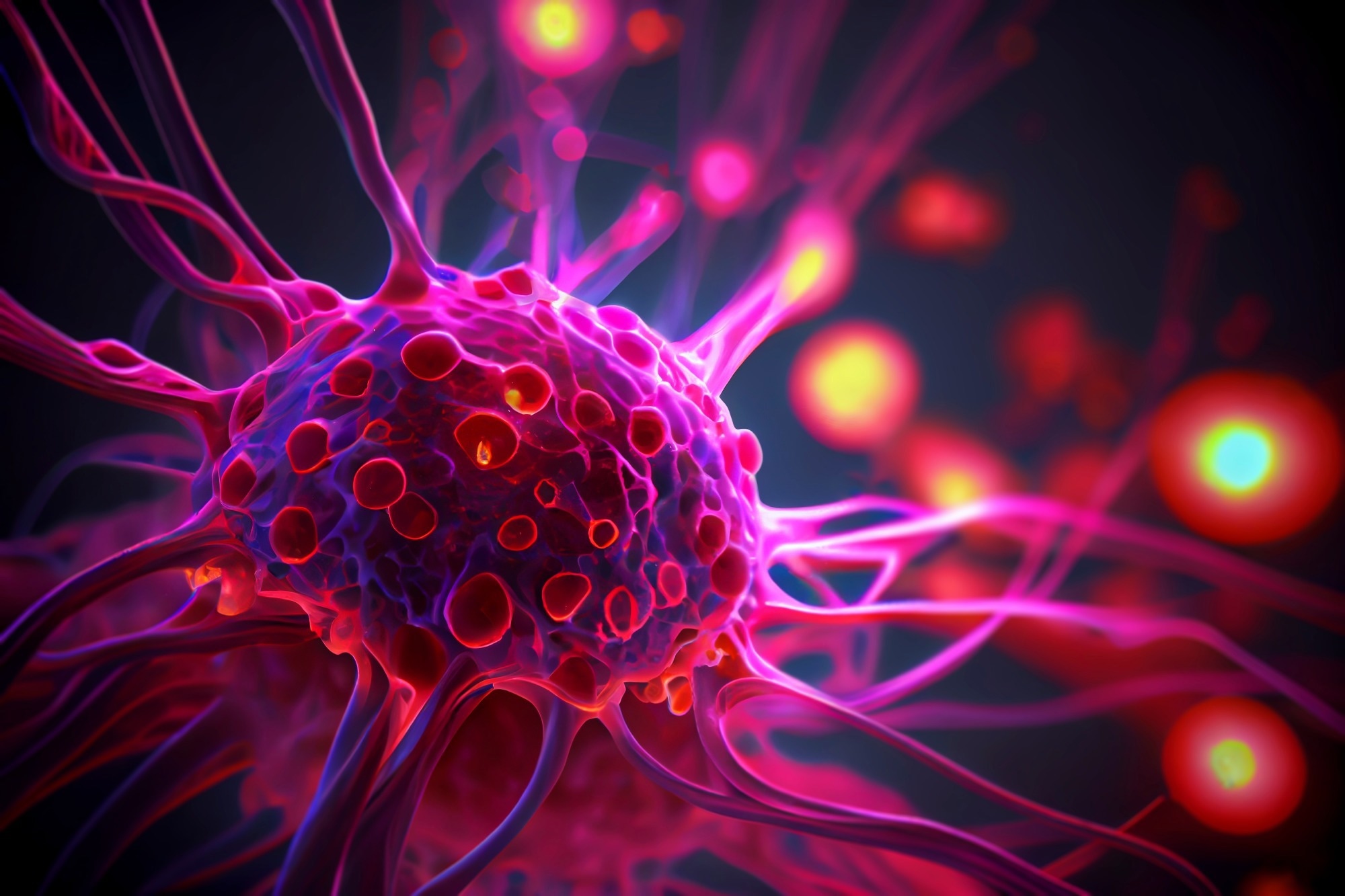
How the Nervous System Drives Cancer Growth and Metastasis
Recent investigations into the tumor microenvironment have revealed that cancer cells actively recruit and manipulate the peripheral nervous system to facilitate progression, metastasis, and immune evasion. Research published in News-Medical and corroborated by findings in PMC12051345 highlights that tumors are not isolated biological entities but are highly integrated into the body’s neural architecture, utilizing neurotransmitters and neurotrophic factors to reprogram surrounding cells.
- Tumors hijack neural signaling pathways to accelerate growth and induce immunosuppression.
- Cancer-nervous system crosstalk creates a self-reinforcing loop that promotes perineural invasion and metastatic spread.
- Emerging diagnostic and therapeutic strategies focus on blocking neuro-tumor signaling, offering potential new targets for precision oncology.
Biological Mechanisms of Neuro-Tumor Crosstalk
The interaction between malignant cells and the nervous system is characterized by complex biochemical feedback loops. According to research detailed in PMC12051345, Tumor-Associated Macrophages (TAMs) play a pivotal role in this process. TAMs express ADRB2 receptors, which, when activated, trigger a cascade that downregulates pro-inflammatory cytokines while upregulating pro-angiogenic factors like VEGF. This shift effectively suppresses antitumor immunity and creates a favorable environment for tumor progression.
The nervous system contributes to this environment through the secretion of neurotrophic factors. Schwann cells, when activated by TAMs, secrete Nerve Growth Factor (NGF), which binds to TrkA receptors on tumor cells. This activation triggers the PI3K/AKT signaling pathway, enhancing tumor survival and angiogenesis. Furthermore, the secretion of Glial Cell Line-Derived Neurotrophic Factor (GDNF) activates the RET tyrosine kinase receptor, which governs metabolic reprogramming and increases the migratory capacity of tumor cells, directly driving perineural invasion.
Immune Evasion and the Role of Regulatory T Cells
Neuro-tumor signaling extends its influence to the adaptive immune response. Regulatory T cells (Tregs) are recruited into the tumor microenvironment through the activation of the cAMP/PKA pathway. Once present, these cells reinforce an immunosuppressive state by secreting TGF-β and IL-10, which inhibit effector T-cell proliferation. This mechanism is further compounded by the release of norepinephrine (NE) from sympathetic nerves, which binds to β2-adrenergic receptors on immune cells, effectively silencing the body’s natural defense mechanisms against the malignancy.
Clinical management of patients presenting with advanced metastatic disease often necessitates a multidisciplinary approach. For those navigating the complexities of tumor-immune interactions, consulting with board-certified oncology specialists is critical to ensure that emerging therapies targeting these pathways are integrated correctly into standard-of-care protocols.
Clinical Implications for Metastatic Progression
Neutrophils also undergo significant functional changes due to neural input within the tumor microenvironment. Increased SP1 levels and the secretion of IL-1β promote the expression of mesenchymal genes, leading to an epithelial-mesenchymal transition (EMT) that enhances cell motility. The resulting metastatic capacity is bolstered by Neutrophil Extracellular Traps (NETs), which capture circulating tumor cells and release inflammatory mediators.
Because these pathways are often independent of traditional chemotherapy targets, they represent significant gaps in current treatment efficacy. Patients experiencing treatment-refractory progression may benefit from an evaluation at a comprehensive diagnostic imaging center equipped to detect early signs of perineural spread or metastatic infiltration.
Strategic Integration in Oncology Care
The shift toward targeting neuro-biological factors in cancer treatment requires high-level clinical coordination. This evolution in care necessitates that clinics maintain robust healthcare compliance and clinical advisory services to ensure that patient management remains aligned with the latest peer-reviewed evidence and regulatory guidance.
The future of oncology lies in deconstructing the tumor-nerve interface. By neutralizing the signals that allow tumors to exploit the body’s own neural infrastructure, clinicians may eventually be able to stall progression in ways previously considered impossible.
Disclaimer: The information provided in this article is for educational and scientific communication purposes only and does not constitute medical advice. Always consult with a qualified healthcare provider regarding any medical condition, diagnosis, or treatment plan.