
Baltic Sea Yields Centuries-Old Champagne Secrets
Shipwrecks Preserve Vintage Bubbles, Offering Unique Taste Experiences
The frigid, low-salinity waters of the Baltic Sea are proving to be an extraordinary natural cellar for Champagne, preserving bottles for centuries. Divers have unearthed thousands of these vintage treasures from sunken vessels, offering a unique glimpse into past vintages and their remarkable preservation.
A Maritime Graveyard for Fine Wines
These treacherous Baltic waters, known for their shallow depths, numerous islands, and frequent storms, have claimed many ships over the centuries. Among their lost cargo, explorers have discovered a surprising bounty: meticulously preserved bottles of Champagne, once destined for royalty in regions like Estonia, Latvia, Lithuania, and Russia.
The exceptional preservation is attributed to the Baltic Sea’s unique environment. A mix of freshwater and saltwater creates a dark, cold climate with low salinity, acting like a time capsule. This environment allows the wine to age in ways that mimic, and in some cases surpass, traditional cellars.
The Jönköping’s Incredible Vintage
A remarkable discovery occurred in 1998 when Swedish divers located the Jönköping, a ship that sank in October 1916 after being torpedoed by a German U-boat. The vessel’s most prized possession was an astonishing 3,000 bottles of 1907 Heidsieck & Co Monopole Goût Américan Champagne. Miraculously, the wine remained drinkable after its long submersion.
Writer **Chris Hoel** described the experience of tasting this historic Champagne, noting, “Maybe it was the power of suggestion, but I could taste the sea, the explosion, and the Champagne all at once.”
He further detailed notes of “graham cracker, burnt lemon oil, and flamed oranges”
alongside “caramelized bananas, burnt citrus, and kerosene.”
New Discoveries and Modern Experiments
In 2010, divers recovered 168 bottles of Juglar and Veuve Clicquot from a ship that sank in the late 1840s. Analysis published in the Proceedings of the National Academy of Sciences revealed initial notes of cheese and wet hair that transformed upon oxygenation into “grilled, spicy, smoky, and leathery, together with fruity and floral notes.”
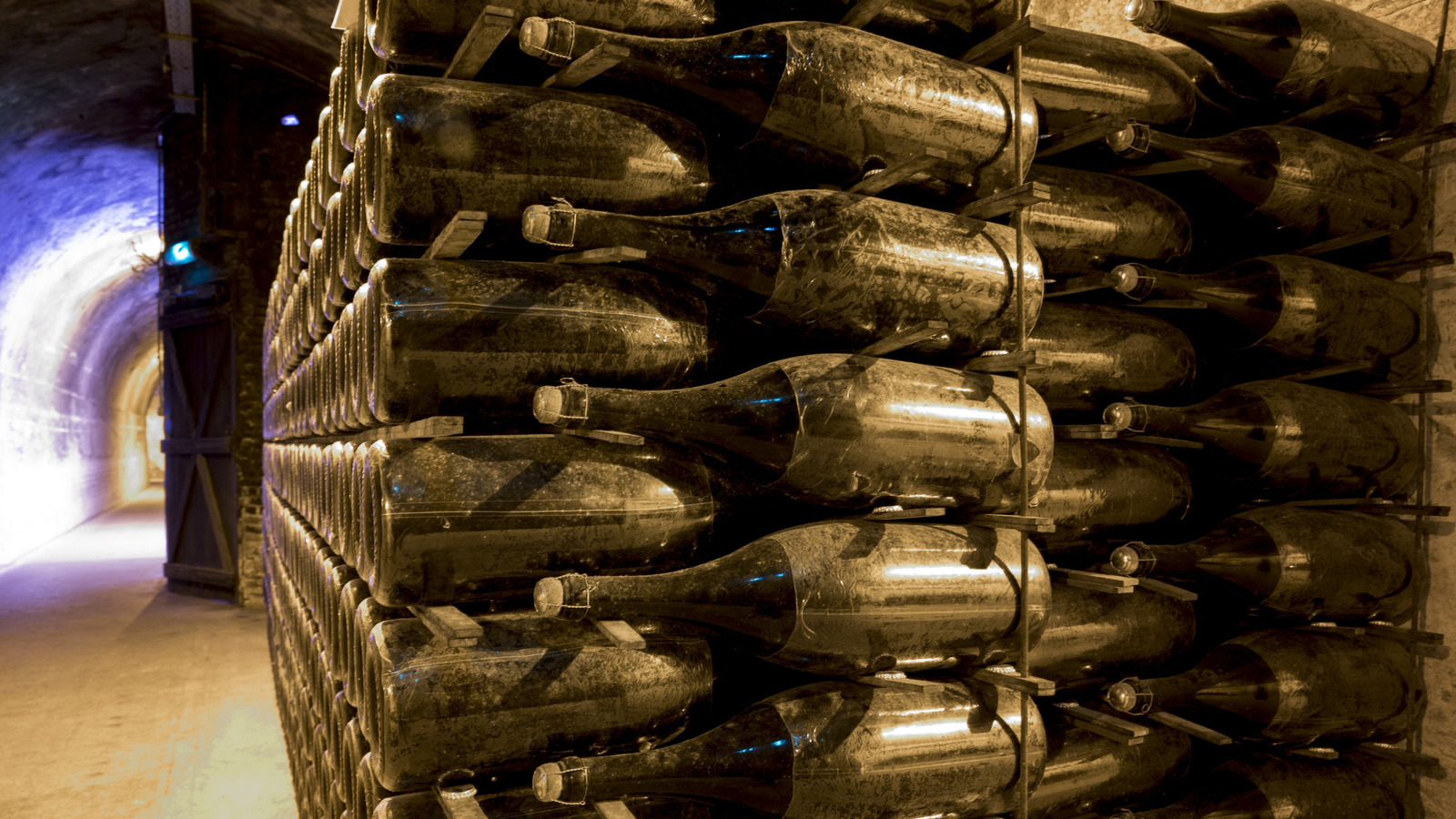
Intrigued by these findings, Veuve Clicquot replicated the process in 2014, submerging 350 bottles in the Baltic Sea to recreate the shipwrecked vintages. In 2023, the house offered exclusive tastings of these sea-aged wines. A comparison by Yuri Shima for Club Oenologique found that sea-aged Champagnes were “a little shy and rather closed, with tighter fruit and more non-fruit flavors,”
while cellar-aged versions were “more open, with broader fruits and more tertiary notes.”
Notably, some sea-aged bottles exhibited remarkable vibrancy and a frothier mousse.
Other winemakers are also exploring underwater aging. **Hervé Jestin**, winemaker at Leclerc Briant, maintains an underwater cellar in the Atlantic Ocean for his biodynamic “Abyss” Champagnes, which retail for around $200 per bottle.
The practice of aging wine underwater is gaining traction, with some producers now experimenting with ocean aging. For instance, in 2021, 15 wineries from the Rías Baixas region of Spain submerged Albariño wine in the Atlantic to study its aging process, reporting nuanced flavor development (Wine-Searcher, 2021).
