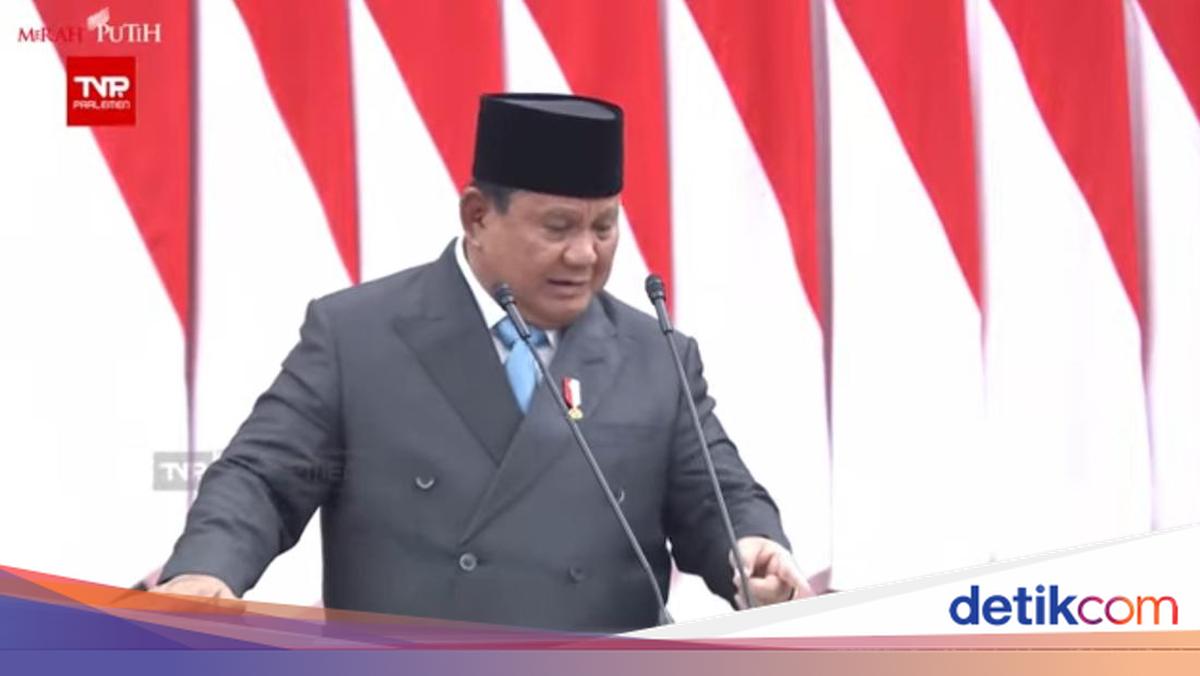
How Prabowo’s Coffee Hunt at DPR’s Plenary Sparked Economic Debate & Policy Scrutiny
Indonesian President Prabowo Subianto’s casual gesture of searching for coffee during a full session of the House of Representatives (DPR) on May 20, 2026, has sparked national debate over his leadership style and the economic contradictions facing his administration. The moment, captured live, contrasts sharply with his earlier image as a disciplined military commander and now raises questions about his ability to address Indonesia’s widening middle-class decline amid optimistic growth projections. Jakarta and regional economies—already grappling with inflation and stagnant wages—now face heightened scrutiny over policy delivery.
Why This Gesture Matters: Symbolism Over Substance
The coffee-searching incident, though seemingly trivial, underscores deeper tensions. Prabowo’s presidency, inaugurated in October 2024 after decades of political maneuvering, has been marked by a dual narrative: a return to strongman governance and a promise to continue outgoing President Joko Widodo’s economic reforms. Yet, his administration’s recent admission that the middle class has shrunk—despite targeting 5.8% to 6.5% GDP growth for 2027—has exposed a credibility gap. The DPR’s upcoming evaluation of the 2027 state budget (due June 4) will test whether his government can reconcile these contradictions.
Key Contradictions:
- Economic Growth vs. Middle-Class Decline: While the government projects robust GDP growth, household surveys indicate a notable decline in middle-class households—a trend linked to stagnant wages and rising costs in cities like Jakarta, Surabaya, and Bandung.
- Leadership Perception: Prabowo’s military background and Suharto-era ties have fueled concerns about authoritarian tendencies, now juxtaposed with his informal, almost whimsical public persona.
- Policy Delivery: The DPR’s evaluation of the 2027 budget will scrutinize whether Prabowo’s “Red and White Cabinet” can implement programs like the National Economic Recovery Plan without alienating regional stakeholders.
Regional Impact: Who Loses When Growth Stalls?
Indonesia’s economic disparities are geographically acute. In Jakarta, where Prabowo’s gesture occurred, the middle class has contracted by over 10% since 2024, according to the Indonesian Central Bureau of Statistics. Meanwhile, East Java and South Sumatra—key agricultural and manufacturing hubs—face wage stagnation despite government subsidies. Local officials warn that without targeted interventions, social unrest could escalate.
“The middle class isn’t just a statistic—it’s the backbone of consumer demand. If their purchasing power erodes, the entire economy feels it. We’re seeing early signs in Bandung’s retail sector, where foot traffic has dropped by nearly 15% in the past six months.”
Expert Analysis: A Leadership Style at Odds with Economic Reality
Legal experts argue Prabowo’s informal demeanor risks undermining institutional trust. Dr. Lintang Sari, a constitutional law professor at the University of Indonesia, notes that his approach contrasts with Widodo’s pragmatic, technocratic style. “Indonesia’s middle class expects competence, not charm,” she warns. “The DPR’s evaluation will reveal whether Prabowo’s team can translate rhetoric into results.”
Economists point to structural flaws in Prabowo’s growth strategy. While his administration has prioritized infrastructure projects (e.g., the Jakarta-Bandung High-Speed Rail), critics argue these lack direct links to wage growth. The World Bank’s 2026 Indonesia Economic Update highlights that productivity gains in manufacturing have stalled, a critical factor for middle-class expansion.
The Budget Showdown: DPR’s June 4 Evaluation as a Litmus Test
The DPR’s evaluation of the 2027 budget will hinge on three pillars:
| Focus Area | Government Claim | Reality Check |
|---|---|---|
| Middle-Class Support | Expansion of social safety nets | Current programs underfunded; Jakarta’s middle class already shrinking. |
| Infrastructure Spending | $42 billion allocated for 2027 | Delays in priority projects (e.g., Palembang’s port expansion) risk misallocation. |
| Wage Growth | Targeted 7% increase for formal workers | Inflation outpaces wage hikes in Surabaya and Medan. |

Solutions in the Directory: Who Can Fix This?
The economic and political tensions exposed by Prabowo’s gesture demand urgent, localized solutions. Here’s how stakeholders can act:
- Regional Economic Advisors: Cities like Jakarta and Surabaya need specialized economic advisory firms to align infrastructure projects with wage growth. The Jakarta Provincial Government has already engaged firms to model regional productivity gains—but more are needed.
- Labor Law Firms: With wage stagnation and inflation, employees and unions require labor attorneys to negotiate fair compensation packages. The Ministry of Manpower has faced criticism for slow enforcement of wage laws.
- Social Safety Net Providers: Nonprofits and community organizations must expand microfinance and vocational training programs. In Bandung, initiatives like Kemensos’ food assistance programs have shown promise but need scaling.
The Bigger Picture: Can Prabowo’s Leadership Survive the Contradictions?
Prabowo’s presidency is at a crossroads. His coffee-searching moment, while seemingly innocuous, symbolizes a leadership style that may struggle to reconcile Indonesia’s economic realities. The DPR’s evaluation in June will be pivotal: if the budget fails to address middle-class decline, social unrest could escalate. Meanwhile, regional economies—from Jakarta’s congested streets to East Java’s factories—are already feeling the strain.
“Indonesia’s middle class isn’t just a number—it’s the pulse of the economy. If Prabowo’s team can’t deliver, we’ll see the kind of protests that defined 1998 all over again.”
The path forward requires actionable solutions. For businesses navigating uncertainty, economic resilience consultants can help mitigate risks. For citizens concerned about wages and inflation, labor rights organizations offer critical support. And for policymakers, the think tank community stands ready to provide data-driven strategies.
The question isn’t whether Prabowo’s presidency will falter—it’s whether Indonesia’s institutions can adapt before the cracks widen. The next six months will tell the story.