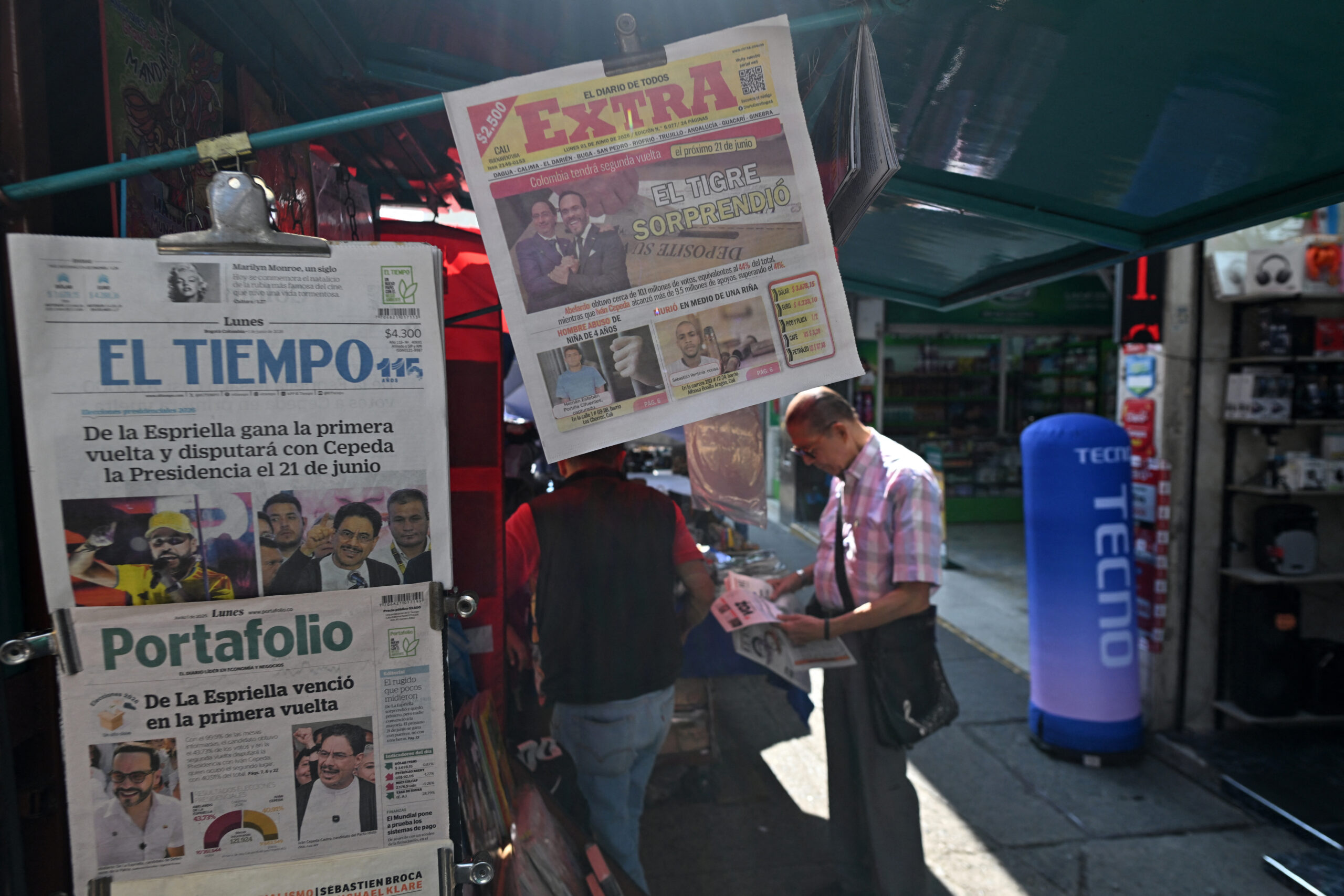
How Polls Fell Short in Colombia’s Presidential Elections: A Post-Election Analysis
Colombia’s June 2026 presidential vote defied pre-election polls, upending projections that favored a centrist consensus. Lawyer Abelardo de la Espriella and peace-builder Iván Cepeda surged to the runoff, exposing systemic flaws in polling methodologies while signaling a potential shift toward progressive governance in Latin America’s fourth-largest economy. The results force multinational corporations, from extractive firms to agribusinesses, to recalibrate risk assessments as Colombia’s political trajectory could alter trade agreements, security dynamics, and social stability in a country critical to global supply chains.
The Polling Collapse: A Crisis of Methodology or Structural Shift?
Polls consistently overestimated centrist candidates while undercounting the groundswell for Espriella—a former prosecutor with a hardline stance on corruption—and Cepeda, a leftist aligned with Colombia’s historic peace process. The discrepancy stems from three interlinked failures:
- Urban bias: Pollsters over-sampled Bogotá and Medellín, missing rural and peri-urban shifts where Espriella’s anti-establishment rhetoric resonated.
- Late-decider underestimation: A notable share of voters—particularly in the Pacific Coast and Amazon regions—made up their minds within 48 hours of the vote, a pattern studies on Latin American elections show correlates with high volatility.
- Social media amplification: Espriella’s campaign leveraged micro-targeted digital ads and organic viral content, bypassing traditional media channels that pollsters rely on for sample stratification.
Macro-Economic Ripples: How Colombia’s Vote Redefines Global Trade and Security
Colombia’s $350 billion economy—ranked as the largest in South America after Brazil—serves as a linchpin for U.S. And EU supply chains, particularly in coal, coffee, and automotive parts. The runoff’s outcome will dictate:

| Scenario | Trade Impact | Security Risk | Investment Climate |
|---|---|---|---|
| Espriella Victory | Accelerated FTA renegotiations with the EU; potential tariffs on Chinese imports to protect domestic industries. | Increased military cooperation with the U.S. On counter-narcotics, but strained relations with Venezuela. | Surge in green energy FDI (solar/wind) but capital flight from extractive sectors. |
| Cepeda Victory | Slowdown in FTA progress; focus on regional integration (e.g., Pacific Alliance) over bilateral deals. | Reduced U.S. Military aid; potential normalization with Venezuela, but risks of ELN insurgency resurgence. | Boost for social enterprises and agroecology, but uncertainty for traditional agribusiness. |
“Colombia’s election isn’t just about domestic politics—it’s a stress test for the Andean region’s ability to maintain stability amid U.S.-China competition. A Cepeda win would force Washington to recalibrate its ‘maximum pressure’ strategy on Venezuela, while Espriella could deepen ties with Brazil’s far-right bloc.”
Directory Bridge: Who Wins (or Loses) from Colombia’s Political Uncertainty?
Multinational firms operating in Colombia now face a three-pronged risk matrix requiring immediate action:
- Trade Compliance: With Espriella’s campaign promising to “renegotiate all FTAs”, companies exporting to Colombia must prepare for potential trade compliance overhauls, particularly in automotive and agricultural sectors. Firms like Deloitte’s Latin America trade practice are already fielding inquiries from European automakers.
- Security Logistics: The runoff’s outcome will dictate counter-narcotics funding. Firms with assets in high-risk regions (e.g., Cauca, Norte de Santander) are engaging specialized risk consultants to model ELN or dissident group activity under either candidate.
- Financial Hedging: The Colombian peso (COP) has already volatility-spiked ahead of the runoff. Hedge funds and corporate treasuries are deploying cross-border FX specialists to lock in rates before the runoff’s market reaction.
The Long Game: How This Vote Reshapes Latin America’s Geopolitical Chessboard
Colombia’s election is a microcosm of Latin America’s broader realignment:

- U.S. Hedging: The Biden administration’s Western Hemisphere Strategy now faces a dilemma—Espriella’s pro-U.S. Stance on security vs. Cepeda’s push for regional autonomy. Expect a surge in K-Street consultants specializing in Latin American policy.
- China’s Counterplay: Beijing has already deepened ties with Colombia via infrastructure loans. A Cepeda win could accelerate Belt and Road projects, forcing U.S. Firms to litigate FDI disputes under new sovereignty clauses.
- Venezuela’s Gambit: Nicolás Maduro’s regime is monitoring the runoff closely. A Cepeda victory could trigger diplomatic overtures, but Espriella’s hardline stance may prolong isolation—complicating oil and gas transit routes through Colombian territory.
The Kicker: Why This Election is a Wake-Up Call for Global Business
Colombia’s polling failure is a symptom of a larger trend: the erosion of traditional political forecasting in an era of algorithm-driven campaigns and fragmented media ecosystems. For multinational corporations, the lesson is clear—assumptions about political stability are now as risky as currency fluctuations. The firms that thrive in this new reality will be those that:
- Invest in real-time political risk modeling, not quarterly reports.
- Diversify supply chains across Andean and Caribbean nodes, not just Bogotá.
- Lobby for bilateral investment treaties with escape clauses for regime shifts.
The runoff on June 16, 2026, won’t just decide Colombia’s future—it will test whether global business can adapt to a world where predictability is the new luxury. The firms that act now will determine who wins the next phase of this story.