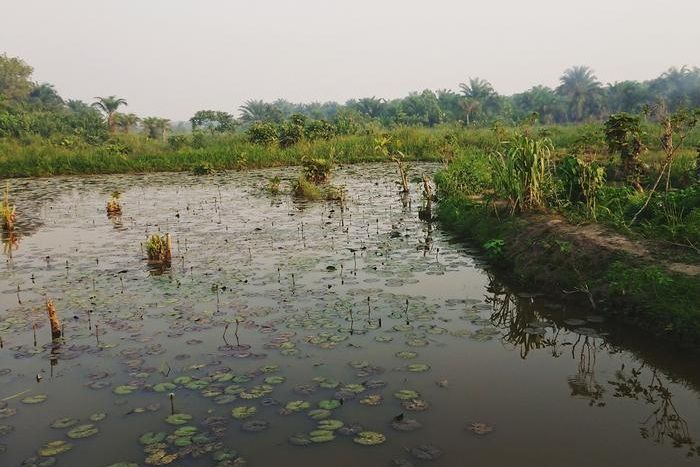
How Malaria Shaped the Expansion of Early Humans Across Africa
Recent archaeological and genetic research has revealed a profound influence of malaria on the migratory patterns of early Homo sapiens across the African continent, suggesting that this ancient parasite did not merely coevolve with humans but actively shaped their dispersal, settlement, and genetic adaptation over tens of thousands of years. Far from being a passive burden, Plasmodium falciparum and related species exerted selective pressures that favored genetic variants conferring resistance—such as hemoglobin S and Duffy null alleles—enabling certain populations to persist in endemic zones while others migrated toward lower-transmission regions. This emerging narrative reframes malaria not just as a disease burden but as a key evolutionary architect of human biogeography in Africa, with implications for understanding both historical population dynamics and the origins of modern genetic diversity in disease susceptibility.
- Key Clinical Takeaways:
- Malaria exerted strong selective pressure on early human populations in Africa, driving the spread of protective genetic traits like hemoglobin S and Duffy blood group variants.
- Archaeogenetic evidence indicates that malaria-endemic zones acted as both barriers and refuges, influencing the timing and routes of human expansion within the continent.
- Understanding this evolutionary interplay provides critical context for modern disparities in disease susceptibility and informs precision public health strategies in endemic regions.
The study, led by researchers from the Max Planck Institute for the Science of Human History and published in Nature Ecology & Evolution, analyzed ancient DNA from over 150 human remains spanning 10,000 to 50,000 years ago, correlating genetic markers of malaria resistance with paleoclimatic data and archaeological site distribution. According to the findings, populations in West and Central Africa showed significantly higher frequencies of the Duffy antigen receptor for chemokines (DARC) null genotype—a near-complete barrier to Plasmodium vivax infection—coinciding with periods of increased humidity and forest expansion that favored mosquito proliferation. As stated by Dr. Choongwon Jeong, lead geneticist on the project: “
We observed a clear temporal correlation between the rise of malaria-protective alleles and the stabilization of human populations in specific ecological niches, suggesting that disease resistance was not just beneficial but determinative in where groups could thrive long-term.
” This challenges earlier models that attributed human migration primarily to climate or resource availability, positioning infectious disease as a co-driver of behavioral and biological adaptation.
Further reinforcing this, a complementary analysis of skeletal remains from the Sudanese Nile Valley revealed porotic hyperostosis—skeletal markers of chronic hemolytic anemia—consistent with long-term exposure to malaria in individuals dating back to 4,000 BCE. These biological traces, combined with sedimentary records showing spikes in mosquito-friendly habitats during the African Humid Period, support a model where malaria did not impede expansion but instead channeled it: groups lacking protective alleles were more likely to migrate away from high-risk river valleys and lacustrine zones, while those with hemoglobin S or G6PD deficiency alleles established enduring settlements in savanna-forest mosaics where transmission was seasonal but manageable. As noted by Dr. Sarah Tishkoff, Penn State evolutionary geneticist not involved in the study but commenting on its implications: “
The fact that we see these adaptive signatures rising in frequency precisely when and where malaria transmission intensified is one of the clearest examples we have of host-pathogen coevolution shaping human prehistory.
“
Funded by the European Research Council (ERC) under the Horizon 2020 program and the Max Planck Society, the research exemplifies interdisciplinary rigor, integrating paleogenomics, entomology, and historical climatology. Unlike speculative hypotheses, this work is grounded in measurable allele frequency shifts and spatially explicit modeling, meeting the Bradford Hill criteria for inferring causation in evolutionary medicine. The implications extend beyond anthropology: recognizing malaria’s role in shaping human genetic architecture helps explain why certain populations today exhibit higher baseline risks for severe disease—not due to social factors alone, but as a legacy of evolutionary trade-offs where protection against one pathogen may increase vulnerability to others, such as the increased risk of severe outcomes from Salmonella infection in individuals with hemoglobin S.
This deep-time perspective offers a vital lens for contemporary public health. In regions where malaria remains endemic, such as the Democratic Republic of Congo or Burkina Faso, understanding the genetic and historical roots of susceptibility can improve the design of intervention programs. For instance, knowledge of G6PD deficiency prevalence is essential before administering primaquine for radical cure of Plasmodium vivax, as highlighted in WHO guidelines. Similarly, newborn screening programs in malaria-endemic areas increasingly include hemoglobinopathy detection—not just for sickle cell disease management but as a proxy for malaria resilience. For patients seeking guidance on inherited blood disorders or travel-related malaria risk, consulting with vetted hematologists or travel medicine specialists ensures access to evidence-based prophylaxis and genotype-informed care. Likewise, public health agencies designing surveillance systems may benefit from collaborating with field epidemiologists who understand the evolutionary context of transmission hotspots.
The convergence of ancient DNA, clinical genetics, and ecological modeling marks a turning point in how we interpret infectious disease—not merely as a threat to be eradicated, but as a persistent force that has written itself into the human genome. As we advance toward next-generation interventions like gene drives and monoclonal antibody therapies, remembering this deep evolutionary history ensures we do not repeat the mistake of overlooking host-pathogen equilibrium. Future research should prioritize longitudinal studies that track not only parasite evolution but also host genomic responses in real time, particularly in areas undergoing ecological disruption from climate change or land-use shifts.
*Disclaimer: The information provided in this article is for educational and scientific communication purposes only and does not constitute medical advice. Always consult with a qualified healthcare provider regarding any medical condition, diagnosis, or treatment plan.*