How Extreme Heat Threatens Italy’s Billion-Dollar Cheese Banks and Economy
<>
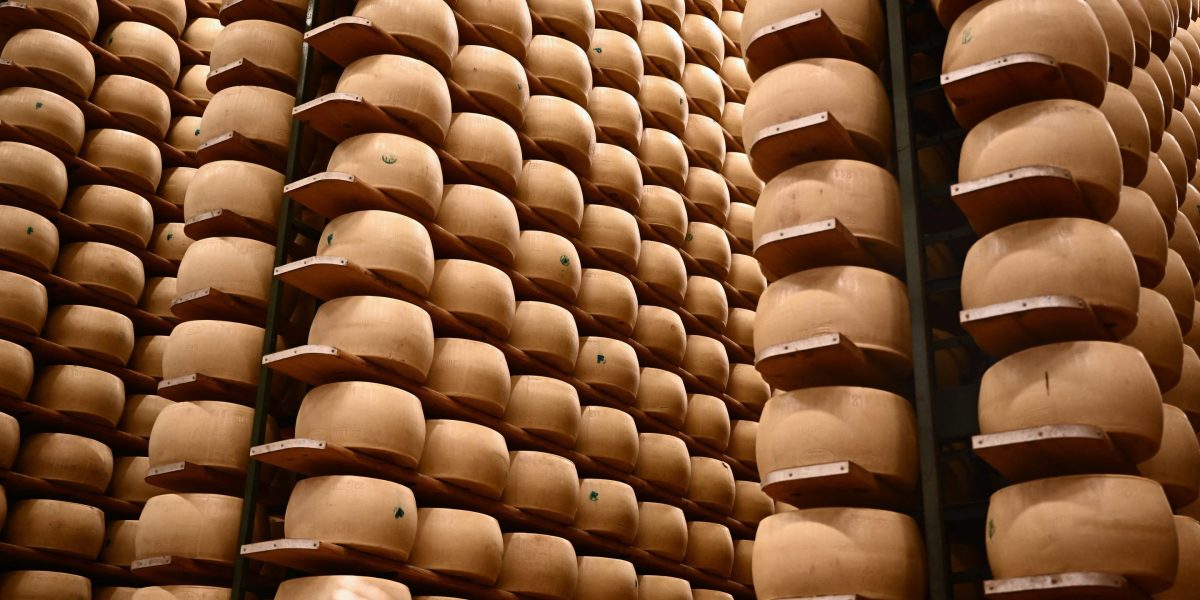
Italy’s $4.7 billion Parmigiano Reggiano industry is facing severe financial friction as record-breaking heat waves threaten the specialized cheese banks that hold hundreds of thousands of aged wheels as loan collateral. According to Credito Emiliano, known as Credem, extreme summer temperatures have driven up daily energy consumption by roughly 30 percent across its storage warehouses in Emilia-Romagna, forcing capital expenditures into cooling systems, heavy insulation, and expanded renewable power generation.
The Mechanics of Collateralized Cheese and Liquidity Pressures
Since 1953, Credem has accepted young wheels of Parmigiano Reggiano as tangible collateral for loans issued to local dairy farms. Producers typically receive 60 to 80 percent of a wheel’s market value upfront from the bank’s subsidiary, Magazzini Generali delle Tagliate, which ages the product across secure facilities in Reggio Emilia and Modena. Because authentic Parmigiano Reggiano requires a minimum of 12 months to mature—and frequently 24 to 36 months—small family operations cannot easily keep that much capital trapped in inventory without generating immediate cash.
Modern adoption of blockchain technology has transformed this traditional lending model. According to bank data, blockchain tracking now allows dairy producers to pledge wheels while keeping the inventory safely stored in their own approved facilities, effectively doubling Credem’s lending capacity across the region. Yet this financial architecture relies entirely on strict temperature and humidity controls. When heat waves hit the region, energy demands spike instantly, squeezing operational margins for both the financial institutions holding the assets and the dairies servicing their debt.
Upstream Climate Shocks and Downstream Valuation Impacts
The exposure runs far beyond bank vaults into the foundational supply chain of the agricultural sector. Sustained high temperatures cause dairy cattle to lie down more and eat less, which cuts annual milk production by up to 10 percent. Giancarlo Ravanetti, who oversees the bank’s cheese warehouse operations, told CNN that the facilities handle roughly 2.3 million wheels annually out of a national production pool of approximately 4 million wheels.
This heat-induced stress on milk output translates directly into higher production costs that ripple across local credit portfolios. R. Jisung Park, a labor economist at the Wharton School of the University of Pennsylvania and author of Slow Burn: The Hidden Costs of a Warming World, noted in an interview with Fortune that supply chain spillovers stemming from upstream heat ultimately trigger measurable downstream firm valuation impacts. According to Park, the economic toll of extreme weather tends to hide in indirect, delayed effects rather than registering all at once, leading corporations and financial institutions to chronically underprice climate risk.
While a European Central Bank working paper found that the immediate GDP hit from extreme heat is relatively contained in Mediterranean economies accustomed to high temperatures, indirect credit shocks remain difficult to predict. When a dairy herd experiences heat stress in the spring, the financial impact materializes as a liquidity and cost problem for lenders months later.
Broader Agricultural Pressures Across Italian Markets
The climate strain extends well beyond dairy into Italy’s wine and olive oil sectors, tightening liquidity for agricultural borrowers. In Lombardy’s Franciacorta sparkling-wine region, the 2026 harvest commenced on July 30, marking the earliest start on record following an accelerated budbreak. Meanwhile, Sicily’s grape harvest has stretched into an extended picking season as growers rush to time each variety ahead of the blistering heat.
According to Coldiretti, Italy’s largest farmers’ association, the 2026 agricultural calendar ranks among the earliest nationally due to persistent drought and elevated temperatures. These conditions force sugar accumulation in grapes before flavors can fully mature, dealing a severe blow to late-ripening reds like the Nebbiolo grape used to produce Barolo. Compounding these pressures, regional producers face rising operational burdens; Coldiretti reported that geopolitical conflict in Iran has added roughly 250 euros per hectare in energy, fertilizer, and material costs this year, dragging export values down by 7 percent in the first four months of 2026.
Olive groves have absorbed even sharper losses. Puglia and Calabria, the nation’s primary olive oil-producing regions, watched national production fall well below the historical average of 350,000 tons, landing between 270,000 and 300,000 tons for the 2025/26 season. In prior drought cycles, regional output in Puglia has plummeted by more than half in a single year, disrupting cash flows for independent growers.
Historical Parallels in Agricultural Surpluses
The reliance on stored agricultural commodities to stabilize farm income has deep historical precedents. During the Great Depression, collapsing milk prices prompted U.S. dairy farmers to dump products into the streets. President Franklin D. Roosevelt’s New Deal administration countered by establishing the Commodity Credit Corporation in 1933 to acquire surplus butter, cheese, and dried milk.
This federal intervention evolved into vast underground storage networks in Missouri, Kansas, and Wisconsin, holding hundreds of millions of pounds of surplus dairy by the early 1980s. Italy’s private cheese banking model solves a similar liquidity challenge through commercial credit rather than government intervention, relying on the intrinsic, aging value of Parmigiano Reggiano to secure private capital.