
How East Asia Is Battling Extreme Heat With Personal Cooling Gadgets
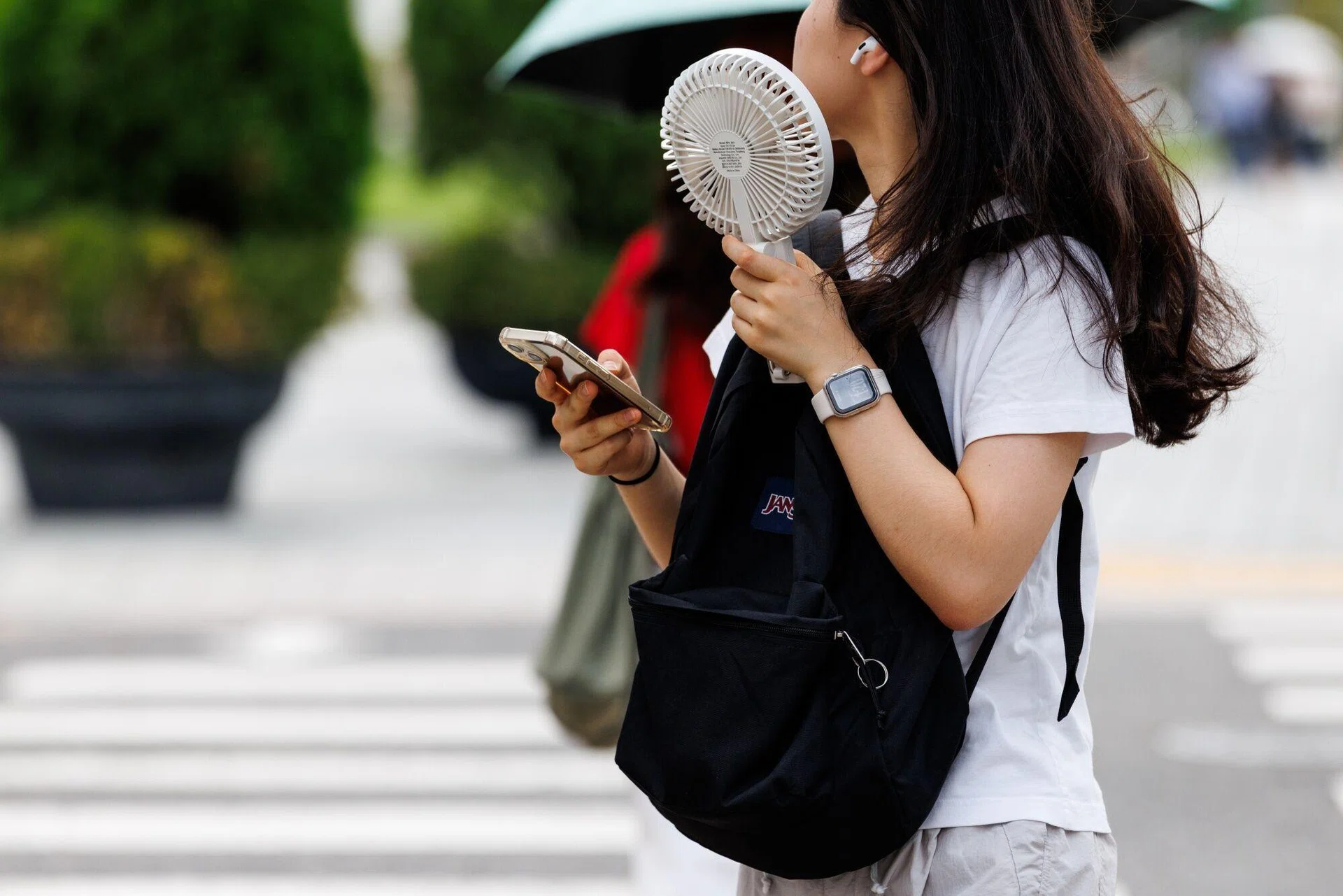
As summer temperatures climb across East Asia, consumers and enterprise organizations are turning to high-tech personal cooling devices, ranging from semiconductor-powered handheld fans to air-conditioned apparel, according to reporting from The Business Times. Driven by longer and hotter summer seasons—exemplified by South Korea’s cancelled baseball games and Japan’s newly coined meteorological term kokushobi, or “cruel heat day”—the market for portable thermal mitigation tools has expanded rapidly. E-commerce platform Rakuten reports that Japan’s online market for heat countermeasure products has expanded more than sixfold since 2020, listing roughly 800,000 items in the category.
The Tech TL;DR:
- Hardware Evolution: Personal cooling has shifted from basic handheld fans to advanced semiconductor-cooled plates and motor-driven apparel, backed by cheaper and more effective battery systems.
- Industrial Deployment: Municipalities and major firms are integrating cooling gear—such as vortex-tube greenhouse vests and air-con jackets—into operational safety protocols for frontline workers.
- Market Expansion: E-commerce listings for heat countermeasures on platforms like Rakuten have scaled more than sixfold since 2020, tracking with structural rises in ambient summer temperatures across East Asia.
Semiconductors and Air-Con Jackets: Under the Hood of Modern Personal Cooling
The engineering behind these deployment-ready gadgets relies on electrical currents and miniaturized motors. According to The Business Times, handheld fans now utilize small metal plates running on the same science as semiconductors, using electrical currents to generate a chill. Eimi Nakayama, a 20-year-old university student interviewed in Tokyo, described the sensation as comparable to holding a cold drink against the neck.
This hardware iteration builds upon foundational designs pioneered in 2004 by Hiroshi Ichigaya, a former Sony electrical engineer who invented the fan-cooled jacket. Modern iterations have scaled far beyond simple cloth and fans. In Hubei province, China, the state-owned power company has equipped workers with waist-mounted mini fans, while delivery platform Meituan has piloted air-con jackets for couriers in Chongqing. In agricultural sectors, researchers like Kim In-soo at South Korea’s National Institute of Agricultural Sciences have designed specialized vests utilizing “vortex tube” technology. Hooked to a compressor, these units shoot cold, dry air into thin distribution tubes perforated across the garment to cool greenhouse workers handling time-sensitive harvests.
Enterprise Logistics and IT Infrastructure Triage for Extreme Heat
As thermal stress impacts human capital on farms, delivery routes, and municipal cleaning shifts, employers treat personal cooling as a necessity rather than a luxury. Lee Joo-young, an expert in the relationship between clothing and thermal environments at Seoul National University, notes that the accessibility of these products stems directly from falling costs for motors and batteries, which have become cheaper and more effective.
Implementation Benchmarks and Deployment Architecture
Deploying personal thermal hardware at scale requires careful evaluation of power delivery and battery endurance.
{
  "device_class": "wearable_cooling_node",
  "hardware_spec": {
    "cooling_mechanism": "thermoelectric_peltier_plate",
    "airflow_cfm": 14.5,
    "nominal_voltage": 5.0,
    "battery_capacity_mah": 10000
  },
  "telemetry_metrics": {
    "max_draw_amps": 2.1,
    "thermal_plate_delta_c": -12.0,
    "continuous_runtime_hours": 4.5
  }
}
According to The Business Times, startups and consumer brands are capitalizing on this demand curve with items priced around US$35, such as Seo Hye-young’s online cooling neck bands. Governments are also stepping in; Japan’s Ministry of the Environment and the Tokyo metropolitan government actively promote parasols to mitigate heat stress, while South Korean municipalities issue neon cooling vests to street cleaning crews.
Operational Outlook
The transition from passive consumer comfort items to mandated enterprise safety hardware signals a structural shift in how densely populated East Asian urban centers manage climate anomalies.
Disclaimer: The technical analyses and security protocols detailed in this article are for informational purposes only. Always consult with certified IT and cybersecurity professionals before altering enterprise networks or handling sensitive data.