
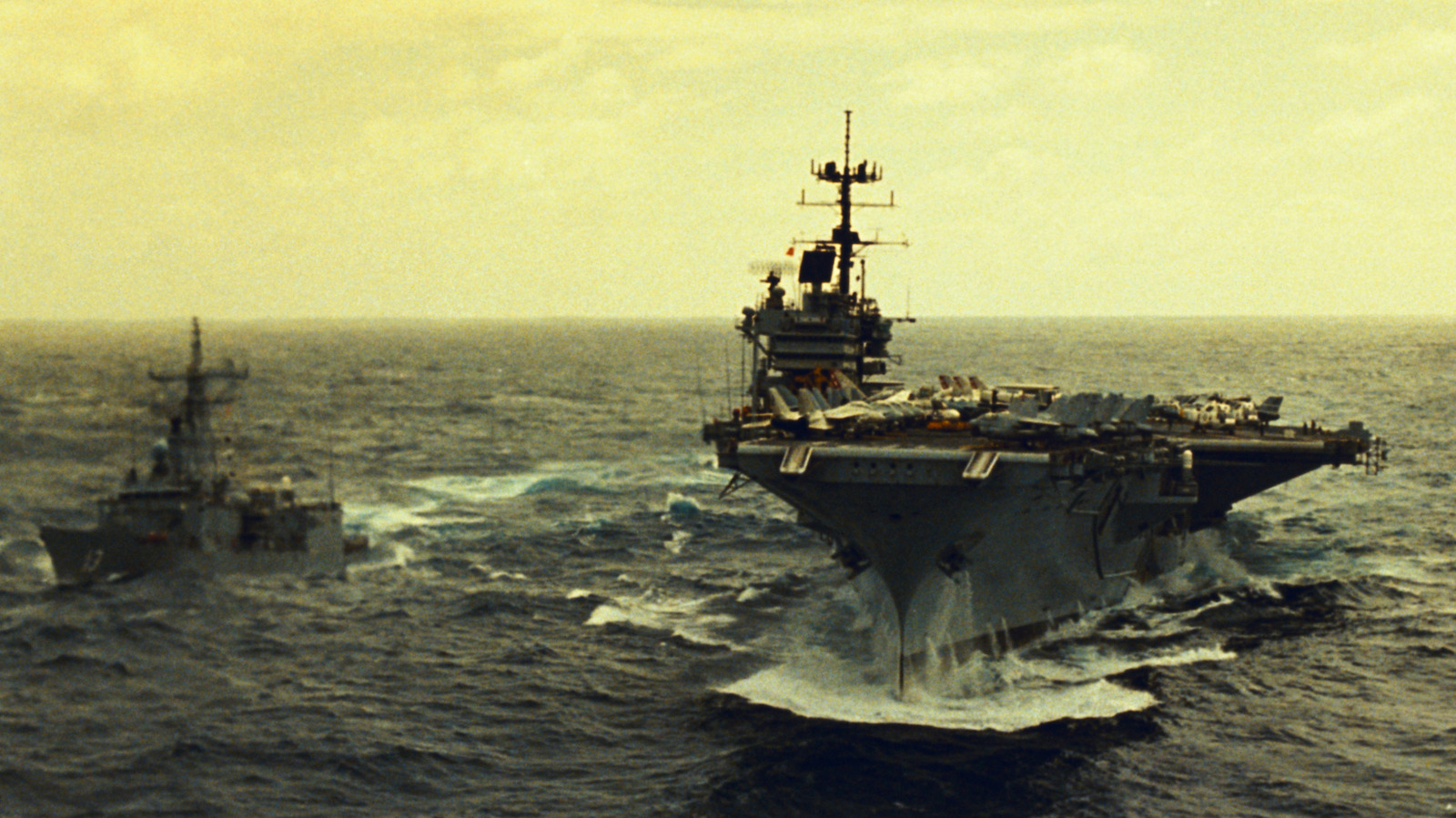
The U.S. Navy faces a perennial challenge: protecting its multi-billion dollar aircraft carriers and the aircraft they carry from the unpredictable force of severe weather. While modern technology offers significant advantages over past eras, the threat remains a constant concern as carriers operate in oceans around the globe.
Historical records demonstrate the vulnerability of naval fleets to storms. During World War II, Typhoon Cobra devastated Admiral Halsey’s Task Force 38 in the Philippines, damaging or destroying nearly 150 aircraft and causing the deaths of hundreds of sailors. More recently, in 1988, a Midway-class carrier survived a dramatic 26-degree roll during a typhoon in the Sea of Japan. These events underscore the potential for catastrophic loss.
Today, the Navy relies on a multi-layered approach to mitigate these risks. The process begins with detailed weather forecasting. Aerographers, both ashore and aboard the carriers, continuously monitor weather and ocean patterns, providing accurate forecasts to the ship’s bridge. When feasible, courses are altered to avoid the most severe storms. Though, operational requirements, particularly during periods of conflict, may preclude evasive maneuvers.
Preparation for a storm involves specific plans tailored to its predicted intensity and wave height. Aircraft on the flight deck are moved from launch positions toward the center of the deck, where motion is minimized. Each aircraft is then secured with heavy-duty chains and wheel chocks to prevent rolling. Additional aircraft are moved into the hangar bay, which is then sealed with watertight doors to protect against the elements.
Once secured, the carrier employs a range of navigational techniques to navigate the storm. The navigation team and helmsmen adjust the ship’s heading, typically angling it into the waves. Speed is carefully managed, and ballast tanks and stabilizers are utilized to maintain stability and minimize rolling. These techniques are standard practice for large vessels at sea, but are particularly critical for aircraft carriers given the value and complexity of their air wings.
Despite these precautions, incidents involving damage to carrier aircraft do occur. However, recent events, such as the loss of two American jets from aircraft carriers in 2025, were attributed to equipment failures and a lack of warning during evasive maneuvers, rather than directly to heavy seas.
