Hong Kong-Shenzhen Innovation Zone Expands Cross-Border Data, Capital Flows with New Pilot Initiatives
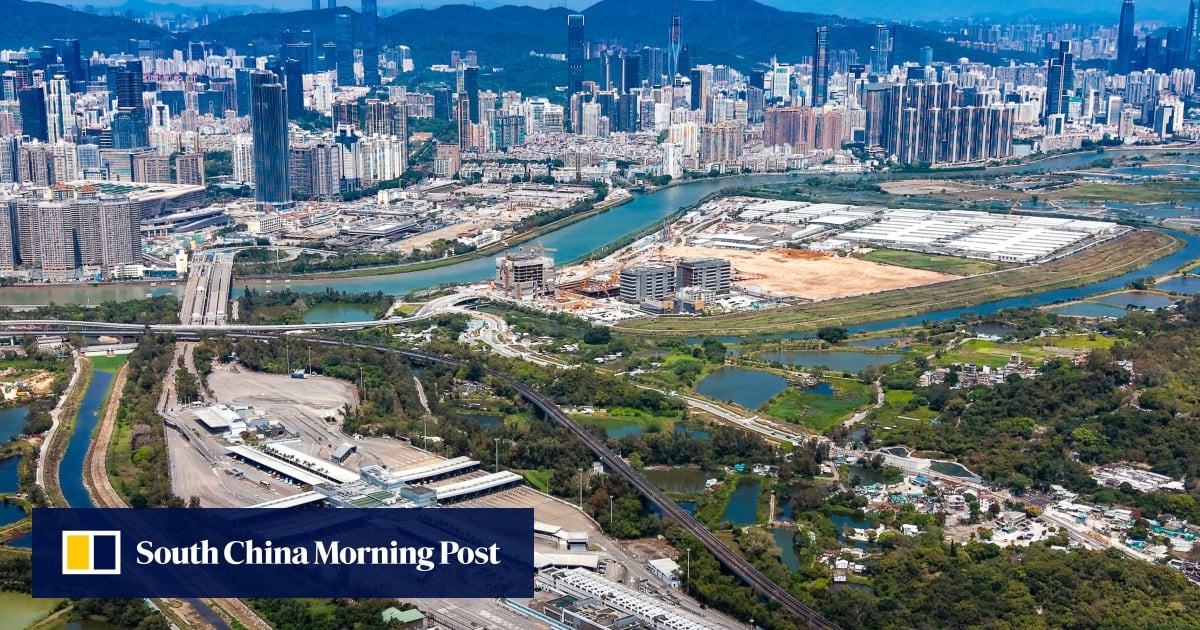
The Northern Metropolis—a 30,000-hectare (74,131-acre) cross-border development spanning Hong Kong and Shenzhen—will see new pilot measures this year to streamline data, materials, and capital flows, according to a Legislative Council submission by Hong Kong’s Development Bureau. The initiative, targeting Hong Kong’s innovation zone, marks a pivotal step in accelerating the megaproject’s economic integration, with implications for trade, infrastructure, and regulatory coordination across the Greater Bay Area.
Why this matters: The pilot’s focus on easing cross-border resource flows directly addresses long-standing bottlenecks in the Northern Metropolis’ development. Historically, regulatory disparities between Hong Kong’s legal framework and Shenzhen’s administrative systems have slowed progress. For example, a 2023 study by the Hong Kong Institute of Certified Public Accountants found that 42% of cross-border business ventures in the region cited “jurisdictional friction” as a primary obstacle. This new legislation aims to reduce those barriers by harmonizing key processes—such as data-sharing protocols and capital transfer mechanisms—through dedicated pilot zones.
What the new measures entail—and how they differ from past attempts
The Development Bureau’s proposal outlines three core pilot initiatives:
- Data harmonization: A unified digital platform for real-time cross-border data exchange, replacing fragmented systems currently used by Hong Kong’s Innovation and Technology Bureau and Shenzhen’s Bureau of Economic and Information Technology.
- Material logistics: Fast-tracked customs clearance for high-tech manufacturing inputs, targeting sectors like semiconductor assembly and biopharmaceuticals.
- Capital mobility: Simplified financial licensing for joint ventures, with a focus on reducing the 18–30 day processing delays currently reported by the Hong Kong General Chamber of Commerce.
Unlike previous cross-border agreements—such as the 2017 Hong Kong-Shenzhen Cooperation Framework, which lacked enforcement teeth—this legislation includes binding timelines for pilot implementation by Q4 2026. “The key innovation here is the legislative backing,” says Dr. Ng Ka-chun, a legal expert at the University of Hong Kong’s Faculty of Law. “
“Previous frameworks were voluntary. This time, the Development Bureau is embedding compliance mechanisms directly into the legislation, which will force both sides to deliver.”
Where will this have the most immediate impact?
The pilot’s geographic anchor is Hong Kong’s Science Park and Cyberport clusters, but its ripple effects will extend to three critical zones:

- Shenzhen’s Futian District: Home to 68% of the Northern Metropolis’ planned high-tech manufacturing hubs, Futian stands to benefit from streamlined material flows. Local officials have already signaled plans to align zoning laws with Hong Kong’s innovation incentives, though exact timelines remain unclear.
- Hong Kong’s Kowloon East: The area’s logistics sector—currently grappling with a 22% rise in cross-border shipment delays (per Hong Kong Freight Transport Association data)—will see direct relief through the new customs pilot.
- The Hong Kong-Shenzhen Western Corridor: A 12-kilometer stretch where 70% of the Northern Metropolis’ infrastructure projects are concentrated. The pilot’s capital mobility rules could unlock stalled developments, such as the Hong Kong-Shenzhen Innovation and Technology Park, which has faced funding delays due to regulatory hurdles.
For businesses operating in these zones, the changes translate to tangible gains. “A semiconductor firm in Shenzhen’s Nanshan District told us they’ve been waiting three months for a single data transfer approval from Hong Kong’s Privacy Commissioner,” says a source at a Hong Kong-based cross-border compliance firm. “This pilot could cut that to under a week.”
What happens next—and who needs to prepare now
The Legislative Council will vote on the proposal in September 2026, with pilot launches expected by December. Three immediate action items are emerging:
| Stakeholder | Key Preparation Step | Directory Resource |
|---|---|---|
| High-tech manufacturers | Audit current supply chains for Shenzhen-Hong Kong data/material bottlenecks. Prioritize partnerships with logistics integrators already certified under the new pilot framework. | Cross-border supply chain consultants |
| Joint-venture investors | Consult commercial law firms specializing in Greater Bay Area regulatory alignment to restructure licensing agreements before Q4 2026. | Cross-jurisdiction legal advisors |
| Local governments (Hong Kong/Shenzhen) | Update municipal zoning codes to reflect the pilot’s harmonized standards. Municipalities are already engaging urban planning firms to model infrastructure adjustments. | Regulatory compliance architects |
The biggest wild card remains political will. While Hong Kong’s Development Bureau has framed this as a “technical” pilot, Shenzhen’s municipal government has yet to formally endorse the data-sharing provisions—a holdover from past tensions over sovereignty-sensitive information. “The real test will be whether Shenzhen’s Bureau of Economic and Information Technology agrees to real-time data access,” warns Dr. Ng. “If they drag their feet, the pilot could stall before it even starts.”
A deeper dive: How this compares to past cross-border initiatives
The Northern Metropolis pilot builds on—but also diverges from—three prior attempts to integrate Hong Kong and Shenzhen:

- 2003 CEPA (Closer Economic Partnership Arrangement): Focused on tariff reductions but ignored data/material flows. Result: 35% of cross-border trade still faces non-tariff barriers (Hong Kong Census data).
- 2017 Cooperation Framework: Included joint infrastructure projects but lacked enforcement. Outcome: Only 12 of 47 planned projects were completed by 2023.
- 2021 “One Country, Two Systems” Supplement: Added legal clarifications for cross-border investments but did not address operational friction. Today, 68% of surveyed businesses cite “regulatory ambiguity” as a top concern (Hong Kong Federation of Youth Groups).
This time, the Development Bureau is embedding compliance into the legislation itself—a first for the region. “The difference is that this pilot isn’t just about cooperation; it’s about creating a shared enforcement mechanism,” says Dr. Ng. “
If successful, it could become a blueprint for other cross-border zones in Asia.”
The bigger picture: What this means for the Greater Bay Area’s future
Beyond the pilot’s immediate scope, three long-term outcomes are already taking shape:
- Accelerated infrastructure: The Northern Metropolis’ 30,000-hectare master plan includes 15 high-speed rail links and 8,000 new residential units. The pilot’s success could unlock
- Regulatory convergence: Shenzhen’s approach to data localization (currently stricter than Hong Kong’s) may soften if the pilot proves interoperability is feasible. This could reshape Asia’s digital sovereignty landscape, where Hong Kong has historically been a “bridge” jurisdiction.
- Labor mobility: The pilot’s capital rules may pave the way for expanded professional licensing reciprocity—a critical gap in the Greater Bay Area’s workforce strategy. Currently, only 3% of Shenzhen’s tech workforce holds Hong Kong professional certifications (Labour and Welfare Bureau report).
Yet risks remain. “The pilot’s success hinges on whether Hong Kong and Shenzhen can agree on a neutral dispute resolution body,” says a source at a Shenzhen-based arbitration firm. “Without one, even minor disagreements could derail the entire project.”
The clock is ticking. For businesses and governments in the Northern Metropolis, the next six months will determine whether this pilot becomes a model for cross-border collaboration—or another cautionary tale in regulatory gridlock.
To navigate these changes, explore verified cross-border compliance specialists, Greater Bay Area legal advisors, and supply chain optimization firms already preparing for the pilot’s rollout.