
Honey Scare Debunked: Authorities Assure Quality and Safety
Cairo – May 16, 2024 – Recent concerns about honey quality in local markets have been addressed by egyptian authorities, dispelling online claims of adulteration. The National Food Safety Authority (NFSA) has responded to social media reports, stemming from alleged testing of samples, emphasizing their commitment to consumer safety and upholding stringent standards.Analysis revealed the initial claims to be scientifically unsound, backed by regulatory authorities and quality-control expertise that ensure the accuracy of all products. Further investigation is needed.
Honey Scare Debunked: Authorities Assure Quality and Safety
Social Media Buzz and Official Response
Recent social media claims alleging the presence of adulterated bee honey in local markets have prompted a swift response from authorities. The government is emphasizing its commitment to ensuring the health and safety of its citizens by maintaining stringent quality controls on all food products available in the Egyptian market.
National food Safety Authority Weighs In
The National Food Safety Authority (NFSA) addressed the allegations, stating that the individual who initially raised concerns did not adhere to proper scientific methodology. according to the NFSA,the samples were mishandled,compromising the integrity of the analysis.
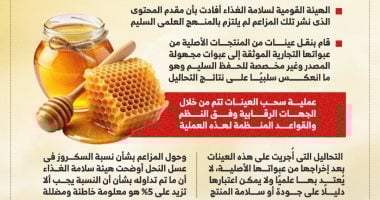
The content provider who published these allegations did not adhere to the proper scientific approach, as he transferred samples from the original products from its documented commercial packages to unknown source packages and not dedicated to proper preservation, which was negatively reflected on the results of the analyzes.
The NFSA clarified that official sample collection follows strict protocols to ensure accurate and reliable results. Analyses conducted on samples that have been removed from their original packaging are considered scientifically unsound and cannot be used as evidence of product quality or safety.
The process of withdrawing samples is carried out through the regulatory authorities, according to the regulations and rules regulating this process, and that the analyzes that were conducted on these samples, after removing them from their original packages, are not scientifically used and cannot be considered evidence of the quality or safety of the product, which is confirmed by the criteria used in the approved food analysis laboratories.
Addressing Sucrose Percentage concerns
The NFSA also addressed concerns regarding the percentage of sucrose in honey, clarifying that claims suggesting a maximum limit of 5% are inaccurate and misleading.
What was circulated about that the percentage should not exceed 5 % is wrong and misleading.
According to Egyptian Standard No. (355-1/2005) and the Codex alimentarius Commission (CXS 12-1981/2022), the acceptable range for sucrose in normal honey is between 5% and 15%, depending on the type of honey and its floral source.
Advanced Analysis and Authenticity
Determining “actual fraud” in honey requires advanced analytical techniques, such as carbon isotope analysis (C13) and analysis of the types and proportions of added sugars.The NFSA emphasized the importance of maintaining a clear chain of custody and proper documentation to ensure the scientific and supervisory credibility of the analysis.
The disclosure of the presence of “actual fraud” in honey also requires conducting other advanced analyzes, such as: carbon analogs analysis (C13), analysis of the type and proportions of sugars added to honey, and that the blurring of the history of production, and the expiration of the authority and the operation number on the analyzes, which the samples are lost, scientific and supervisory credibility, as the approved analyzes are required to take place on documented samples and well -known samples To ensure accuracy of the results.
Ongoing Monitoring and Consumer Advice
The NFSA conducts regular inspections of honey production facilities and products in the local market,as well as imported honey products,to ensure compliance with Egyptian standards and product safety.
The honey production factories and products circulated in the local market, as well as imported honey products, are subject to periodic examination, by the National Food Safety Authority, to ensure their conformity with the Egyptian standard specifications, and to ensure the safety of products before offering consumers.
citizens are urged to verify the accuracy of information and avoid spreading unsubstantiated claims. It is indeed crucial to purchase honey products from reputable sources with clear and consistent labeling.
We call on the citizens to investigate the accuracy, and not to be drawn into unrelated information, while emphasizing the importance of buying honey products from well -known and reliable sources that carry clear and identical data.
For inquiries or complaints, contact the official channels approved by the National Food safety Authority.
In the event of inquiries or complaints, please contact the official channels approved by the National Food Safety Authority.
