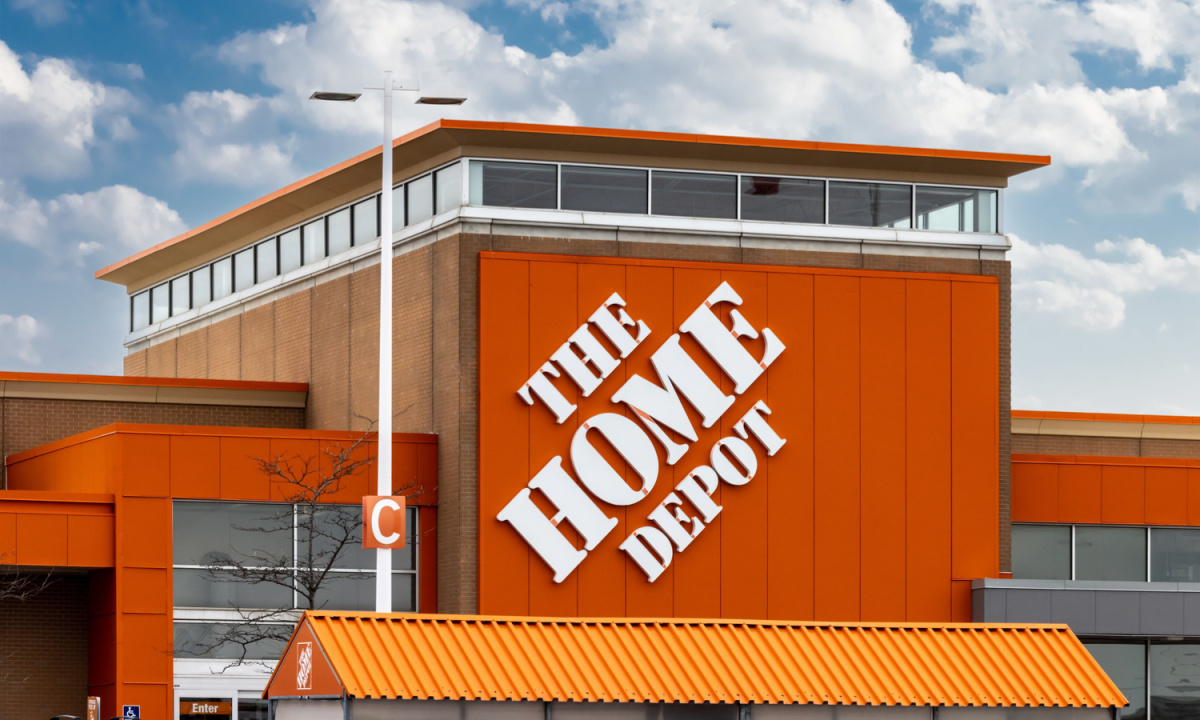
Home Depot and Lowe’s Pivot to Pro Customers Amid Housing Market Freeze
Home Depot reported second-quarter sales of $47.86 billion on Aug. 18, rising 5.7% year-over-year while comparable sales ticked up 1.7%. The figures highlight how elevated mortgage rates are reshaping the roughly $1 trillion U.S. home-improvement economy, forcing retailers to pivot hard toward the professional contractor market as discretionary DIY spending stalls.
High mortgage rates have frozen housing market activity across the United States. Homeowners with low legacy loan rates refuse to sell, eliminating the moving-triggered spending that historically fueled massive kitchen overhauls and flooring replacements. Discretionary demand is sputtering.
Yet America’s housing stock continues to age. Water heaters fail and commercial jobs require immediate attention. Maintenance demands that cannot be deferred have become the primary battleground for big-box retailers.
Home Depot CFO Richard McPhail characterized current conditions as frozen. That freeze has crystallized a distinct bifurcation in consumer behavior. Smaller, essential projects grew during the quarter, while larger discretionary renovations dropped.
Professional contractors insulate retailers from this slowdown because their workflow relies on recurring maintenance, repairs, and projects already under contract. Capturing that business requires infrastructure that standard retail stores cannot easily provide.
Home Depot spent years engineering its supply chain for this exact demographic. The company absorbed SRS Distribution in 2024 for approximately $18 billion, scaling up its complex-project capabilities, job-site delivery networks, and trade credit offerings.

Professional customer metrics outperformed DIY segments during the second quarter. Transactions exceeding $1,000 climbed 2.4%, proving that commercial-grade demand remains resilient even as consumer wallets tighten against macroeconomic headwinds.
Lowe’s faced a different reality when it reported second-quarter earnings on Aug. 19. The company posted $25.96 billion in sales, marking an 8% increase that still missed expectations. Comparable sales inched up just 0.2%.
Adjusted earnings per share reached $4.40, beating forecasts largely due to tariff refunds. Weakness among discretionary retail shoppers forced Lowe’s management to adjust its full-year outlook to the bottom of its prior range, targeting approximately $92 billion in sales and $12.25 in adjusted EPS.

Lowe’s has pursued its own professional strategy under its Total Home framework, driving online sales up nearly 16% and posting its fifth consecutive quarter of positive comparable sales. But retail headwinds remain stubborn.
Intense promotional activity during July illustrated the risks of relying on the discretionary consumer. Competitors utilized tariff refunds to finance aggressive seasonal discounting. Lowe’s resisted matching those price cuts, which contributed to a 1.2% comparable-sales drop for the month.
The divergence between Home Depot and Lowe’s confirms that the American home-improvement sector no longer relies on fluid housing turnover. Retailers must capture the unglamorous, unavoidable work of fixing existing houses. Companies that successfully court professional contractors will own the maintenance economy, while those tied to discretionary remodels navigate a prolonged demand drought.