
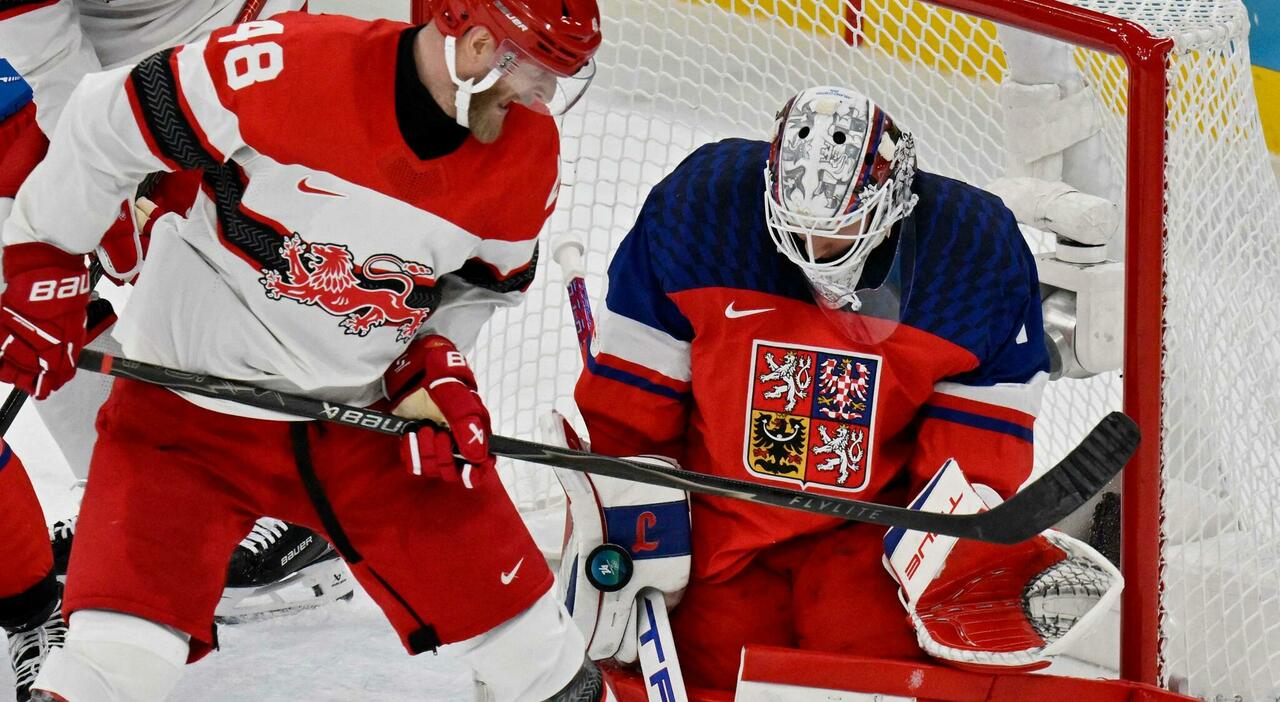
A flurry of gloves and a brief but intense fight between Canada’s Luke Wilson and France’s Antoine Crinon punctuated Canada’s 5-1 victory over France in their final game of the Olympic men’s hockey group stage on Tuesday. The incident, which resulted in both players being ejected from the game, has reignited debate over the role of fighting in the sport, particularly within the context of the Olympic Games.
While fighting is a recognized, though controversial, element of North American professional hockey – specifically the National Hockey League (NHL) – it is explicitly prohibited by the International Ice Hockey Federation (IIHF) rules governing play at the Olympic Winter Games. Article 46 of the IIHF regulations states plainly: “Fighting is not part of the DNA of ice hockey,” resulting in immediate game misconduct penalties for those involved, as was the case with Wilson and Crinon.
The contrast between the NHL’s tolerance of fighting and the IIHF’s zero-tolerance policy highlights a fundamental difference in hockey culture. In the NHL, a largely unwritten code governs physical confrontations, often involving designated “enforcers” whose role is to protect teammates and respond to perceived slights. These altercations typically follow a specific protocol: sticks are dropped, gloves are removed, and combatants engage in bare-handed fighting, with referees intervening once a player falls. A five-minute penalty is then assessed. This system, proponents argue, can paradoxically deter more dangerous infractions like high-sticking or headshots.
However, the NHL has been steadily reducing the frequency of fighting in recent years, driven by growing concerns about concussions and the long-term neurological consequences of head trauma, including chronic traumatic encephalopathy (CTE). Despite this trend, the practice remains ingrained in the league’s identity.
The Olympic Games, however, operate under a different set of priorities. Beyond athletic competition, the Games are intended to project a specific image of international cooperation and sportsmanship. The IIHF’s strict enforcement of its anti-fighting rule reflects a desire to avoid portraying violence as an acceptable part of the Olympic spectacle. The Games, officials believe, should emphasize skill, strategy, and athletic achievement, not physical confrontation.
The incident between Wilson and Crinon is not isolated. Hockey, by its nature as a full-contact sport, frequently treads a fine line between aggressive competition and outright fighting. Similar tensions exist in other sports, such as rugby, where scrums can escalate into physical altercations, and basketball, which has seen its share of on-court brawls. However, these sports also have clear rules and penalties for violent conduct.
The core distinction, as highlighted by the Canadian incident, lies in whether violence is considered an inherent, albeit regulated, part of the game or a violation of its fundamental principles. While the NHL has historically tolerated fighting as a means of self-regulation, the Olympic Games prioritize a message of non-violence and sportsmanship. The question remains whether the spectacle of fighting, which can attract audiences and generate media attention, outweighs the ethical considerations of representing a nation on the international stage.
Following the game, neither the IIHF nor Team Canada offered further comment on the incident. The focus now shifts to the playoff rounds, where the stakes are higher and the pressure to perform is even greater, leaving open the possibility of further confrontations and continued scrutiny of the role of physicality in Olympic hockey.
