
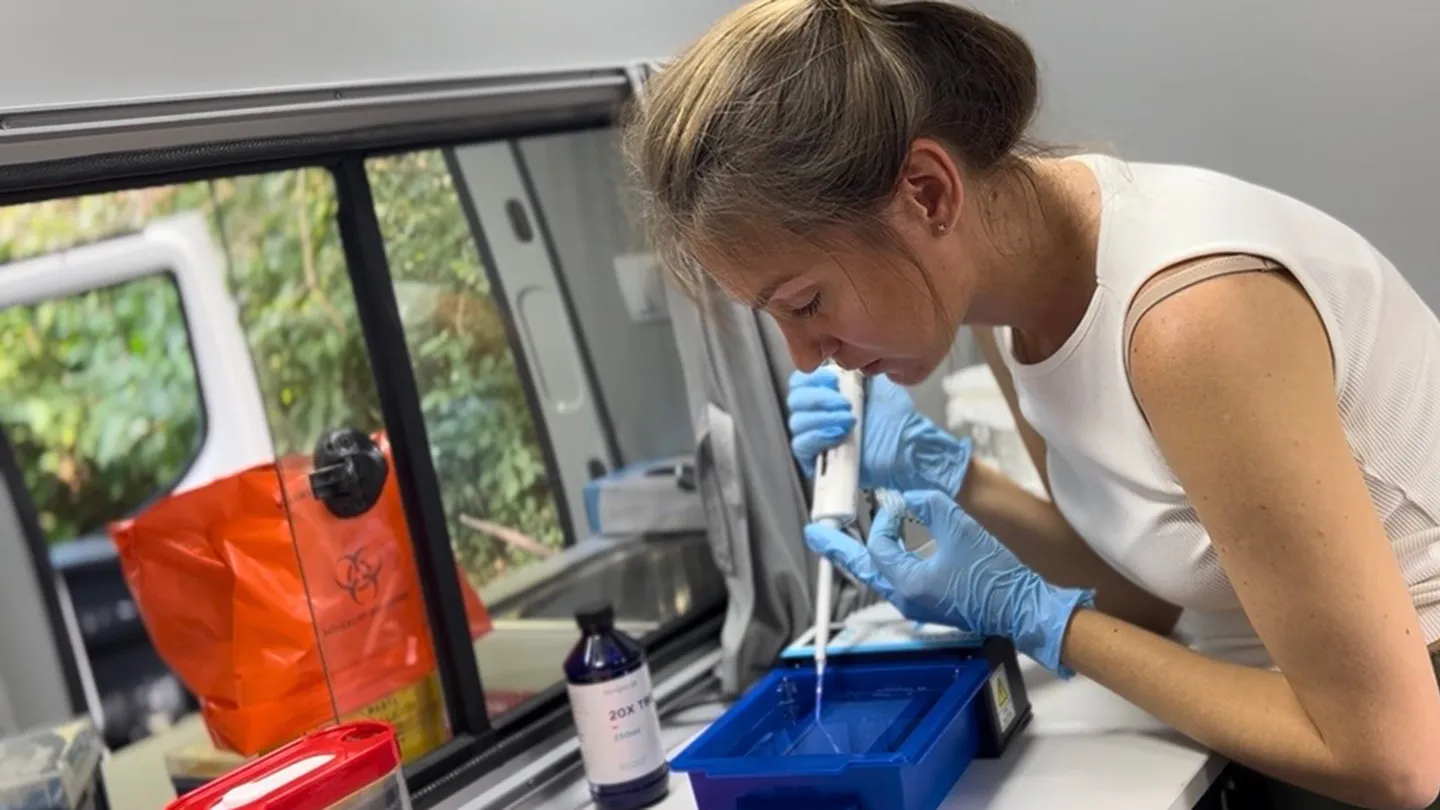
A mobile laboratory is now tracking the spread of HIV and emerging drug resistance in Ukraine, as the country’s healthcare system struggles under the strain of ongoing war. The lab, equipped for genomic sequencing, is operated by a team led by virologist Ganna Kovalenko of the University of California, Irvine, and aims to reach populations cut off from traditional testing and treatment.
The Russian invasion, beginning with the annexation of Crimea in 2014 and escalating significantly in 2022, has severely disrupted healthcare access across Ukraine. Prior to the full-scale invasion, HIV spread primarily through intravenous drug use and sexual activity, according to Kovalenko. The conflict has exacerbated the problem by limiting access to testing, treatment, and preventative measures like needle exchange programs.
Even when testing is available, routine sequencing of viral genomes to detect drug-resistant mutations has been limited, as such analysis typically requires stationary laboratory facilities often far from areas of active conflict. The ARTIC network, which aims to bring sequencing tools to remote locations – previously demonstrated during the 2014 Ebola outbreak in West Africa – provided the framework for Kovalenko’s project.
Kovalenko and her team launched a test run of the mobile lab in August 2024, operating out of Lviv, a city in western Ukraine that has become a hub for internally displaced people. “We worked during the daytime. Most missile attacks happened at night,” Kovalenko said. Healthcare workers in the region described having to abandon equipment and interrupt patient care during attacks.
Casper Rokx, an HIV specialist at Erasmus MC in Rotterdam, Netherlands, who previously established stationary clinics in Lviv from 2023 to 2025, emphasized the limitations of fixed facilities. “We didn’t reach the hard-to-reach populations, at least not as effectively as we wanted that to be,” he said. “Vans can just drive to where people are.”
During the initial three-day test run, the team analyzed blood samples from 20 HIV-positive individuals. The analysis revealed the emergence of a new HIV strain among displaced people in Lviv following the expanded war, a finding published in the journal AIDS. Researchers estimate, based on the virus’s mutation rate, that the strain emerged after February 2022.
The team also identified a mutation conferring resistance to a non-nucleoside reverse transcriptase inhibitor (NNRTI), a backup antiretroviral drug. This discovery raises concerns about the potential for further resistance mutations to develop against first-line treatments, a problem already observed in other regions, such as South Africa, according to Rokx.
Kovalenko’s team intends to expand the mobile lab’s capabilities to address other urgent health threats. She highlighted the growing problem of antimicrobial resistance, particularly among soldiers with infected wounds, and the potential for sequencing bacterial genomes to guide antibiotic prescriptions. Tuberculosis, another increasing concern in Ukraine, and the prevalence of multi-drug resistant strains, is also a potential focus for the mobile lab.
Rokx stated, “I think what they nicely did was bring deep sequencing and advanced laboratory technique to a population in need.”
