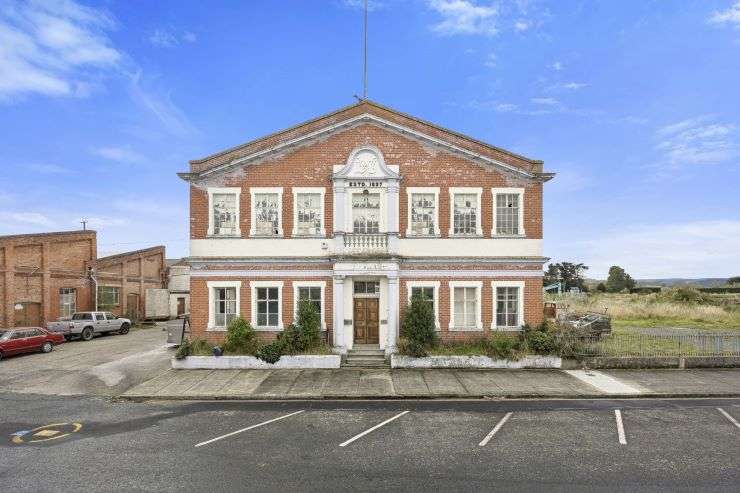
Historic Building for Sale As Is After Illegal Demolition Halted
Ezra Eini is selling the 8.7-hectare Bruce Woollen Mill site in Milton, Clutha, “as is where is” after Heritage New Zealand halted the demolition of 19th-century buildings. The property, which earns $185,000 in annual rent, faced redevelopment stalls and a $52,000 environmental fine in 2024.
This is a textbook case of a deadlock asset. When the vision for commercial redevelopment hits the brick wall of heritage preservation, the resulting friction doesn’t just stall construction—it erodes the internal rate of return (IRR) and transforms a strategic acquisition into a liability. The Bruce Woollen Mill, once the industrial heart of the region and the birthplace of the Swanndri brand, now represents the precarious balance between historic preservation and modern capital expenditure.
For investors, the problem is no longer about the physical structure but the regulatory environment. Unlocking the value of such a site requires more than just capital; it requires a sophisticated navigation of zoning laws and conservation mandates. This is where the gap between a failed redevelopment and a successful pivot opens, often requiring the intervention of specialized commercial real estate attorneys to negotiate easements and preservation agreements that satisfy both the state and the balance sheet.
The Economics of the Bruce Woollen Mill Deadlock
Ezra Eini acquired the iconic site in 2012, roughly a year after the facility ceased operations as a woollen mill in 2011. On paper, the 8.7-hectare footprint offered significant scalability. However, the financial reality of the site is currently anchored by a modest yield. The property generates approximately $185,000 per annum from multiple tenants—a steady cash flow, but one that likely pales in comparison to the projected valuation of a fully redeveloped commercial or residential hub.

The friction began in 2022 when Eini’s company initiated the demolition of buildings on Union Street. The intervention by Heritage New Zealand didn’t just stop the bulldozers; it effectively froze the asset’s liquidity. In the world of high-stakes real estate, a “halt” order is a fiscal bleed. Every month of delay increases the carry cost while the potential for capital appreciation is capped by the inability to alter the site’s physical profile.
The decision to sell “as is where is” is a strategic admission of defeat regarding the current development plan. By transferring the property in its current state, the seller shifts the burden of regulatory compliance and structural remediation to the next buyer. It is a risk-transfer mechanism designed to exit a position that has become too costly to manage.
Regulatory Friction and the $52,000 Penalty
The site’s complications extend beyond heritage disputes into the realm of environmental liability. In 2024, Eini and his company were successfully prosecuted by the Otago Regional Council for breaching national environmental standards. The offense: the illegal storage of 5,000 end-of-life tyres on the property.
The resulting $52,000 fine is a secondary symptom of a larger operational failure. When a primary development plan is stalled by heritage rules, sites often become “holding zones” for low-value activity or illicit storage, further complicating the site’s profile. This environmental taint creates a secondary layer of risk for any prospective buyer, who must now account for potential soil contamination and the costs of clearing industrial waste.
Cleaning up such a site is not a simple matter of hauling away debris. It requires a rigorous audit of environmental impact and a structured remediation plan. Sophisticated buyers will likely insist on a significant price haircut to cover the engagement of environmental remediation specialists to ensure the land is fit for its intended future use.
The Macro Shift: Three Pillars of Heritage-Commercial Conflict
The struggle over the Bruce Woollen Mill is not an isolated event but a reflection of a broader trend in regional industrial hubs. The clash between the “preservationist” mandate and the “development” mandate is redefining how mid-market commercial assets are valued.
- The Rise of Conservation-First Zoning: Regulatory bodies are increasingly prioritizing the “cultural fabric” of towns over the economic utility of the land. This shifts the risk profile of 19th-century assets, making them “high-risk/high-reward” plays that can only be executed by developers with an appetite for protracted legal battles.
- Environmental Liability as a Deal-Breaker: The Otago Regional Council’s prosecution highlights how quickly a stalled development can spiral into an environmental hazard. Industrial brownfields are under increasing scrutiny, and the cost of non-compliance is rising, both in fines and in reputational damage.
- The Pivot to Risk-Transfer Exits: We are seeing a surge in “as is where is” listings for heritage sites. This indicates a market correction where owners are no longer willing to gamble on the likelihood of obtaining demolition permits, preferring instead to liquidate the asset and move capital into “cleaner” developments.
The “As Is Where Is” Exit Strategy
Selling a property “as is where is” is the ultimate hedge in a distressed real estate transaction. It strips away the seller’s warranties regarding the condition of the building, the legality of the current use, and the viability of future plans. For the buyer, it is an invitation to a gamble. For the seller, it is a way to purge a toxic asset from the books without the expense of fixing the problems that caused the deadlock in the first place.
The Bruce Woollen Mill’s identity as the birthplace of Swanndri provides a certain “brand equity” that may attract a buyer interested in adaptive reuse—converting the mill into a boutique hotel, a cultural center, or a mixed-use creative hub. However, such a transition requires a partnership with heritage consultancy firms capable of designing a project that satisfies Heritage New Zealand while remaining fiscally viable.
Without a radical shift in the development approach, the site risks remaining a stagnant piece of real estate, generating a modest rental yield while the physical structures continue to decay. The market is currently waiting to see if a new investor can find the synergy between the site’s 19th-century bones and 21st-century commercial needs.
As regulatory headwinds grow and the cost of capital remains volatile, the ability to navigate the intersection of law, environment, and architecture will separate the successful developers from those left holding “as is” liabilities. For firms looking to avoid these pitfalls or for investors seeking to capitalize on distressed heritage assets, finding vetted partners is the only way to mitigate risk. Explore the World Today News Directory to connect with the legal and environmental experts who specialize in unlocking the value of complex commercial assets.