
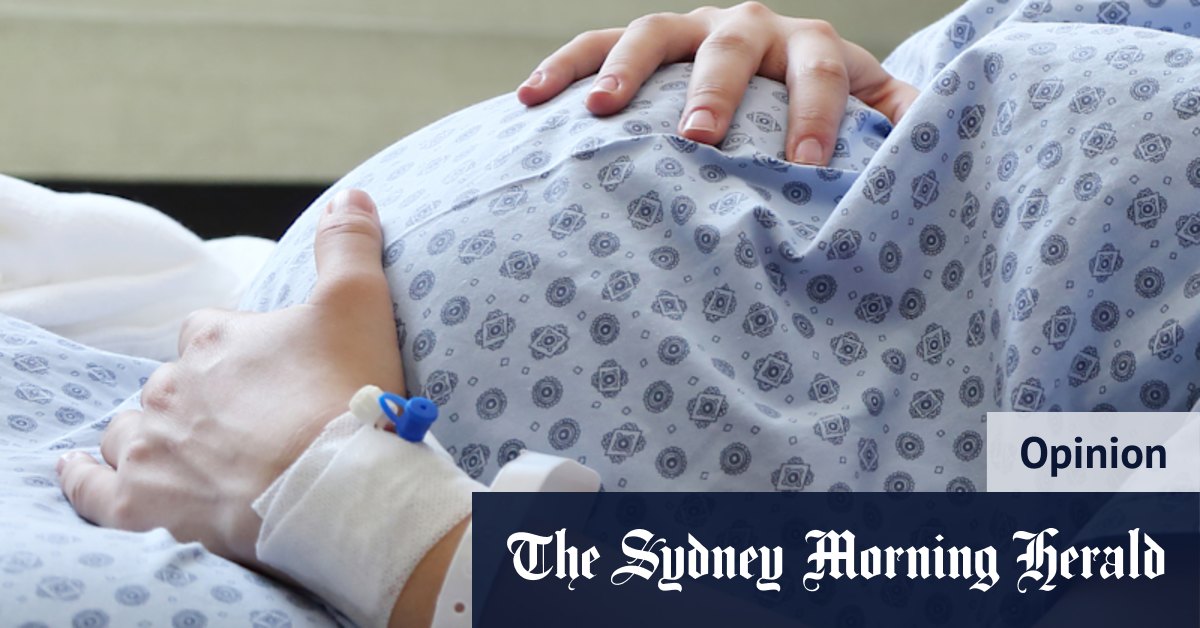
Pregnant Woman endures 16 Surgeries, exposes Gaps in Women’s Healthcare
Sydney, Australia – A Sydney journalist is speaking out about a harrowing four-year medical journey marked by 16 surgeries, beginning during her pregnancy, and highlighting systemic failures in Australian healthcare to adequately address the needs of women. grace Jennings-Edquist details a pattern of medical professionals seemingly unprepared to manage her body as a pregnant, then lactating, patient, raising concerns about a lack of extensive women’s health education within Australian medical schools.
Jennings-Edquist’s ordeal began with an abscess requiring emergency surgery while pregnant. This initial experience quickly revealed a troubling trend. She recounts encountering multiple doctors, the vast majority of whom were male (approximately 85 per cent of bowel surgeons in Australia are men), who appeared “genuinely bamboozled” by her female physiology.
The challenges continued throughout her pregnancy and after the birth of her son. Jennings-Edquist recalls waking after a subsequent surgery to find herself repositioned onto her back – a position known to increase the risk of stillbirth in later pregnancy – despite a pre-operative agreement with the surgeon to avoid it. She received no description for the disregarded request.
A particularly distressing incident involved the delivery of her Crohn’s diagnosis months after her son’s birth. she describes a “stern male surgeon” who “loomed over” her hospital bed, not to offer support, but to “reprimand” her for choosing a gastroenterologist he didn’t approve of, treating her “like an errant child” while she was attempting to express breast milk. “As that white-coated, white-haired doctor towered over me, the message I received was crystal-clear: my agency, privacy and dignity was not his priority,” she wrote.
Beyond these specific instances, Jennings-Edquist details the constant need to self-advocate, learning to time breastfeeding with pain medication, master one-handed pumping while receiving IV infusions, and ultimately, accepting she had no control over when to cease breastfeeding.
Her experience underscores a broader issue identified by recent research from James Cook University, which found “no fixed or explicit requirement to include women’s health in Australian medical school curricula.” This lack of education, Jennings-Edquist argues, leaves doctors ill-equipped to understand the impact of hormonal shifts, pregnancy, and lactation on conditions like autoimmune diseases, and how to safely treat patients during these critical periods.
Jennings-Edquist emphasizes the crucial need for doctors to listen to women, who have historically been marginalized within the medical system.She is the author and host of the podcast Beyond Hysterical, and hopes her story will spark a wider conversation about improving women’s healthcare in Australia.
