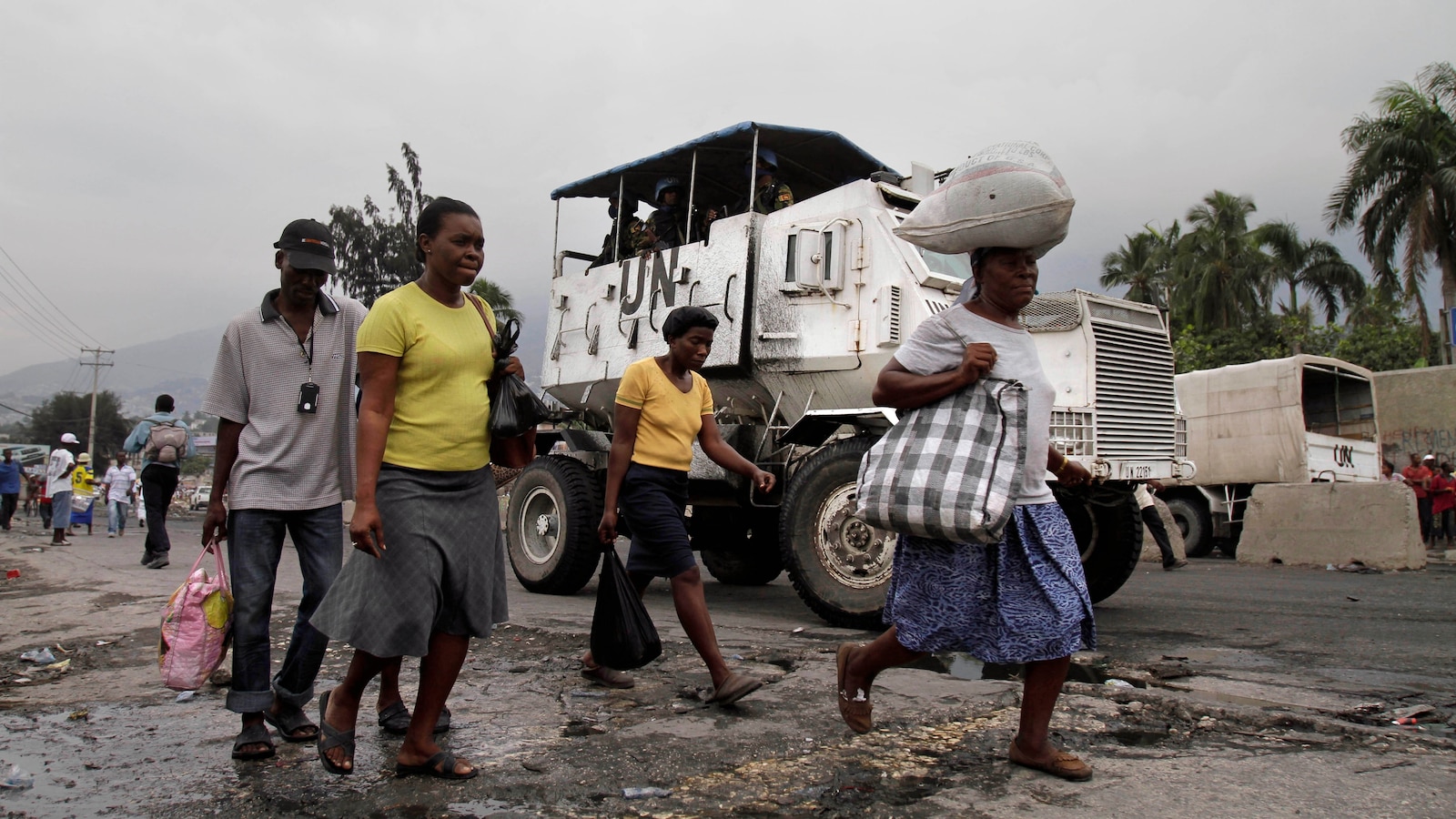
Haitian Forces Launch Major Operation to Reclaim Gang-Controlled Martissant Corridor
Haitian security forces launched a major operation on Thursday to drive gangs out of Martissant, the Port-au-Prince corridor they have held for more than five years, and the National Police said at least 34 suspected gang members were killed in the fighting.
It is the first major operation in Martissant since violent gangs seized the neighborhood at the western tip of the capital. Haiti’s National Police posted a video on X saying the 34 suspected gang members died in a fight with officers working alongside a task force from Vectus Global, a private security firm founded by former U.S. Navy SEAL and Blackwater founder Erik Prince.
Why it matters: Martissant sits on Route 2, the main road linking Port-au-Prince to Haiti’s western and southern cities. Before the gangs took over, thousands of people crossed through every day. Since then, gangs have charged tolls — reportedly around $380 in some stretches, according to a 2023 U.N. report — or opened fire on cars and buses that tried to pass.
Local media reported heavy gunfire and explosive drones in the area as police posted footage of armored vehicles rumbling through the community.

The corridor gangs choked for five years
The battle over Martissant started in June 2021, when gangs based in Grand-Ravine and Village-de-Dieu targeted the Ti-Bois gang. Armed men burned homes, killed families, destroyed businesses and seized the neighborhood’s police station.
The toll was severe. According to a United Nations report from July 2022, the fighting drove at least 19,000 people from their homes and touched the lives of roughly 800,000 people in total.
Haiti’s Center for Analysis and Research in Human Rights noted last year that since Martissant fell, hundreds of public and private institutions were relocated and more than one million people nationwide were forced from their homes.
With the main road closed, aid workers and civilians have been forced to take alternative transportation or use rural back roads — a disruption that has hurt communities along Route 2, where gangs have charged tolls or randomly opened fire on cars and buses trying to cross through Martissant.
| Figure | Detail | Source |
|---|---|---|
| 34 | Suspected gang members killed in Thursday’s Martissant operation | Haiti’s National Police |
| 19,000 | People forced to flee Martissant clashes by July 2022 | July 2022 U.N. report |
| 800,000 | People affected overall by the 2021 clashes | July 2022 U.N. report |
| 1 million+ | Haitians displaced nationwide since Martissant fell | Haiti’s Center for Analysis and Research in Human Rights |
| $380 | Toll gangs demanded from those transiting Martissant | 2023 U.N. report |
A wider push along Routes 2 and 5
The Martissant assault is running alongside a broader campaign by a U.N.-backed gang suppression force, which says it is working to displace gangs and prevent their return.
“Operations are entering a new phase: increasing pressure on gang networks, dismantling more strongholds, and extending control over strategic areas.”
the force wrote Thursday on X.

The force says it is operating in Tabarre in Port-au-Prince and in the central Artibonite region, which armed groups have repeatedly attacked. It reported coming under fire as it advanced along Route 5, “removing obstacles established by gangs to isolate communities and control key routes.”
It also said it cleared and secured a church and school that gangs had been controlling north of Gros-Morne.
“It is about restoring freedom of movement, reopening access to public institutions, and re-establishing State presence for communities that have endured years of gang control,” the force wrote Sunday on X.”
El Salvador’s troops join the fight
This week, large crowds of Haitians turned out in the streets of Port-au-Prince and elsewhere to show backing for Bukele. But experts have criticized the unilateral operations of Salvadoran troops and said that the use of explosive drones has claimed a growing number of innocent victims.
A small group of Salvadorans is separately working with the gang suppression force. In late September, El Salvador’s legislature passed a law authorizing that group’s participation in Haiti for another 12 months until October 2027. Bukele promoted the law, and it won sweeping approval from the nation’s congress, which is dominated by his party.
What stays unresolved
Thursday’s operation dislodges gangs from a corridor they held for five years, but nothing in the reporting so far confirms that forces have held Martissant, that Route 2 has reopened to civilian traffic, or what the final death toll will be. The National Police figure of 34 suspected gang members killed comes from the force’s own video statement and has not been independently verified.
The stakes extend beyond one neighborhood. The country hasn’t had a president since Jovenel Moïse was killed in July 2021, and Haiti prepares for its first elections in more than a decade. Reopening Route 2 and restoring access to public institutions and state presence will require overcoming the gang control that has isolated communities and disrupted the country’s economy by preventing goods from entering or leaving the capital.
The next dated marker on record is Salvadoran lawmakers’ authorization for their personnel to remain in Haiti until October 2027.
Vectus Global, a US-based private security firm that provides logistics, infrastructure and defence services, began its operations in Haiti in March, working mostly through drones in coordination with a government task force. Under a 10-year contract with the Haitian government, the company was set to deploy several hundred personnel from the US, Europe and El Salvador — trained as snipers and intelligence and communications specialists — along with boats and helicopters.
Prince told Reuters that regaining control of gang-held roads within about a year would be a key measure of success, and the firm is also expected to take a long-term role advising the government on restoring tax revenue collection, including at the border with the Dominican Republic, where taxation used to account for half of the country’s tax revenue.
As the suppression force put it Sunday on X: “It is about restoring freedom of movement, reopening access to public institutions, and re-establishing State presence.”