Guangdong and ASEAN Discuss Industrial Supply Chain Complementarity
Guangdong provincial authorities and ASEAN member states are convening a high-level supply chain forum this month to formalize industrial complementarity, aiming to integrate manufacturing bases across the Pearl River Delta with Southeast Asian markets. The initiative seeks to stabilize regional trade flows amidst shifting global manufacturing and geopolitical realignments.
The Strategic Pivot Toward Regional Integration
As of July 10, 2026, the economic relationship between China’s industrial powerhouse, Guangdong, and the Association of Southeast Asian Nations (ASEAN) has entered a phase of intensified structural alignment. The upcoming forum focuses on “industrial complementarity,” a policy framework designed to distribute production stages—such as high-end component manufacturing in Guangdong and assembly or raw material processing in ASEAN nations—to maximize regional efficiency.

For businesses operating in the Greater Bay Area, this shift represents more than just trade volume growth; it is a fundamental reorganization of how goods reach international markets. The integration seeks to mitigate the risks associated with long-haul supply chain disruptions that have plagued global logistics since 2023.
Infrastructure Dependencies and Market Access
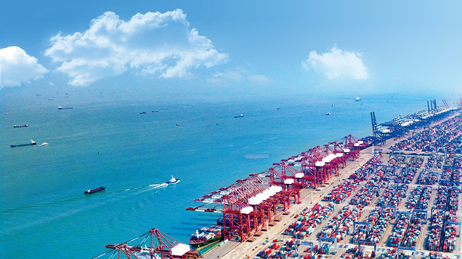
The success of this complementarity depends heavily on the physical and legal infrastructure connecting the two regions. Guangdong’s massive manufacturing output relies on seamless transit through ports like Nansha and Shenzhen, which must now synchronize with the expanding port capacities in Vietnam, Malaysia, and Indonesia. According to data from the ASEAN Secretariat, intra-regional trade has become the primary engine for GDP growth in the bloc, surpassing traditional trans-Pacific export dependencies.

However, companies attempting to bridge these markets face a complex regulatory environment. Differences in customs protocols, labor laws, and cross-border tax treatment create significant friction. Organizations often find that local expertise is the only way to navigate these jurisdictional hurdles.
When supply chains span multiple legal regimes, the risk of non-compliance increases exponentially. Engaging a specialized International Trade Law Firm is a frequent necessity for firms attempting to restructure their logistics to align with these new, state-sanctioned industrial corridors.
The Role of Guangdong as a Manufacturing Hub
Guangdong’s provincial government is positioning the region as the “R&D and high-end manufacturing core” while encouraging ASEAN states to serve as essential nodes for final assembly and consumer distribution. This division of labor is intended to hedge against potential trade barriers in Western markets.
Dr. Chen Wei, a regional economist who has tracked the Pearl River Delta’s industrial evolution, notes that the move is a defensive necessity. “The focus is no longer just on selling goods, but on embedding Guangdong’s industrial DNA into the ASEAN growth story. This is a multi-year transition toward a self-sustaining regional ecosystem,” Chen stated during a recent briefing on regional trade policy.
Operational Challenges for Private Enterprises
While the forum promises high-level policy support, the practical realities for small-to-medium enterprises (SMEs) remain fraught with operational ambiguity. Companies must account for varying standards of quality control and intellectual property protection across different ASEAN jurisdictions.
The logistical complexity of moving semi-finished goods between Guangdong and ASEAN hubs requires sophisticated oversight. Businesses are increasingly turning to third-party logistics auditors to ensure that their supply chain partners meet international standards. Utilizing a vetted Global Supply Chain Consulting Service has become a common strategy for firms looking to de-risk their expansion into these emerging industrial corridors.
Data-Driven Trade Realignment
The following table outlines the current focal points for the Guangdong-ASEAN industrial forum:

| Focus Area | Objective |
|---|---|
| Digital Infrastructure | Standardizing cross-border e-commerce data protocols. |
| Logistics Synchronization | Reducing port clearance times between Guangdong and ASEAN hubs. |
| Supply Chain Resilience | Diversifying sourcing to prevent single-point failures. |
Looking Toward a Long-Term Regional Bloc
The push for industrial complementarity is not merely a reaction to current market conditions but a long-term strategy to insulate the regional economy from global volatility. By tightening the industrial links between the Pearl River Delta and the ASEAN bloc, Guangdong is effectively creating a private, high-speed economic zone that operates with a degree of autonomy from global fluctuations.
For the average business owner or investor, the message is clear: the era of disconnected manufacturing is ending. The future belongs to those who can integrate their operations across borders, navigate the shifting regulatory landscape, and leverage regional partnerships to maintain a competitive edge. As the forum concludes, the real work begins in the boardrooms and on the factory floors, where the success of this grand regional design will ultimately be tested.
Navigating the administrative requirements for cross-border operations requires a deep understanding of local municipal mandates. Many firms are now partnering with a Regional Business Compliance Agency to ensure their operations remain within the evolving framework of the Guangdong-ASEAN trade agreement.