
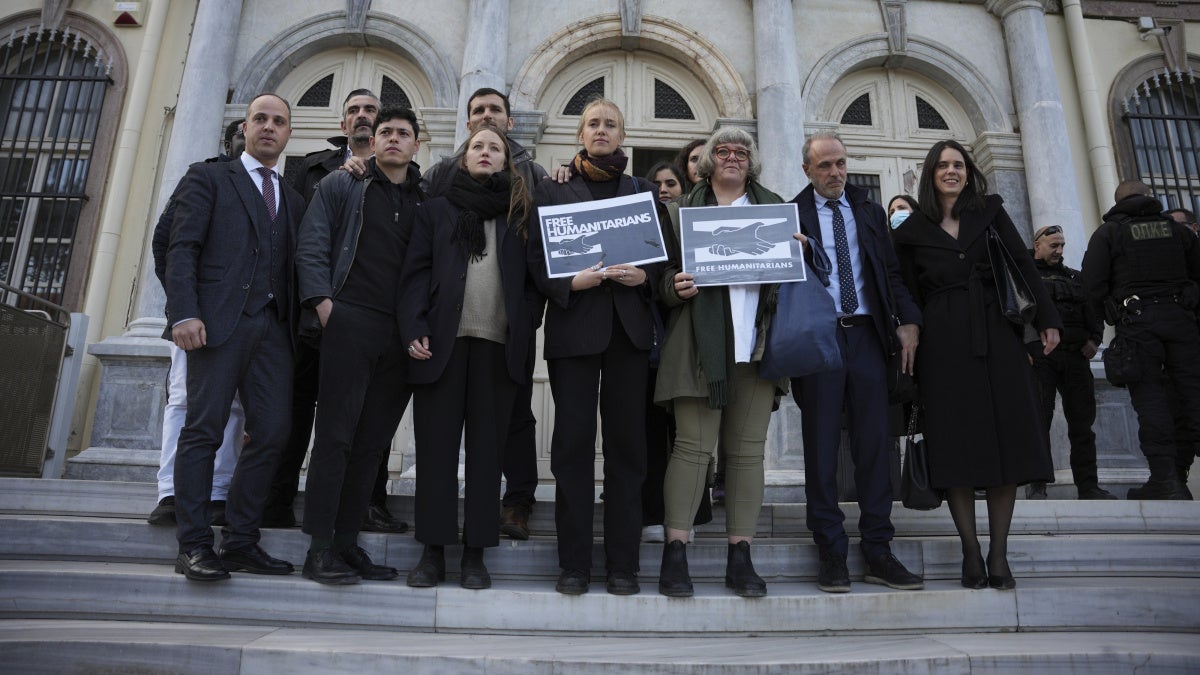
Greek Court Acquits Humanitarian Workers in Landmark Lifesaving Case, Highlighting Ongoing Concerns Over Migrant Rights
Lesbos, Greece – After a grueling seven-year legal battle, a Greek court on the island of Lesbos today acquitted all 24 defendants accused of felonies for providing humanitarian aid to migrants and asylum seekers. The courtroom erupted in festivity as the verdict was delivered, marking a important, though perhaps insufficient, victory for human rights advocates.
The case centered around volunteers associated with Emergency Response Center International (ERCI), who were initially arrested in August 2018 by Greek authorities. Sara Mardini and Séan binder, two prominent volunteers, were among those detained for over 100 days while prosecutors built a case alleging they were facilitating illegal migration and operating a criminal smuggling institution. The prosecution further claimed that fundraising activities constituted money laundering and that some defendants participated in smuggling activities while not even being present in Greece.
Despite Greek law explicitly exempting individuals assisting asylum seekers from criminal penalty, the charges carried potential sentences of up to 20 years in prison. This case became known as “the largest case of criminalization of solidarity in Europe,” as described by the European Parliament [[1]].
This acquittal follows previous dismissals of similar charges in Greek courts, including a case dropped in April 2024 [[1]]. However, the prosecution’s persistence in pursuing felony charges underscores a troubling trend of targeting humanitarian work.
“Saving lives is not a crime,” stated Sara Mardini following the verdict.
The lengthy prosecution has already had a chilling effect on search and rescue operations in the aegean Sea, with numerous groups forced to cease their activities. This reduction in aid has coincided with a rise in migrant deaths, including the tragic recovery of a seven-year-old girl’s body off the coast of Samos on january 8 [[1]].
Human rights organizations are now calling on the Greek government to prioritize saving lives and to take concrete steps to protect humanitarian workers. recommendations include a formal apology to the acquitted defendants, a commitment to cease prosecuting individuals engaged in solidarity work, and the withdrawal of a proposed migration bill that would impose restrictive regulations and penalties on non-governmental organizations [[1]].
Furthermore, organizations like Human Rights watch are urging an end to the government’s “abusive crackdown” against human rights defenders [[1]] and [[1]], and also an immediate halt to the practice of illegal pushbacks at its borders [[1]]. These pushbacks, were migrants are forcibly returned to perilous situations, remain a significant concern for international observers.
