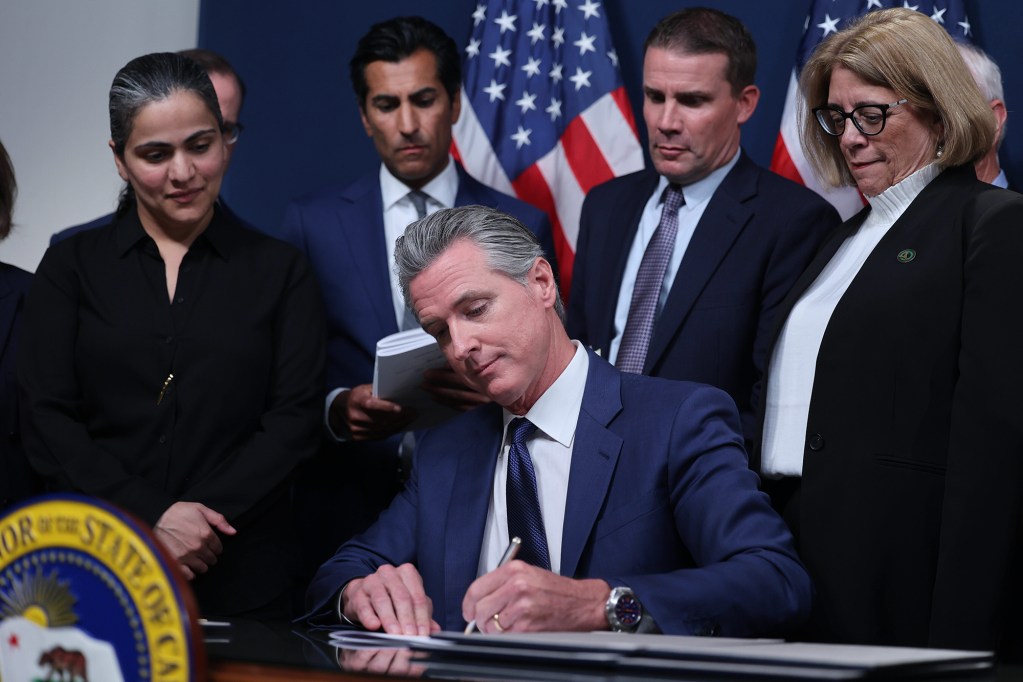
Gov. Gavin Newsom Signs Final California Bills on AI, Trump, and Tech
In his last bills as California governor, Governor Gavin Newsom weighed in on 1,160 legislative bills by a state-imposed Wednesday deadline, bringing his total consideration to nearly 8,000 bills during his tenure. The consequential legislative wave featured strict guardrails on artificial intelligence, aggressive pushback against the federal policies of President Donald Trump, and critical decisions on public employee unions, housing, and data center regulations.
Data Center Regulations and Environmental Oversight
Lawmakers and the governor showed a stronger appetite for regulating technology infrastructure in 2026. These statutes are designed to prevent massive digital infrastructure projects from inflating local electric bills and degrading regional environmental resources.
Child Safety, Social Media, and Artificial Intelligence Restrictions
Setting the tone for his final wave of executive actions during a signing ceremony in front of the Golden Gate Bridge, Newsom approved 13 bills targeting children’s digital consumption. Among these is a landmark statute prohibiting social media platforms from exposing minors under the age of 16 to addictive features such as infinite scrolling.

Another prominent measure establishes corporate liability if digital platforms fail to protect children from harm. Explaining the urgency behind the legislation during his public remarks, Newsom stated, “Parents can’t compete. Can’t compete with the engineering, can’t compete with the algorithms, can’t compete.”
Pushback Against Federal Policies and Election Security
In a public release highlighting the state’s defensive posture, the governor signed legislation explicitly banning public officials from issuing cryptocurrency meme coins—a direct response to digital currency projects associated with Trump in 2025.
Lawmakers also passed defensive measures to protect California elections from potential federal interference, restricting attempts to limit vote-by-mail access. Concurrently, the state authorized new legal pathways empowering citizens to sue federal agents over alleged civil rights violations, while expanding state authority to investigate conditions in detention centers.
Fiscal Discipline, Labor Vetoes, and Regional Housing
While taking aggressive stances on social and technological policy, Newsom drew a firm line against public employee unions seeking expanded workplace benefits. The governor vetoed legislation that would have broadened remote work allowances for state employees and enhanced retirement benefit packages for first responders.

On the housing and homelessness front, the administration approved a new regional planning framework aimed at coordinating municipal responses. State funds are now authorized for sober housing initiatives alongside minor statutory adjustments to CARE Court, the state’s flagship judicial program designed to transition severely mentally ill unhoused individuals into structured care.
Journalism Support and Final Legislative Reflections
At the conclusion of the signing window, Newsom approved targeted tax credits designed to provide financial relief to California’s collapsing local news industry. Additional late-session approvals included bans on child marriage, enhanced DUI enforcement statutes stemming from investigative reporting, and new mandatory firearms safety courses for gun owners.
Reflecting on his historic administrative workload during a final press conference in Sacramento, Newsom acknowledged a profound sense of nostalgia. “I love this stuff,” Newsom told reporters. “We’ve had more fun devouring even bills that sunset a commission, which, trust me, I didn’t spend a lot of time on before.”