
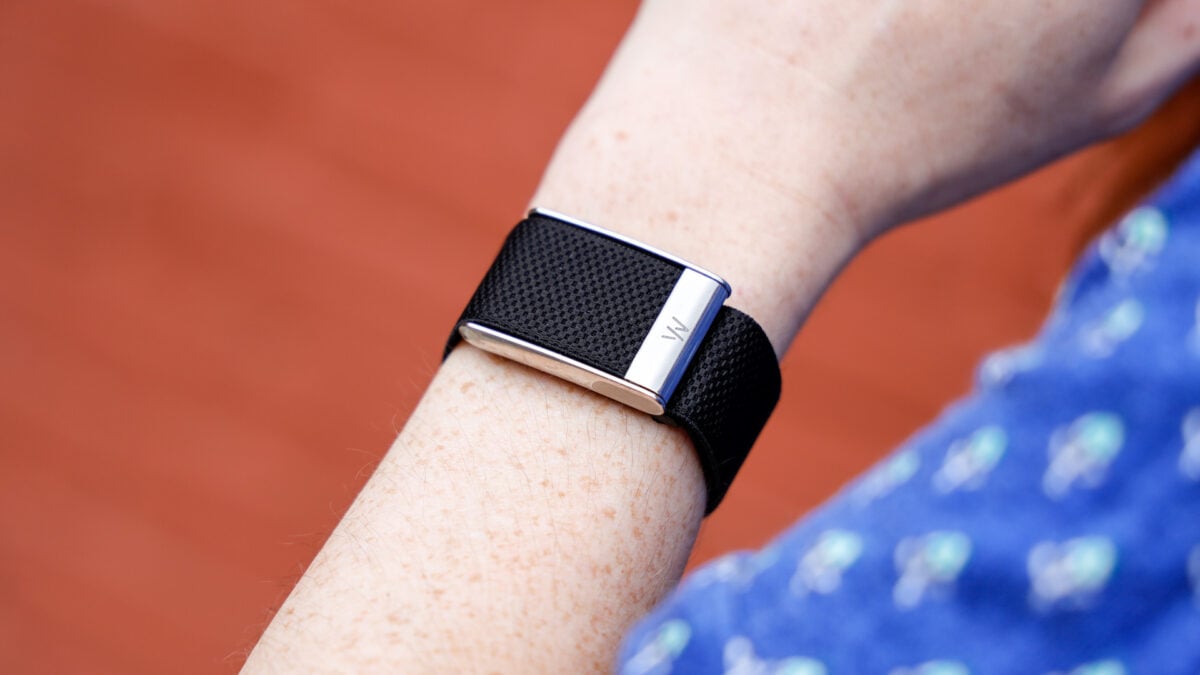
Google’s Next Fitbit Sounds Exactly Like a Whoop Clone
Google’s Screenless Bet: Architecture Analysis of the Fitbit-Whoop Convergence
Steph Curry’s Instagram endorsement signals a pivot, not a breakthrough. Google is replicating the Whoop architecture to capture the subscription health market, stripping away the display to reduce BOM costs whereas locking users into a recurring revenue model. This isn’t innovation; it’s market segmentation disguised as wellness technology. As enterprise IT leaders evaluate allowing these devices on corporate networks, the focus must shift from marketing hype to data sovereignty and API security.
- The Tech TL;DR:
- Hardware Redundancy: The device likely utilizes standard PPG sensors and BLE 5.3, offering no distinct architectural advantage over the Whoop 5.0.
- Subscription Dependency: Core analytics are gated behind an AI-driven subscription, mirroring Whoop’s SaaS model rather than traditional hardware sales.
- Data Risk: Continuous biometric streaming introduces new vectors for HIPAA compliance violations and corporate network exposure.
The core issue lies in the data pipeline. A screenless wearable functions as a continuous data ingestion node. It collects heart rate variability (HRV), skin temperature, and motion data, transmitting this via Bluetooth Low Energy to a mobile gateway. From there, the data enters Google’s cloud infrastructure. For a CTO, this represents an unmanaged endpoint potentially bridging personal health data with corporate credentials if single sign-on (SSO) boundaries are blurred. The lack of a local display means users cannot verify data transmission states visually, relying entirely on the companion app’s security assertions.
Google’s strategy leverages its recent expansion of the Fitbit AI health coach. Previously gated behind a paywall, the public preview now serves as a trojan horse for broader AI subscription adoption. This mirrors the “first hit is always free” playbook observed in generative AI sectors. However, the underlying infrastructure requires robust encryption standards. According to the Bluetooth SIG specifications, secure connections should utilize LE Secure Connections. If Google implements legacy pairing methods to ensure compatibility with older Android kernels, the device becomes susceptible to man-in-the-middle attacks during synchronization.
Stack Comparison: Fitbit vs. Whoop vs. Polar
To understand the deployment reality, we must dissect the technical stack. Whoop has established a dominant position by decoupling hardware profit from service revenue. Google is attempting to replicate this while integrating its Vertex AI capabilities for personalized coaching. Polar remains the outlier, rejecting the subscription model entirely. The following matrix breaks down the architectural implications for IT procurement.

| Feature | Google Fitbit (Projected) | Whoop 5.0 | Polar Loop |
|---|---|---|---|
| Connectivity | BLE 5.3 / Wi-Fi Direct | BLE 5.2 | BLE 5.1 |
| Data Encryption | AES-256 (Cloud) | AES-256 (Transport) | Local Storage Focus |
| Subscription Model | Required for AI Insights | Required for All Data | None |
| API Access | Restricted (Google Health) | Limited Partner API | Open Flow |
The table highlights a critical divergence in API access. Google’s ecosystem is notoriously walled. Developers cannot easily extract raw biometric data for third-party analysis without navigating stringent OAuth 2.0 scopes. This limits the device’s utility in enterprise wellness programs that require aggregated, anonymized data for insurance adjustments. Organizations needing to integrate these devices into broader health platforms should engage cybersecurity consulting firms to audit the data flow compliance before rollout.
Security researchers argue that the convergence of AI and biometrics creates a unique privacy surface. “When you combine continuous physiological monitoring with large language models, you aren’t just tracking steps; you’re inferring mental states and potential health liabilities,” says a Principal Security Architect at a major cloud provider, speaking on condition of anonymity. “The risk isn’t just data leakage; it’s inference attacks where employers could theoretically deduce stress levels or pregnancy status from metadata.”
Implementation and Data Sovereignty
For developers attempting to integrate this hardware into existing health stacks, the reliance on proprietary APIs is a bottleneck. Standardization via HL7 FHIR (Fast Healthcare Interoperability Resources) is the industry benchmark for secure health data exchange. Below is a cURL request example demonstrating how a secure integration should look when pulling patient observations, assuming the device supports standard interoperability protocols.
curl -X Acquire "https://api.healthcare.google.com/fhir/R4/Patient/{patient-id}/Observation" -H "Authorization: Bearer {access_token}" -H "Accept: application/fhir+json" -H "Content-Type: application/json" In practice, Google often abstracts this layer, forcing developers through intermediate SDKs that obscure the underlying transport security. This opacity necessitates rigorous third-party validation. Enterprises allowing these devices on guest networks must treat them as IoT risks. A compromised wearable could serve as an entry point for lateral movement if network segmentation is weak. Security teams should prioritize cybersecurity risk assessment and management services to evaluate the blast radius of adding hundreds of unmanaged biometric sensors to the corporate edge.
Funding transparency as well matters. Whoop’s recent $575 million raise at a $10.1 billion valuation indicates aggressive expansion funded by global entities, including the Qatar Investment Authority. Google’s hardware division operates under Alphabet’s broader capital structure. For government contractors or regulated industries, the ownership structure of the data handler is a compliance variable. The NIST Cybersecurity Framework provides guidelines for managing supply chain risk, which applies here given the hardware manufacturing origins.
The Verdict on Deployment
The move to a screenless form factor reduces hardware failure points but increases dependency on the mobile app and cloud infrastructure. Latency in data processing becomes a user experience killer. If the AI coach relies on server-side inference rather than edge computing on the device’s NPU, users experience delays in feedback during high-intensity intervals. This architectural choice prioritizes data collection over real-time utility.
Organizations considering subsidizing these devices for employees must weigh the wellness benefits against the administrative overhead. IT departments cannot wait for vulnerabilities to surface. Proactive measures include deploying vetted cybersecurity audit services to test the device’s resistance to spoofing and data interception. The convenience of automatic health tracking does not outweigh the liability of unsecured biometric data traversing public networks.
Google is betting that users will trade privacy for personalized AI insights. The technology works, but the cost is measured in data permissions rather than dollars. As the market saturates with screenless clones, the differentiator will remain security posture and data ownership. Until Google opens its black box to independent verification, skepticism remains the only rational engineering stance.
Disclaimer: The technical analyses and security protocols detailed in this article are for informational purposes only. Always consult with certified IT and cybersecurity professionals before altering enterprise networks or handling sensitive data.