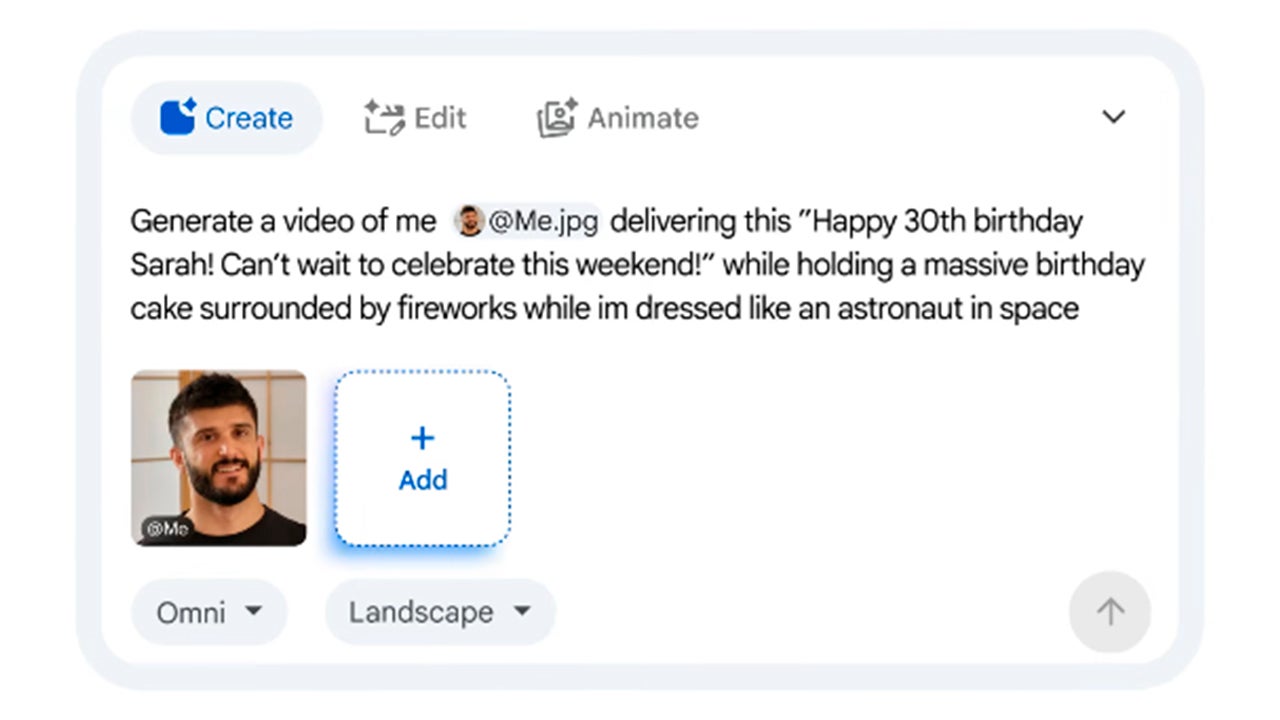
Google Unveils Gemini Omni: AI-Powered Video Creation Tool
Google Gemini Omni and Digital Twin Synthesis: Technical Analysis
Google has expanded its generative AI suite with a new capability to synthesize digital avatars capable of real-time voice mimicry derived from a single selfie, alongside the introduction of the Gemini Omni model for multimodal video manipulation. These features, surfacing as part of the company’s latest production push, signal a shift toward low-latency, high-fidelity synthetic media generation that leverages localized NPU acceleration and cloud-based inference.
The Tech TL;DR:
- Digital Twin Synthesis: Users can now generate expressive, voice-enabled digital replicas using a single static image input, bypassing the need for extensive motion-capture datasets.
- Gemini Omni Integration: The model introduces enhanced multimodal video modification, allowing for granular temporal edits based on natural language prompting.
- Enterprise Deployment Reality: While potent, these tools necessitate robust authentication protocols to prevent deepfake-driven identity theft, requiring firms to engage vetted cybersecurity auditors for risk mitigation.
Architectural Implications of Gemini Omni
The Gemini Omni model represents a departure from traditional frame-by-frame video generation, opting instead for an end-to-end architecture that processes video and audio streams concurrently. According to official developer documentation, the model minimizes latency by reducing the number of intermediate transcoding steps, a bottleneck that previously plagued real-time video generation. By leveraging a unified embedding space for both visual and linguistic tokens, the system maintains temporal consistency across longer clips—a significant hurdle in Google DeepMind research.

For enterprise developers looking to integrate these capabilities, the implementation relies on asynchronous API calls. A standard cURL request for triggering a video transformation might look like this:
curl -X POST https://generativelanguage.googleapis.com/v1beta/models/gemini-omni:streamGenerate

  -H 'Content-Type: application/json'

  -d '{

    "contents": [{"parts":[{"text": "Modify the background to a minimalist office setting"}]}],

    "video_metadata": {"input_uri": "gs://bucket/input_video.mp4"}

  }'
Digital Twin Fidelity and the Identity Security Gap
The ability to create a talking digital twin from a single selfie relies on sophisticated latent space mapping. By projecting facial features into a high-dimensional vector space, the system infers lip-sync and micro-expression data in real-time. This efficiency, while impressive, presents a significant attack vector for social engineering.
As the barrier to entry for high-quality synthetic identity creation drops, the burden shifts to the infrastructure layer. Organizations must adopt multi-factor authentication (MFA) schemes that move beyond simple visual verification. For those managing sensitive identity access, partnering with a specialized identity management consultant is no longer optional. These firms focus on implementing hardware-backed security keys and behavioral biometrics that are resistant to generative AI mimicry.
Framework C: The Tech Stack & Alternatives Matrix
| Feature | Google Gemini Omni | OpenAI Sora | Runway Gen-3 Alpha |
|---|---|---|---|
| Input Modality | Multimodal (Video/Audio/Text) | Text-to-Video | Text/Image-to-Video |
| Primary Use Case | Real-time interaction | High-fidelity cinematic | Professional creative suites |
| Deployment | Cloud API / Edge Hybrid | Enterprise API | SaaS/Web Interface |
When evaluating these stacks, senior architects must consider the cost of token-based inference versus the control afforded by local containerization. While Gemini Omni offers superior integration with the Google Cloud ecosystem, teams requiring sovereign control over data pipelines often look toward custom software development agencies to build wrappers around open-source models that run on private Kubernetes clusters.

Infrastructure Triage: Protecting the Enterprise
The rapid deployment of these generative capabilities means that the “blast radius” of a compromised account now includes the potential for AI-driven impersonation. If your organization relies on video-based identity verification, you are effectively running a legacy security model. We recommend an immediate audit of your IAM (Identity and Access Management) protocols. For firms requiring immediate remediation, reaching out to cybersecurity penetration testing services can help identify gaps in current verification workflows before they are exploited.
Ultimately, the trajectory of this technology points toward a future where “real” and “synthetic” are indistinguishable at the pixel level. The value will not reside in the generation itself, but in the cryptographic provenance of the media—a standard that is currently being defined by the C2PA (Coalition for Content Provenance and Authenticity).
Disclaimer: The technical analyses and security protocols detailed in this article are for informational purposes only. Always consult with certified IT and cybersecurity professionals before altering enterprise networks or handling sensitive data.