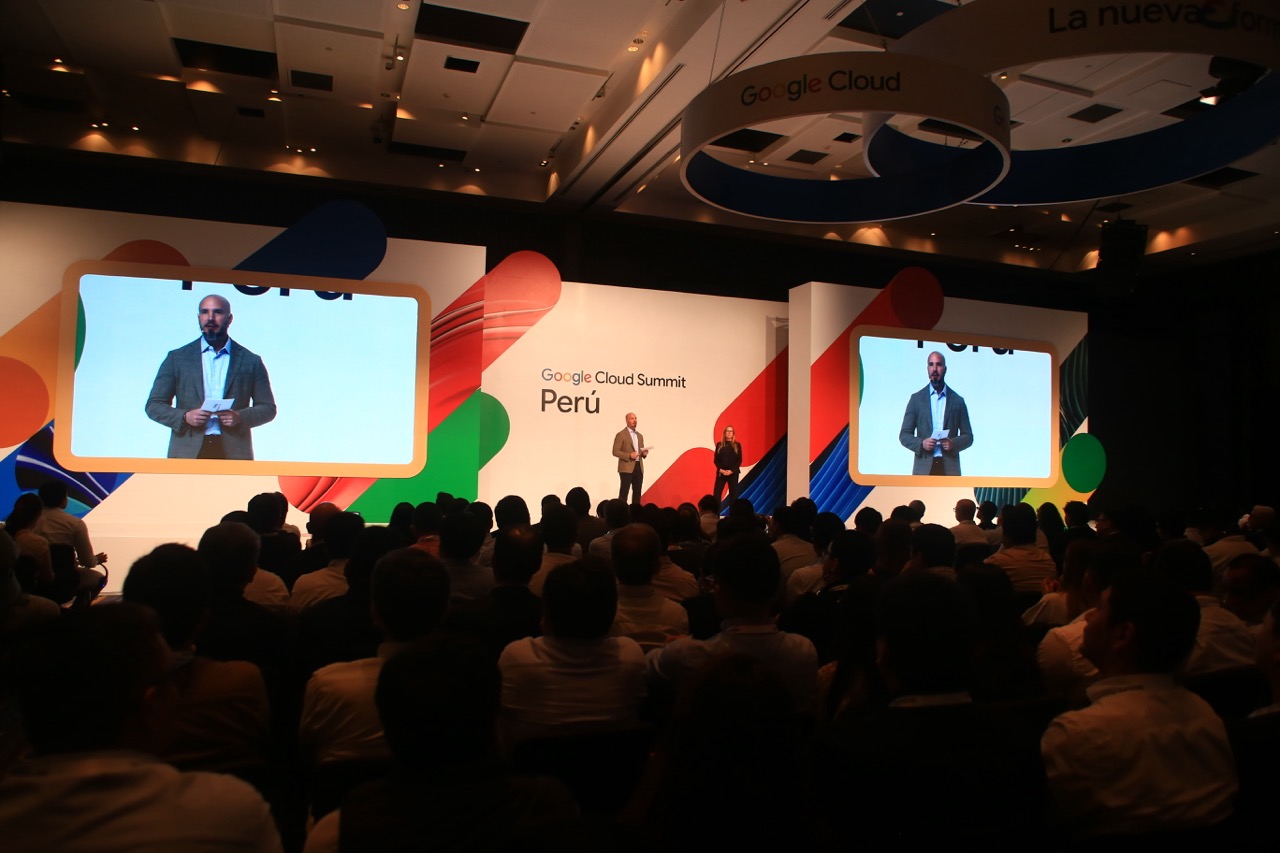
Google Cloud Summit Perú Drives Agentic AI Shift as 94% of Large Firms Adopt AI
Ninety-four percent of medium and large enterprises in Peru now use artificial intelligence, according to data shared on Nov. 19, 2026, at the Google Cloud Summit Perú, according to Andina.
The second annual Lima gathering focused on transitioning organizations from isolated AI experiments to autonomous agents capable of managing complex business workflows. Executives at the event discussed how to measure tangible returns on these technologies.
- 61% of corporate chief executives in Peru state their organizational culture is ready to accelerate AI integration, Andina reported.
- Google Cloud added OpenAI models to its Model Garden, alongside more than 200 proprietary, open-source, and third-party models, enlinea.pe noted.
- More than 10,000 individuals have enrolled in free Google Skills programs across Peru since January 2025, La Cámara reported.
Google Cloud presented infrastructure updates designed to move artificial intelligence past simple question-and-answer interactions. Company representatives introduced tools intended to let autonomous agents reason, plan, and execute multi-step corporate tasks securely.
“The debate in Peru is no longer whether companies should adopt artificial intelligence, but how to convert that advance into a competitive advantage and measurable results,” said Diego Montoya, general manager of Google Cloud for Peru and Ecuador, as reported by La Cámara.

Montoya added that the true challenge for local organizations involves integrating generative and agentic AI into the core of their operations while maintaining solid data security and tangible returns.
Google Cloud introduced Gemini Enterprise for financial services, featuring research agents with more than fifty specialized skills such as credit risk analysis and portfolio monitoring for corporate banking and capital markets, as reported by La Cámara and enlinea.pe. This preview offering operates globally alongside the generally available Gemini 4 Argon, which handles multi-step challenges in regulated sectors like finance, software development, and legal matters.
To organize these deployments, Google Cloud detailed workspace features including Projects for team document management and a Skills Registry to define agent policies, complemented by an Agent Sandbox for secure code execution, according to La Cámara. La Cámara and enlinea.pe said that these structures allow corporate developers to coordinate workflows across multiple artificial intelligence models through a single application programming interface.

To support workloads involving millions of collaborative agents, Google Cloud introduced specialized hardware and database architectures in Lima. The updates include AlloyDB for agents, designed to handle real-time queries without slowing production systems.
The company also unveiled the TPU 8tx and TPU 8i Max processing systems. The 8tx model integrates hardware security to protect sensitive information and cuts response latency in half, while the 8i Max doubles memory and computing capacity to handle massive multi-agent workloads.
Local corporations are already deploying these agentic systems in daily operations. RIMAC Seguros built an agent factory on Google Cloud, putting more than 100 agents into production to automate document auditing and risk assessment.
Meanwhile, Grupo Intercorp’s SIP unit utilizes Google Cloud’s data platform to connect retail transactions with financial services, generating tailored pricing models and credit scores in record time.