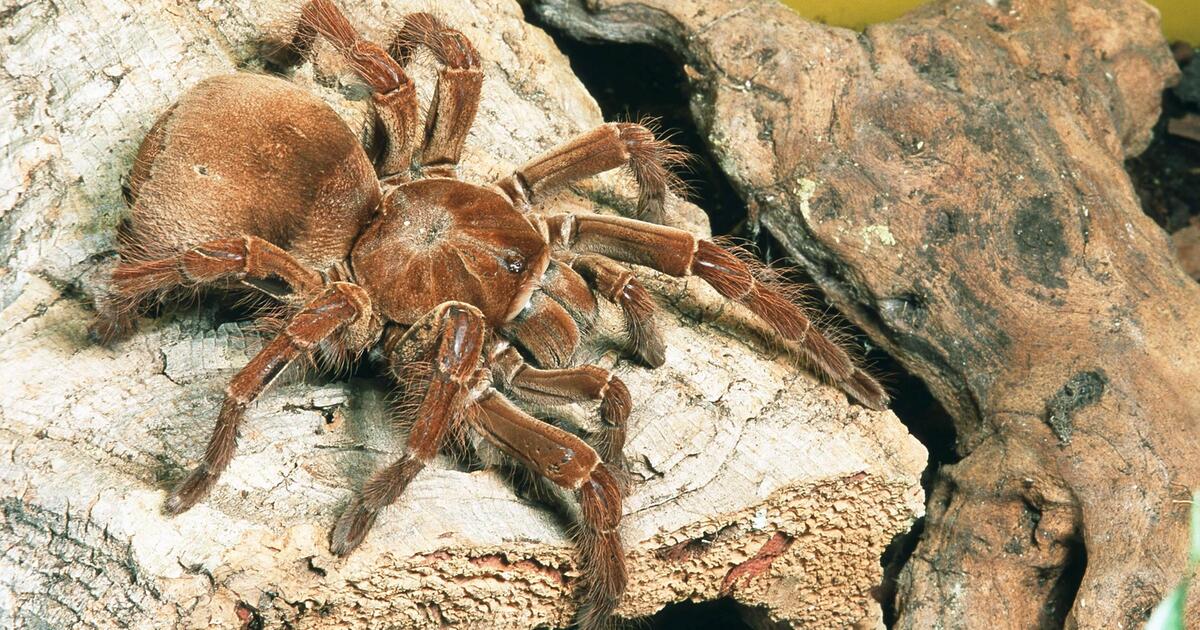
Goliath Birdeater: Everything About the World’s Largest Spider
As of September 2026, the Goliath Birdeater (Theraphosa blondi), native to the rainforests of northern South America including Brazil, Venezuela, Guyana, Suriname, and French Guiana, is recognized by the Guinness Book of Records as the largest spider in the world, featuring a body length of up to 12 centimeters and a leg span reaching 30 centimeters.
Weighing around 170 grams, this massive arachnid matches the mass of a small rodent. Reporting updated on September 27, 2026, by WEB.DE highlights that while its size commands attention, its common name is largely a misnomer derived from historical observations of a single large specimen consuming a small bird.
Physical Dimensions and Competing Records
The sheer scale of Theraphosa blondi places it at the upper limits of arachnid biology. With its legs fully extended, its 30-centimeter span surpasses many small mammals. However, the title for overall leg span is contested. According to Geo reporting cited by WEB.DE, the Laotian giant huntsman spider (Heteropoda maxima) can reach a leg span of up to 35 centimeters. Despite this, the Goliath Birdeater maintains a clear lead in overall body mass and volume.
An additional report featuring insights from Dr. Hubert Höfer, head of biosciences at the Natural History Museum Karlsruhe’s zoology department, notes that these spiders possess fang-like jaw claws (chelicerae) measuring up to 1.7 centimeters long. These impressive structures anchor a predatory toolkit designed for gripping struggling fauna on the rainforest floor.
Like all spiders, the Goliath Birdeater features a body divided into two main parts: a cephalothorax bearing the jaws and sensory hairs, and an abdomen containing vital organs, the respiratory system, heart, and silk-producing glands. To grow within its rigid exoskeleton, the animal must undergo periodic molting, slipping out of its old skin to reveal a fresh, expanding layer beneath.
Habitat, Diet, and Behavioral Defenses
Deep within the lowland rainforests of countries like French Guiana, environmental conditions remain intensely humid, often reaching 80 to 90 percent humidity with temperatures hovering near 25 to 26 degrees Celsius, as detailed by sources. During daylight hours, Theraphosa blondi retreats into self-dug underground burrows. WEB.DE notes that the regional rainy season from May to November frequently floods these subterranean retreats, forcing the spiders to relocate to higher ground.
Despite its common name, avian prey makes up only a tiny fraction of its diet. Dr. Hubert Höfer explains that spiders of this scale easily overpower smaller vertebrates. The primary diet consists of large insects, worms, and other arachnids, supplemented occasionally by frogs, lizards, young snakes, or mice. Upon subduing prey, the spider injects digestive secretions that liquefy the victim from the inside out.
When confronted by potential threats, the Goliath Birdeater relies on a tiered defense strategy. It is relatively aggressive toward other predators but generally avoids human confrontation, fleeing into its burrow or undergrowth when disturbed. If cornered, it emits a hissing sound by rubbing specialized bristles on its legs together, stands on its hind legs, and displays its open jaw claws. As a secondary deterrent, it can flick specialized stinging hairs equipped with microscopic barbs toward an adversary.
Human Interaction and Terrarium Care
While the defensive hairs can cause persistent skin itching and redness, or severe inflammation in the eyes and respiratory tract, the bite of a Goliath Birdeater is not life-threatening to humans. WEB.DE compares the venomous impact to a standard bee sting, noting that clinical danger is generally limited to individuals with specific insect venom allergies.

Due to these factors, the species is strictly unsuited for casual hobbyists. Experienced keepers maintaining these animals in terrariums must verify protection status, obtain certificates of origin, and register their specimens with local municipal authorities where required by law. In secure captive environments, female specimens have been documented living between 12 and 15 years, while males typically survive for only one year.