
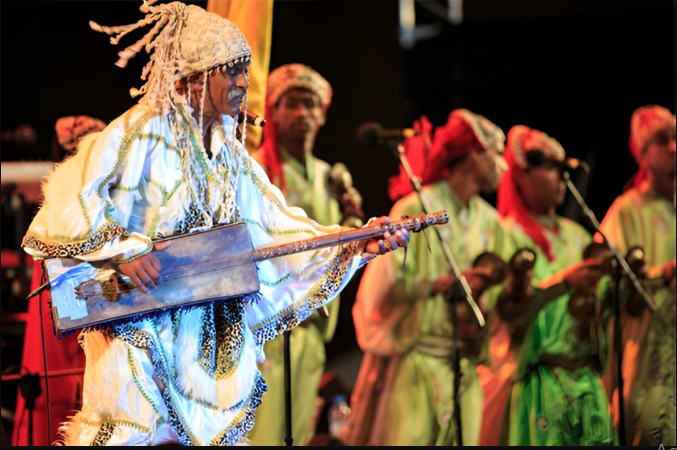
Safi Celebrates Gnaoua Heritage with International Festival
Safi, Morocco, is currently hosting the Gnaoua-Samba International Festival, a vibrant intercultural exchange running until August 31st in partnership with the Ministry of Youth, culture and Dialogue. The festival aims to both preserve Morocco’s secular heritage and foster the musical fusion and artistic influence characteristic of this “City of the Oceans.”
The festival launched with a colorful parade featuring numerous musical troupes, culminating at the “Tagine” site. Attendees were treated to a Gnaouie symphony in the “Kanka” style, a hallmark of the Sahraoui Gnaoui repertoire. The opening ceremony, attended by local and international cultural officials and figures, also premiered the documentary Gnaoua, Shaddou Al-Arwah by director Nizar al-rawi, a film dedicated to Safi and the diverse expressions of Gnaoui art within Morocco.
The festival’s programming showcases a compelling blend of tradition and innovation. Performances included the Gnaoua-Samba group led by Maâlem Abdelkabir Niam, and Maâlem Mohammed Talaq Tyor from Tangier. The evening also featured a concert of customary Irish music, a unique fusion with Aïssaoui art presented by Moqaddem Abderrahim Bouferdi de Safi, and a performance by Maâlem Benâacher Bchebchoub de Salé.
Tributes were paid to prominent figures in Gnaoui art, including artist Khalid El Barkaoui, known for his appearance on the TV program Amalay (produced by Nizar al-rawi), and artist Saâd ammar from Sweden.
Festival director Bilal Loqmari emphasized the event’s role as a platform for dialogue and the party of Gnaoui art, particularly that of Safi. He highlighted the importance of recognizing local Maâlems as the guardians and transmitters of this intangible heritage. Director Nizar al-rawi, attending from Luxembourg, described Safi as “a high place of artistic inspiration and living memory of the Gnaoui heritage.”
This 11th edition also includes an international conference on “The role of cultural diversity and musical heritage in promoting dialogue between peoples,” drawing participants from Morocco, Oman, Sweden, Portugal, and Luxembourg. Ghita Rabouli, director of Bayt Dakira in essaouira, noted the conference provides a crucial space to reflect on valuing intangible heritage as a catalyst for intercultural exchange, emphasizing music’s role as a “universal language of tolerance and coexistence.”
Complementing the musical performances, an exhibition dedicated to Moroccan heritage, curated by researcher and collector Hafida sabbahi, is on display, showcasing objects and works that illustrate the authenticity and richness of national culture.
The Gnaoua-Samba International Festival continues to solidify its position as a vibrant crossroads for cultural dialogue and artistic fusion, celebrating both the deep roots of gnaouie traditions and their dynamic interaction with world music.
