Gizmodo Reports Lenovo Legion Go Beam Leaked as Cheaper Streaming Handheld
Lenovo’s Legion Go 2 now costs $2,000 for its top configuration, up from $1,350 at launch a year ago — and that jump has the company reportedly pivoting to a cheaper, streaming-only handheld.
Leaked renders published by Windows Latest on November 18, 2026 and reported by Gizmodo show an unannounced device called the “Legion Go Beam,” expected within the next few months. The name points to its purpose: instead of running games on-device, the Beam would lean on cloud streaming, in the mold of the Logitech G Cloud. Gizmodo’s reporting frames the device as a more affordable alternative to the premium Legion Go 2.
The business logic is blunt. Handheld gaming PCs have climbed past the $1,300 mark across the board, and the memory-price spike Gizmodo calls “RAMageddon” has pushed even last year’s hardware upward. A device that offloads the computing to GeForce Now or Xbox Cloud Gaming needs far less silicon — and could, in theory, cost far less.

Crayon’s aggregation of the coverage counts Gizmodo as the only outlet on the story so far, which means every hardware detail below rests on leaked renders rather than a Lenovo announcement. The company has not confirmed the device exists.
What the Legion Go Beam leaks show
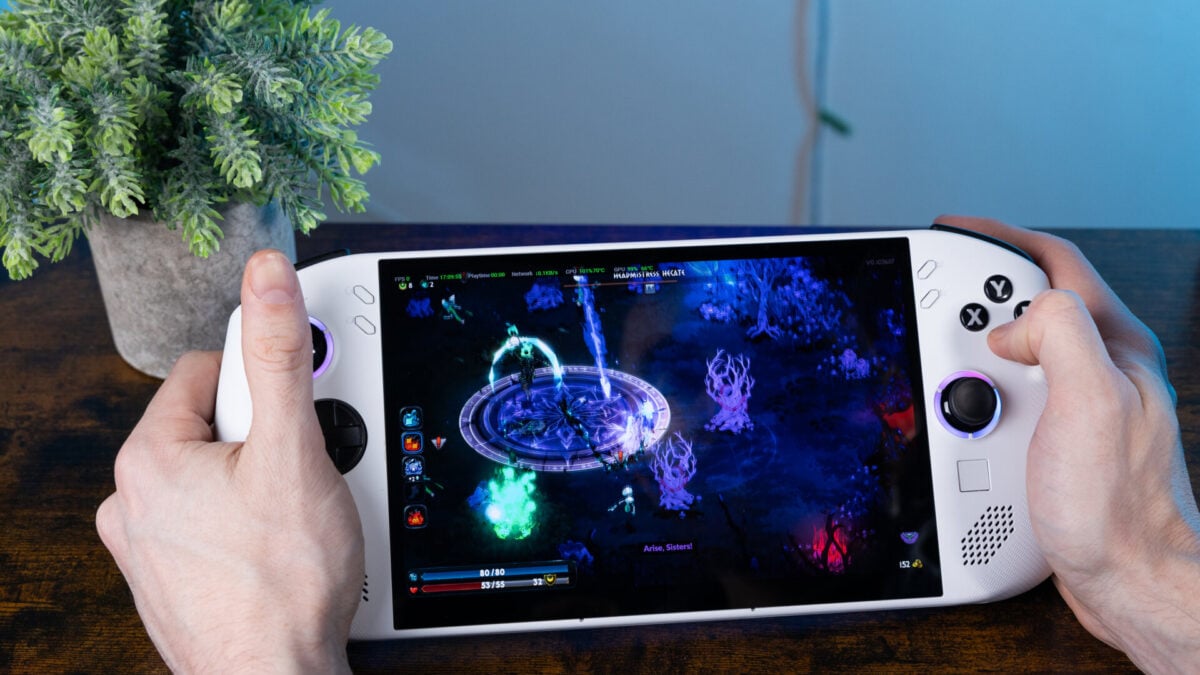
According to Gizmodo, the Beam appears to be built from the white, Windows 11-based Legion Go S — not the black SteamOS edition — with the cost stripped out. The trackpad on the bottom of the device is gone. The trigger switches that toggle between analog and micro-switch inputs are gone too, which Gizmodo’s report calls a shame but survivable.
The ergonomics look close to the Legion Go S, with back buttons and a reshaped trigger that may sit easier in the hand during long sessions. The screen is the sticking point: extra-large bezels could shrink the playable area below the 8 or 8.8 inches Lenovo’s other handhelds offer, per Gizmodo.
EXCLUSIVE: This is Lenovo's upcoming Legion Go Beam, a new gaming handheld that appears to be a more affordable alternative to the premium Legion Go 2: https://t.co/T5Nrh5VAig pic.twitter.com/JdLI9QrzsK
The leaks say nothing about internal specs. Gizmodo doubts the device could run AAA titles natively, but a visible microSD card slot offers some hope for lighter, 2D games. Otherwise, the whole proposition hangs on Wi-Fi — streaming from GeForce Now or Xbox Cloud Gaming, plus local streaming from a PlayStation 5 through PS Remote Play.
The bar for this category is low. Acer’s Nitro Blaze Link, another streaming handheld, runs on 1GB of RAM and 8GB of storage — barely enough for its Linux Debian operating system. Gizmodo’s hands-on time with that device found controls that felt cheap.

The prices that forced the pivot
Lenovo has the most to gain from a cheaper device, and the numbers explain why. The Legion Go 2’s high-end Ryzen Z2 Extreme model launched at $1,350; a year later, the same configuration runs $2,000.
The Legion Go S, pitched as the sensible buy, climbed to nearly $1,000 for the Ryzen Z2 Go version with 512GB of storage. Gizmodo’s verdict on the market: streaming handhelds need to cost way less than anything that came out this year.
| Device | Price | Note |
|---|---|---|
| Steam Deck OLED | $790 (starting) | Current floor for the category |
| Legion Go 2, Ryzen Z2 Extreme | $1,350 launch / $2,000 now | Up a year after release |
| Asus ROG Xbox Ally X20 | $1,300 | Released this year |
| Acer Predator Atlas 8 | $1,450 | Released this year |
| Legion Go S, Ryzen Z2 Go, 512GB | Close to $1,000 | After price hikes |
That spread is the whole story. When the entry point for a handheld PC sits at the Steam Deck OLED’s starting price and the premium tier has drifted toward $2,000, a cheap streaming device stops looking like a compromise and starts looking like the only sane option.
Acer has already made the same bet with the Blaze Link; Lenovo’s leaks suggest it would rather strip a proven design than watch the budget tier go uncontested.
What nobody knows yet
Price, for one thing — the leaks carry no figure, and Gizmodo argues price will matter more than anything. Specs, for another. Whether “RAMageddon” pricing eases into 2027 or tightens further is, as Gizmodo puts it, anyone’s guess; the report’s advice to consumers is to hope for the best but expect the worst.
The Steam Deck OLED’s $790 starting price now defines the floor. If Lenovo ships the Beam cheap enough, streaming handhelds get a second act. If it doesn’t, the category stays what the Logitech G Cloud proved it was the first time around.
The Legion line belongs to Lenovo, a company with an unlikely origin story. Founded as Legend in Beijing on 1 November 1984 by a team of eleven engineers from a state-owned research institute, it started with 200,000 yuan and initially tried — and failed — to import televisions before turning to computers.
Renamed Lenovo in 2003, the company bought IBM’s PC business and its ThinkPad line in 2005, and by 2013 had become the world’s largest personal computer vendor by unit sales, a position it still holds as of 2024.
Disclaimer: The views and cultural analyses presented in this article are for informational and entertainment purposes only. Information regarding legal disputes or financial data is based on available public records.