
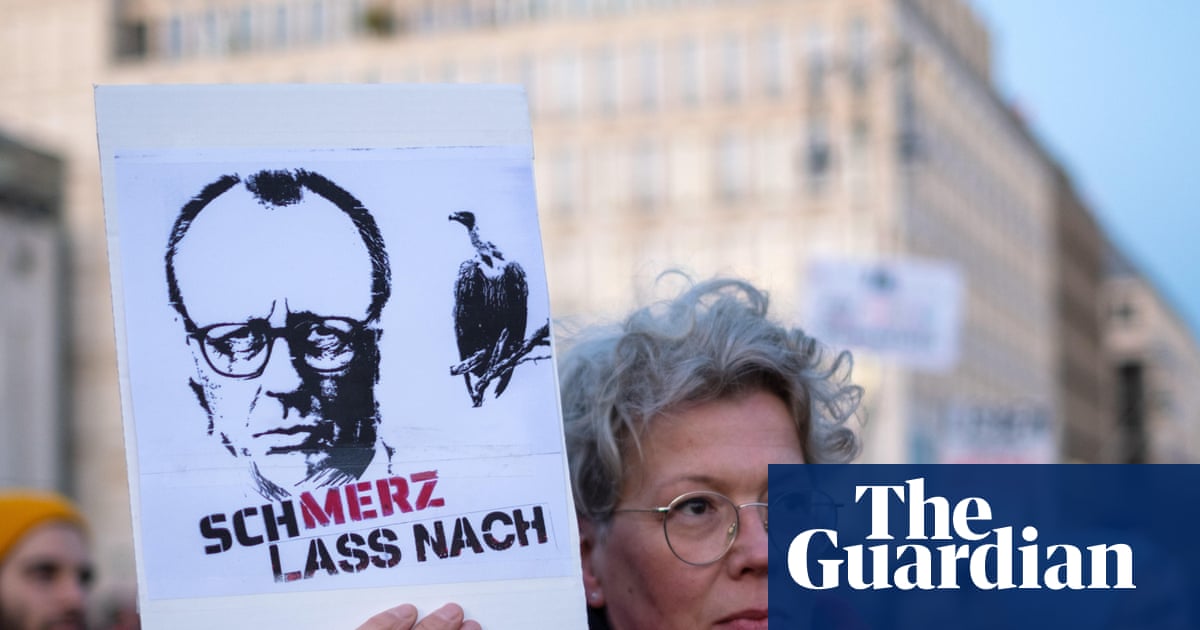
German Opposition Leader Merz Vows Sharper Distinction from Far-Right AfD Amid Rising Poll Numbers
BERLIN – Friedrich Merz, leader of the christian Democratic Union (CDU), has pledged a more explicit and forceful rejection of the far-right Alternative for Germany (AfD) following recent poll data indicating a surge in support for the party. The move comes as internal debate within the CDU intensifies regarding the effectiveness of its long-held strategy of maintaining a strict “firewall” between itself and the AfD.
Recent polling has unsettled some within the CDU, prompting discussions among party officials and advisors about whether the firewall approach is sustainable or even counterproductive. Concerns center on the AfD’s ability to criticize governing policies without bearing the duty of implementation,capitalizing on widespread dissatisfaction with incumbent governments in Western democracies – a phenomenon researchers have termed the “incumbent deficit.” A recent German study also found mainstream parties, including the CDU, are increasingly allowing the AfD to set the political agenda, inadvertently amplifying its ideas.
merz, while avoiding the term “firewall,” emphasized “fundamental differences” with the AfD, stating cooperation is unfeasible. “We accept this challenge,” he said Monday. “We will now also make it very clear and very explicit what the AfD stands for. we will distance ourselves very clearly and very explicitly from them. above all, it is important that we counter this with successful work in government.” He outlined a strategy focused on economic growth within constitutional limits, alongside stricter controls on illegal migration.
The AfD, which domestic security authorities have labeled a rightwing extremist force, has consistently attacked the CDU. Following Merz’s statement, AfD co-leader Alice Weidel responded on X, stating, “Merz and his functionaries keep walling themselves in. They’re fighting against the AfD, we’re fighting for Germany.” Weidel has previously cited Donald Trump’s “Make America Great Again” movement as an inspiration and recently met with US Vice President JD Vance.
The CDU’s shift in rhetoric reflects a growing anxiety within Germany’s mainstream political landscape as the AfD continues to gain traction, fueled by concerns over immigration and economic stagnation. The party was founded in 2013 and has steadily increased its support base, notably in eastern Germany.
