
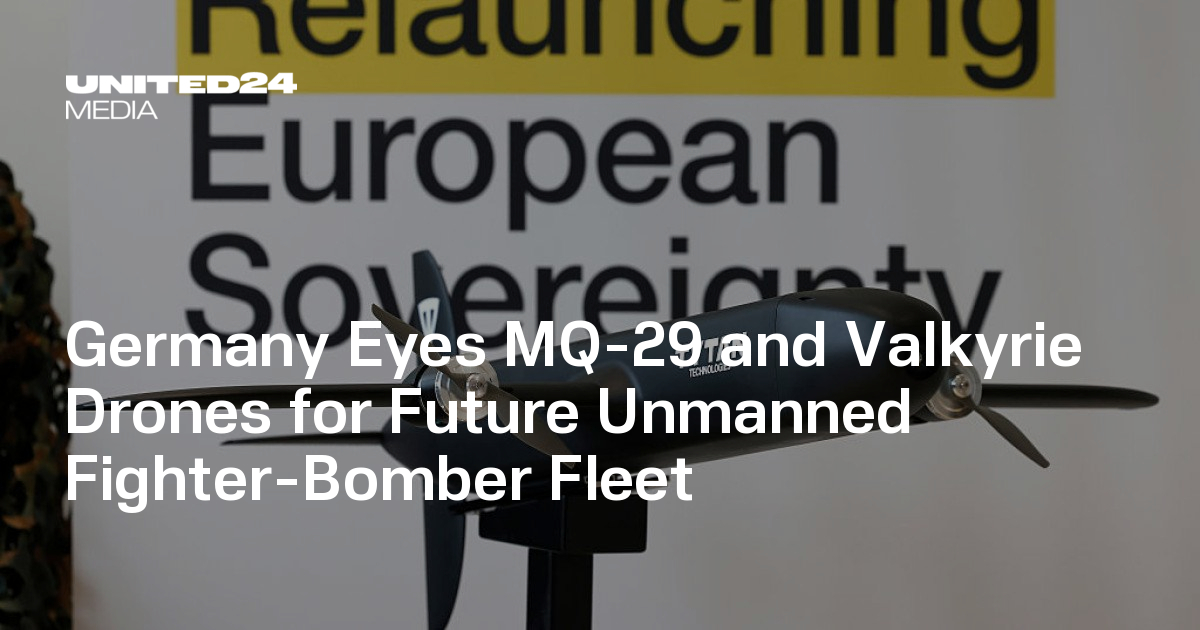
Germany is reassessing its plans for an unmanned fighter-bomber program, shifting focus from the Boeing MQ-28 Ghost Bat to evaluate alternative options, according to a report from German outlet Hartpunkt published February 20. The move comes as Berlin seeks a platform capable of operating alongside manned aircraft, conducting ground strikes and maintaining autonomous operation even after losing communication with control systems.
Whereas initial plans centered on the MQ-28, developed by Boeing Australia, the German Ministry of Defence will now consider other unmanned combat aerial vehicles (UCAVs). Candidates include the XQ-58A Valkyrie, manufactured by American firm Kratos, which has already been selected by Airbus, and an additional, currently unnamed option. Germany aims for initial operational capability (IOC) by 2029.
The shift in focus reflects a broader trend toward collaborative combat aircraft (CCA), exemplified by recent bomb tests conducted with the Turkish Kizilelma drone. It also aligns with potential adjustments to Germany’s Future Combat Air System (FCAS) program, which has faced delays due to disagreements with France.
The MQ-28 Ghost Bat, previously known as the Boeing Airpower Teaming System (ATS), is designed as a “loyal wingman” capable of autonomous missions and integration with crewed aircraft. Boeing has invested significantly in the program, with the Australian government contributing hundreds of millions of dollars, according to reporting from Hartpunkt and information available from Boeing’s website. As of October 2024, eight Block 1 prototypes had completed over 100 hours of flight testing, with operational tests regularly conducted at the RAAF Woomera Test Range Complex. Three additional Block 2 airframes, featuring improved wing design and GPS/INS capabilities, are slated for production by 2025, with a further six Block 2 units and development of an enhanced Block 3 prototype planned for December 2025.
The selection of American-designed UAVs – the MQ-28 and XQ-58A – has prompted speculation about the potential for a European alternative. However, the feasibility of German companies, such as Helsing and Grob, developing a viable option within the 2029 timeframe remains uncertain.
Recent developments involving Quantum Systems, a German drone manufacturer collaborating closely with Ukraine, may also be relevant. The company recently unveiled the RAT (Red Air Target) jet-powered target drone, moving from concept to first flight in just six weeks. While the RAT’s primary function is as a training tool, the rapid development timeline demonstrates German capabilities in aerospace technology.
The German Ministry of Defence has not publicly commented on the specific criteria guiding the UCAV selection process or the status of negotiations with potential suppliers.
