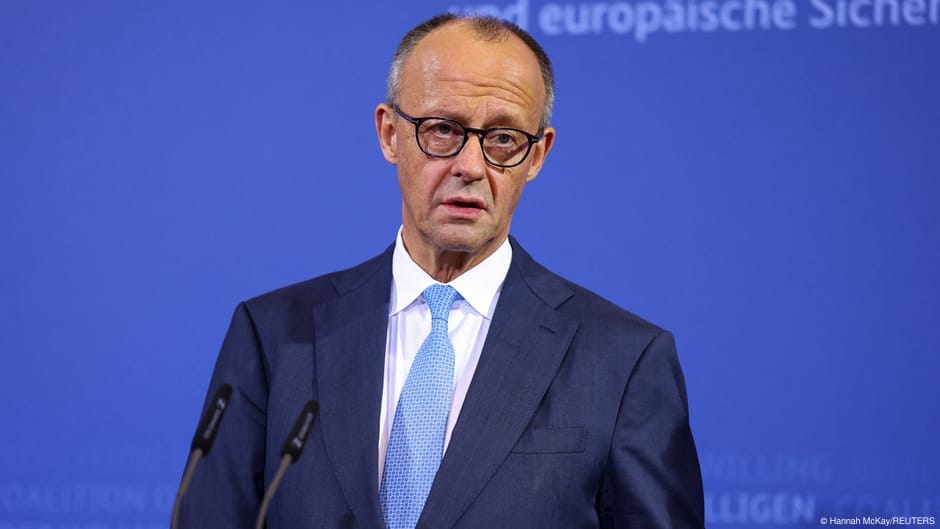
German Chancellor Friedrich Merz Says New Ukraine Peace Talks Including Europe Set Soon
German Chancellor Friedrich Merz said new talks on ending Russia’s invasion of Ukraine — with European leaders seated alongside Washington, Moscow and Kyiv — would take place “soon.”
Merz spoke in Berlin on Thursday after hosting a “Coalition of the Willing” summit of more than 25 leaders, hours after US President Donald Trump, Russian President Vladimir Putin and Chinese President Xi Jinping met in Shenzhen, China.
German Chancellor Friedrich Merz said the talks are “set to take place soon,” though he gave no date and no venue beyond naming the United Arab Emirates as a “neutral ground” option. Merz said Europe’s interests would be represented by Germany, France, the UK, Poland and Italy.
The chancellor’s announcement addressed the diplomatic process. European leaders have been critical of meetings between US, Ukrainian and Russian representatives, arguing that Europe needs a direct seat at the negotiating table.
“Of course we are prepared to hold talks with Russia, we have always said this. These talks are now set to take place soon,” Merz said after the Berlin meeting.
Who was in the room
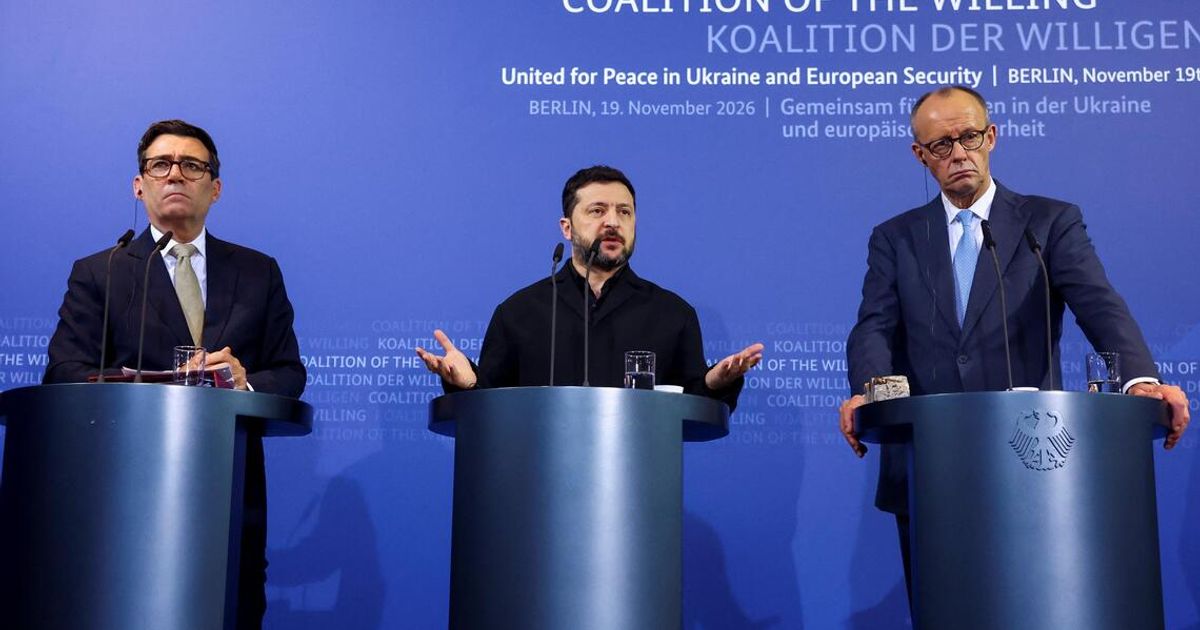
Zelensky attended the Berlin summit alongside Merz, French President Emmanuel Macron, British Prime Minister Andy Burnham, US President Donald Trump’s son-in-law Jared Kushner and US Special Envoy Steve Witkoff. The gathering included EU and NATO chiefs, held almost five years after Russia’s full-scale invasion began in February 2022.
Trump called into the Berlin talks from Air Force One while flying back from Shenzhen, said US envoy Jared Kushner. Kushner said that Trump seeks Europe’s involvement in a peace deal on Ukraine and that the US-European position was growing “much closer.”
“We want to make sure that everything we’re doing is unified, and I also want to be able to reiterate that President Trump wants to make a deal with Europe by his side. He’s not looking to impose anything unilaterally,” Kushner said.
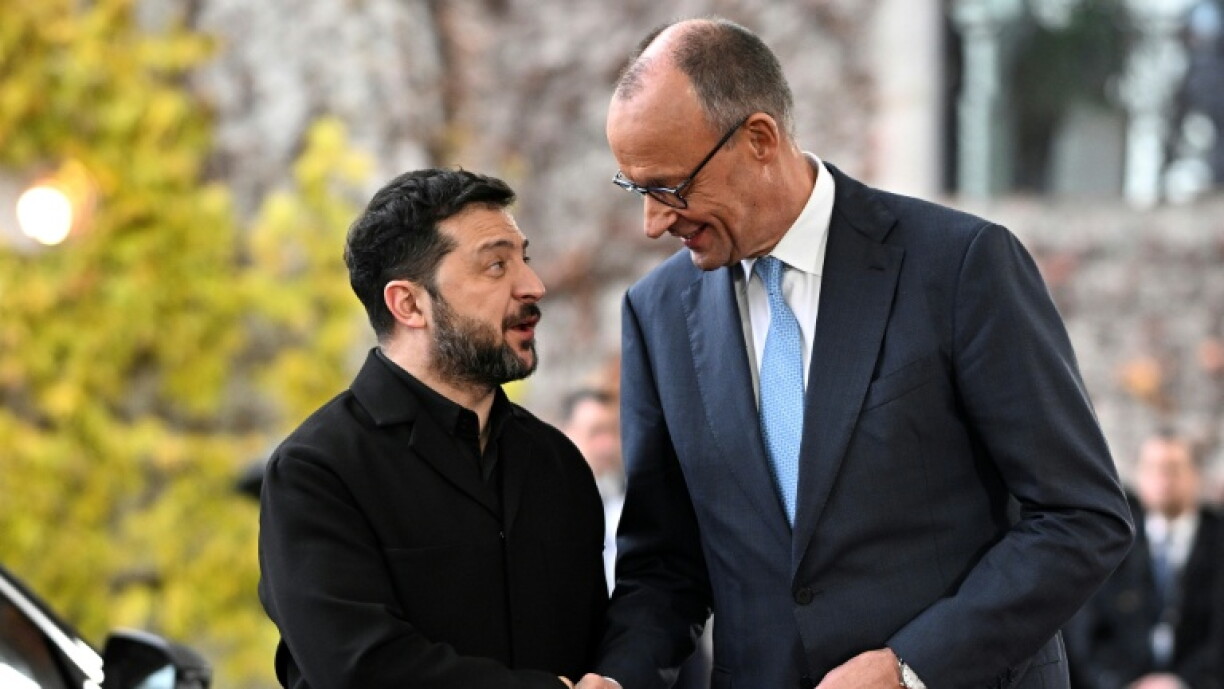
Zelensky told reporters that he saw a “huge chance” for peace if the “United States will really (put) pressure on Putin.”
Moscow’s counter-invitation
Putin, speaking after the Shenzhen trilateral summit, said Moscow had invited European leaders to visit the Russian capital through diplomatic channels.
“The American side is urging us to agree to the involvement of the Europeans,” Putin said. “Through diplomatic channels, we suggested to the Europeans to come to Moscow. And after that we will decide in what format the talks can continue.”
“We understand that discussing issues linked to security in Europe is pointless without the Europeans,” he added.
Moscow drew a red line, though. The Russian president rejected any military cooperation between Europe and Ukraine, stressing that “military cooperation in any form is, of course, a problem.”
The Yalta warnings in Berlin
The Shenzhen meeting — which saw Trump, Putin and Xi take part in a trilateral meeting — drew comparisons with the February 1945 Yalta Conference, where US President Franklin D. Roosevelt, UK Prime Minister Winston Churchill and Soviet leader Joseph Stalin discussed Europe’s future. Merz pushed back hard at that parallel.
“Yalta format cannot bring peace” to Ukraine, Merz said, describing the summit in China as a “photo op.” He handed each Berlin participant a piece of the Berlin Wall, saying the structure had brought “oppression, insecurity and a lack of peace,” adding: “That is exactly what Yalta stood for.”
Showdown over weapons and NATO
The war itself continued. Russian strikes have hammered Ukraine’s energy and transport infrastructure, and Kyiv is in urgent need of US-made Patriot missiles. Ukraine, for its part, attacked the bridge linking annexed Crimea to Russia for the third time in a week on November 19, and attacked Russian oil facilities.
Putin promised retaliation. “Our response will be far more painful than Kyiv’s attack on the bridge,” he said.
Macron called on Ukraine’s allies to do the “maximum” to deliver air defense systems, and said the question of Ukraine’s NATO accession should be reopened, framing the Russian position as “maximalist.”
Burnham, co-hosting the Berlin talks with Merz and Macron, put the alliance’s position plainly. “I hope that message is heard very clearly in Moscow. For as long as it takes, we will be there at the side of Ukraine and we will not falter,” he said.
What the differing reports say
The reports highlight the scale of the Berlin summit and the Washington-Kyiv-Berlin team framing, as well as the military detail on Crimea and Patriots.
Why it matters for business and governance
The diplomatic breakthrough touches more than pipe-lit negotiation rooms. Sanctions regimes, cross-border logistics, and insurance costs shift whenever peace talks move closer to a ceasefire — and multinational firms trading in Central and Eastern Europe watch each mandate carefully.
International trade compliance lawyers and cross-border risk consultancies typically see demand spike around exactly these inflection points in the negotiation cycle, from sanctions-review engagements to supply-chain restructuring across the Baltic states and central Europe.
The next question — who hosts, and when — remains open. Merz said no date had been fixed. The UAE option is on the table, and Putin wants Moscow first.
Russia’s full-scale invasion has now run for almost five years, since February 2022, with the Trump administration prioritizing an end to the war.
“We are looking for locations on neutral ground,” Merz said.