Georgia Power Grid Expansion for AI Data Centers May Displace Residents
Georgia Power is pushing forward with a massive grid expansion plan spanning more than 1,000 miles of new transmission lines to accommodate surging energy demand from artificial intelligence data centers, forcing residential property displacements and igniting intense eminent domain battles across Fayette, Heard, Fulton, and Coweta Counties.
The Transmission Route and Residential Displacement Crisis
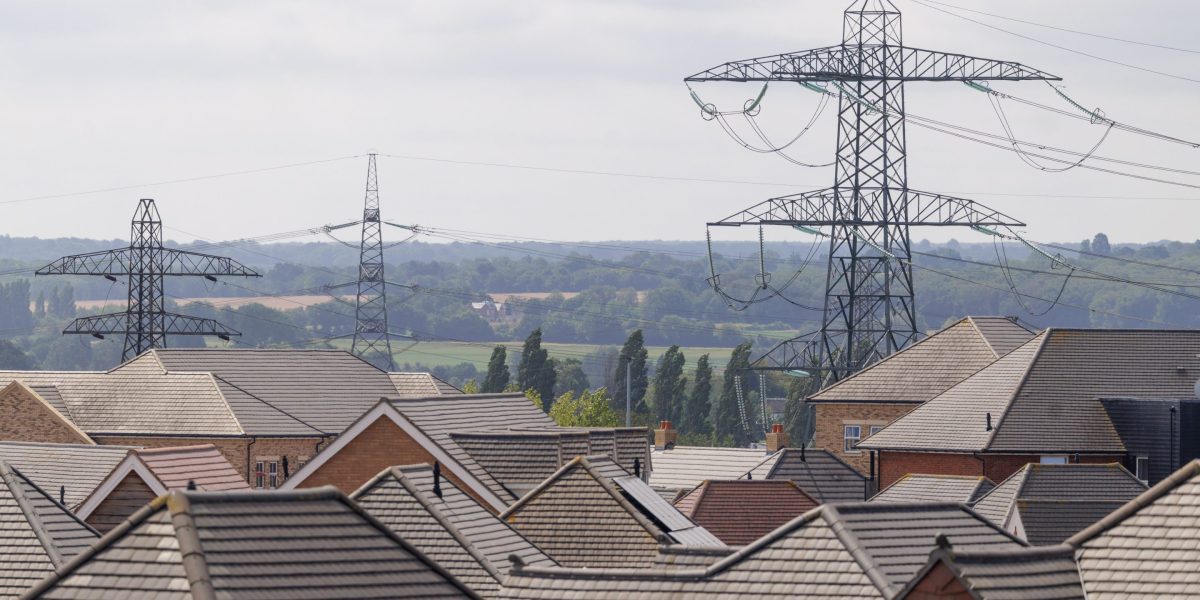
The state’s aggressive push into artificial intelligence infrastructure has moved from executive boardrooms to residential backyards. Georgia Power is rolling out a grid expansion plan that includes building more than 1,000 miles of transmission lines. This infrastructure spans over 330 parcels of land, cutting directly through residential properties and adding about 10 gigawatts of new generating capacity over the next five years. Building these lines requires leveling nearly 30 residential properties, putting families at odds with corporate utility timelines.
“My childhood home is being taken by Georgia Power,” said Ansley Brown, a Georgian whose house is affected, in a public post on Instagram. “They are going to bulldoze this entire property to the ground.”
Property owners face a stark choice between selling their homes outright or surrendering portions of their land through eminent domain as Georgia Power executes its current energy capacity projects. Last year, the Georgia Public Service Commission (PSC) approved Georgia Power’s 2025 Integrated Resource Plan. That filing detailed the projected energy needs of customers and the state’s expected power necessities driven by AI investments.
The 10-year plan includes new transmission resources across more than 1,000 miles of transmission lines. Additionally, the Georgia PSC approved a formal process to evaluate new grid enhancing technologies to help meet increasing grid capacity needs.
Georgia Power is actively reaching out to residents living along a 35-mile stretch between Fayette, Heard, Fulton, and Coweta Counties. The utility aims to construct a high-voltage transmission line connecting its Ashley Park Substation to its plant in Wansley. The proposal, designated as the Ashley Park-Wansley Transmission Project, serves the broader needs of communities relying on critical infrastructure, according to a Georgia Power spokesperson speaking to Fortune.
Affected families argue the expansion is driven almost entirely by the commercial tech boom. “We don’t have a choice in this. They are going to be expanding power lines,” Brown said in a video recorded during active negotiations. “Why? For the data centers.”
In her recent posts on Instagram, Brown noted that District Representative Brian Jack scheduled a meeting with Georgia Power stakeholders and fought for a resolution. A spokeswoman for Congressman Brian Jack told Fortune that the representative received multiple requests for help from constituents concerning Georgia Power activity in the district and worked diligently to address each case with involved stakeholders.
Negotiations between Ansley Brown’s family and the utility have concluded, though the specific financial terms of the settlement remain undisclosed. A Georgia Power representative told Fortune that the firm is pleased to have reached an agreement with Ansley’s mother and brought the matter to a successful resolution. The utility noted that land acquisition and easement negotiations are close to completion, with construction slated to begin as early as next year.
The Data Center Energy Footprint and Fiscal Realities
While Georgia Power denies that the transmission line is exclusively a data center project, stating that the utility is not in the data center business, independent estimates contradict that stance. Reports from CBS estimate that data centers will consume 70 to 80 percent of the power generated and routed through this specific transmission line. In a statement to Fortune, a Georgia Power representative was unable to confirm the accuracy of those specific consumption figures.
Official regulatory filings tell a similar story. The Georgia PSC and Georgia Power agreed in December 2025 to certify a nearly 10,000-megawatt energy generation plan. The agreement explicitly states that approximately 80 percent of the new power generation is expected to power data centers.
Georgia has established itself as a premier national hub for artificial intelligence investment, fueled by aggressive state tax incentives. The state provides exemptions administered through the Georgia Department of Revenue, covering a wide range of equipment and infrastructure deployed in AI developments. Data centers utilizing these incentives must make a minimum investment between $100 million and $250 million, securing a 100 percent waiver of state and local sales and use taxes on equipment purchases.
Over 200 data centers are operational across Georgia, with nearly 170 concentrated in the Atlanta metropolitan area. Major tech giants, including Microsoft, Amazon, and Google, operate these facilities. However, fiscal policies face mounting skepticism from state analysts and lawmakers.
A tax incentive evaluation published in December 2025 by The University of Georgia Carl Vinson Institute of Government projected that the net fiscal impact of Georgia’s data center sales and use tax exemption would leave the state nearly $574 million in the negative. J. Thomas Perdue, a policy analyst at the Georgia Public Policy Foundation, told Fortune that the policy direction has clearly shifted. State and local governments bear the immediate cost through revenue they do not collect, and whether that cost is ultimately felt through other taxes or reduced public spending depends on subsequent budget decisions.
Eminent Domain Mechanisms and Long-Term Easement Encumbrances
When routing transmission lines, Georgia Power employs a multi-step evaluation process reviewing existing land uses and community considerations. Meredith Stone, media relations manager at Georgia Power, told Fortune that the company initiates land acquisition discussions at 125 percent of the appraised value as a starting point. Negotiations continue until the landowner feels comfortable with the transaction.
While uncommon, the utility can attempt to acquire land through eminent domain, which allows private property to be seized for public use under the Fifth Amendment of the U.S. Constitution. Georgia Power reports that eminent domain is used as a last resort and occurs in less than 1 percent of its land transactions. The company states the process was used only five times over the past year, with none of those actions impacting residential homes.
Real estate attorneys representing property owners emphasize that easements carry permanent encumbrances that outlive current ownership. David Needham, a Georgia attorney with over a decade of experience representing property owners in eminent domain cases, explained that permanent utility easements function as contracts attached to the title even after the property is sold. These agreements can restrict owners from building permanent structures beneath lines and reserve broad rights for utilities to install additional infrastructure.
It is a contract heavily tilted in favor of the power company, Needham told Fortune, noting that while compensation is offered, the process blurs the lines regarding what constitutes a public good.
Projected Ratepayer Savings and Grid Reliability Claims
To offset public backlash, Georgia Power projects that the collective 1,000 miles of transmission lines across all five grid expansion projects will generate long-term savings for residential customers. The utility projects nearly $102 in savings per residential customer per year, with those reductions expected to materialize beginning in 2029. Company executives maintain that these savings materialize because large-load industrial and data center customers will pay higher baseline rates, absorbing the bulk of infrastructure costs and reducing the financial burden passed down to residential and small commercial ratepayers.
We are in the service of providing energy to a growing Georgia, and the way that we’re doing that is very different from any other utility in the country, Stone told Fortune. We are requiring our large-load customers to pay more, so we can use those funds to put downward pressure on the rates for our residential customers.
Utility leadership asserts that data center investments will enhance the regional electrical grid through mandated system upgrades without impacting everyday customer experience or increasing blackout risks.