
The Origin of Life’s Code: New Research Links Protein Building Blocks to Genetic Evolution
Urbana-champaign,IL – For decades,scientists have wrestled with a basic question: how did the genetic code – the intricate set of instructions governing all life on Earth – come to be? A groundbreaking new study from the University of Illinois Urbana-Champaign is offering compelling insights,suggesting a surprising link between the genetic code’s origins and the fundamental building blocks of proteins. the research, published recently, has important implications for both genetic engineering and the field of bioinformatics.
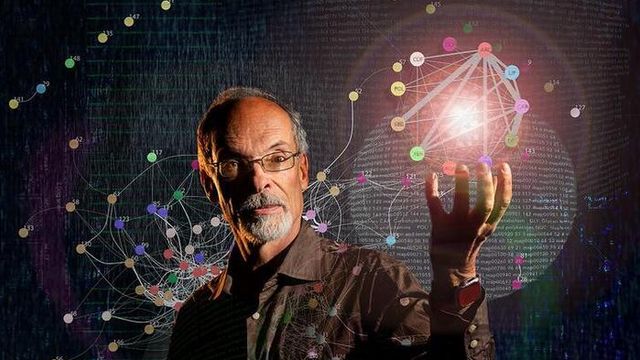
The study, led by Professor Gustavo Caetano-Anollés of the Departments of Crop Sciences, the Carl R. Woese Institute for Genomic Biology, and Biomedical and Translational Sciences at Carle Illinois College of Medicine, focuses on phylogenomics – the study of evolutionary relationships between genomes. Caetano-Anollés and his team discovered a striking correlation between the evolutionary histories of protein domains, transfer RNA (tRNA), and, crucially, dipeptides - sequences of two amino acids.
“We find the origin of the genetic code mysteriously linked to the dipeptide composition of a proteome, the collective of proteins in an organism,” explains Caetano-Anollés.
A Protein-First Outlook
Life on Earth emerged approximately 3.8 billion years ago, but the genetic code didn’t appear for another 800 million years. competing theories have long debated whether RNA-based enzymatic activity or protein interactions came first. This latest research strengthens the argument for the latter, building on previous work by Caetano-Anollés’ team that demonstrated ribosomal proteins and tRNA interactions evolved after the initial stages of life.
The study highlights the dual nature of life’s coding system: the genetic code, stored in DNA and RNA, and the protein code, which dictates how cells function. The ribosome, the cell’s protein factory, bridges these two, utilizing tRNA to assemble amino acids into proteins.Aminoacyl tRNA synthetases, the enzymes responsible for loading amino acids onto tRNA, act as crucial “guardians” of the genetic code, ensuring accuracy.
“Why does life rely on two languages – one for genes and one for proteins?” Caetano-Anollés poses. “We still don’t know why this dual system exists or what drives the connection between the two. Proteins, on the othre hand, are experts in operating the complex molecular machinery of the cell.”
Dipeptides as Early Structural Modules
The research team analyzed a massive dataset of 4.3 billion dipeptide sequences from 1,561 proteomes across all three domains of life – Archaea, Bacteria, and Eukarya – to construct a phylogenetic tree charting the evolution of dipeptides. This tree mirrored patterns observed in protein structural domains,suggesting dipeptides played a significant role as early structural modules. With 400 possible combinations, the varying abundances of these dipeptides across organisms provided a rich source of evolutionary data.
Further analysis categorized amino acids into three groups based on their entry into the genetic code. The oldest groups, linked to the origin of editing mechanisms in synthetase enzymes and the establishment of the first rules of genetic specificity, further support the protein-first hypothesis.
Implications for the Future
This research doesn’t just illuminate the past; it also offers valuable tools for the future. Understanding the evolutionary origins of the genetic code can inform advancements in genetic engineering and bioinformatics, potentially leading to more precise and efficient methods for manipulating and understanding the building blocks of life.
