
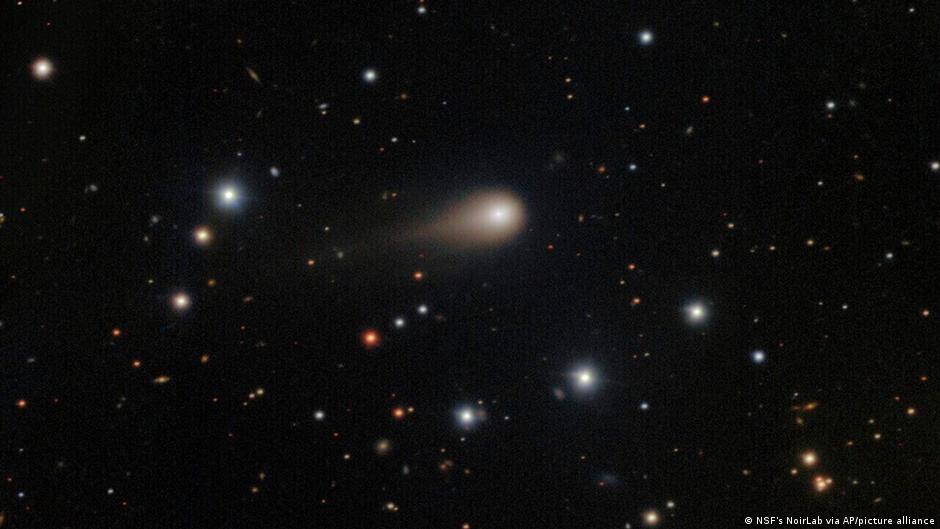
New Hubble Image Reveals Detail of Interstellar Comet 3i/atlas
WASHINGTON – Astronomers have released a new image of the interstellar comet 3i/Atlas, captured by the hubble Space Telescope, offering an unprecedented look at the composition of this rare cosmic visitor. The comet, discovered just two months ago, is onyl the third interstellar object confirmed to be traversing our solar system, following 1i/’Oumuamua (2017) and 2i/Borisov (2019).
this fleeting visit presents a unique prospect for scientists to study material originating from outside our solar system. Previous observations suggested 3i/Atlas could be the largest and oldest comet ever observed. The new Hubble image reveals the growth of a tail, indicating changes in the comet’s particles, and allows for the first spectroscopic glimpse of it’s chemistry.
“We were very excited to see the growth of the tail, which suggests a change in the particles with respect to the previous images of Gemini, and we could glimpse the chemistry from the first time from the spectrum,” said astronomer Karen Meech, of the Astronomy Institute of the University of Hawaii.
As of the latest report, 3i/Atlas was 384 million kilometers from Earth and continuing to approach, though NASA confirms it poses no threat to our planet. The comet will reach its closest approach to the sun at the end of October and will pass within 269 million kilometers of earth in December – further from Earth than it is from the sun.
The image, a scientific milestone, serves as a reminder of the vastness and dynamic nature of our galaxy. “As 3i/Atlas returns to the depths of interstellar space, this image is both a scientific milestone and a source of astonishment,” Meech reflected. “It reminds us that our solar system is only part of a vast and dynamic galaxy, and that even the most fleeting visitors can leave a lasting footprint.”
Image: NASA, ESA, David Jewitt (UCLA); Image Processing: Joseph Depasquale (STSCI)
