
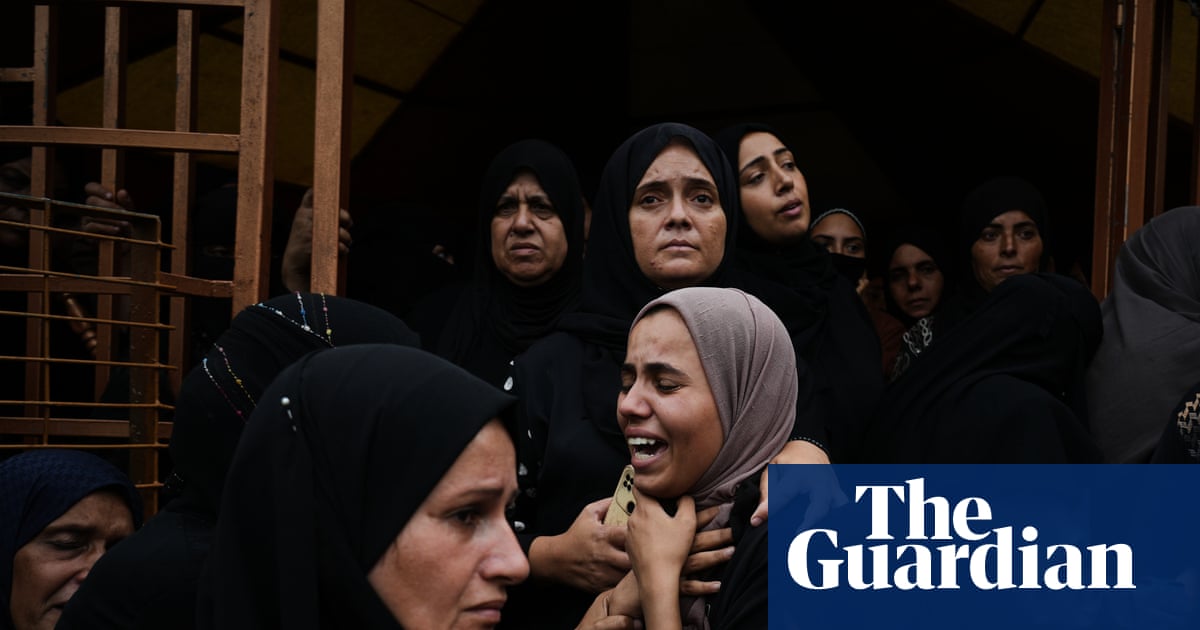
More than 75,000 people have been killed in Gaza during the first 16 months of the ongoing conflict, a modern study published Wednesday in Lancet Global Health reveals. The figure represents at least 25,000 more deaths than previously reported by local authorities.
The research, conducted by a team of economists, demographers, epidemiologists, and survey specialists, analyzed data up to January 5, 2025. It found that between October 7, 2023 – the date of the Hamas attack on Israel – and that date, 42,200 women, children, and elderly people comprised 56% of the violent deaths in Gaza. The study estimates that 3-4% of Gaza’s population has been violently killed during this period, with a “substantial number” of additional non-violent deaths resulting indirectly from the conflict.
The findings come as the exact death toll in Gaza remains a point of contention. However, a senior Israeli security officer reportedly told Israeli journalists last month that figures provided by Gaza’s health authorities were “broadly accurate,” a shift from years of dismissing the data. The officer estimated approximately 70,000 Palestinians had been killed by Israeli attacks since October 2023, excluding those listed as missing.
Gaza health authorities currently report that direct deaths from Israeli attacks have exceeded 71,660, with over 570 fatalities occurring since a ceasefire took effect in October 2025.
The new study corroborates earlier research. A 2024 Lancet study estimated that the Palestinian territory’s health ministry’s initial death toll during the first nine months of the war was roughly 40% lower than the actual number of fatalities. The current research suggests a similar undercount.
Researchers conducted a survey of 2,000 families in Gaza, carefully selected to represent the territory’s population, gathering details on deaths within their families. “This is a very sensitive survey, and potentially very upsetting [for respondents], so it was important to have Palestinians both asking and answering the questions,” said Michael Spagat, a professor of economics at Royal Holloway, University of London, and one of the study’s authors.
Spagat, who has spent over two decades calculating conflict casualties, indicated the research also identified approximately 8,200 deaths attributable to indirect effects of the conflict, such as malnutrition and untreated disease. He also expressed reservations about other estimates suggesting a higher ratio of indirect to direct deaths, citing Gaza’s relatively well-developed medical infrastructure and small geographic size, which facilitates aid delivery.
The Hamas raid on October 7, 2023, resulted in approximately 1,200 deaths, primarily civilians, with 250 individuals taken hostage. Israel responded with a large-scale offensive involving airstrikes, tank shelling, and artillery bombardment, causing widespread devastation in Gaza.
The study’s timeframe encompasses the most intense phase of Israel’s offensive but precedes the peak of the humanitarian crisis in Gaza, where famine was declared by UN-backed experts in August of last year.
Disagreement also surrounds the proportion of combatants versus non-combatants among those killed. Israeli officials have claimed a near-equal ratio, a claim contradicted by the new study.
Separate research published in November by the Max Planck Institute for Demographic Research estimated 78,318 deaths in Gaza between October 7, 2023, and December 31, 2024 – a period nearly identical to the new Lancet study. That research also found a 44% reduction in life expectancy in Gaza in 2023 and a 47% reduction in 2024.
Spagat cautioned that achieving a definitive casualty count will be a lengthy and resource-intensive process, and a complete accounting of all deaths in Gaza may never be possible.
