
Gaza amputation Crisis: Rising Civilian Injuries Amidst Aid Delivery Concerns
Gaza City faces a deepening humanitarian crisis as the number of civilian injuries, particularly amputations, surges. Reports from the Al-shifa Hospital reveal a harrowing reality for residents caught in the crossfire, and increasingly, while seeking essential aid. The situation underscores the urgent need for safe aid access and a cessation of hostilities.
A Surge in Amputations
At Al-Shifa Hospital, young Maryam Abu Alba is receiving treatment after losing a leg in a recent bombing. Her grandmother recounted the trauma, stating, “The neighbor’s house was bombed, and their home was hit.” Doctors were forced to amputate one of Maryam’s legs, and insert metal plates into the other due to fractures. She is currently experiencing severe pain.
Mohammad Hassan, another young patient at Al-Shifa, shared his story of survival. ”I was going to buy falafel,” he said. “On the way home, I looked up and saw a rocket heading towards me. I tried to run, but it was too fast.” He sustained a life-altering leg amputation in the blast.
Did You Know?
Gaza now has the highest per capita rate of child amputees globally, a statistic reflecting the devastating impact of ongoing conflict.
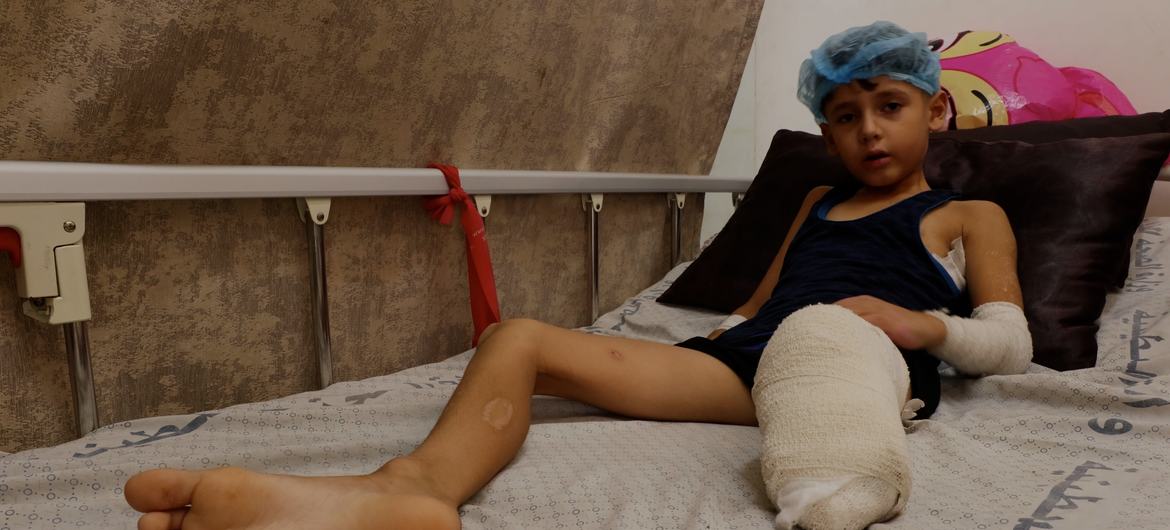
Palestinian child Mohammad Hassan recovering in a gaza hospital after losing his leg in a strike.
Challenges in Aid Delivery and Rising Casualties
In May,the Gaza Humanitarian Foundation (GHF) assumed control of aid distribution,consolidating distribution points into a limited number of fortified hubs. This shift in strategy, bypassing established routes, has drawn criticism from the United Nations and numerous non-governmental organizations. The UN human rights office described attempts to reach these sites as “a deadly pursuit,” with thousands of Palestinians injured or killed while seeking food since May.
Ibrahim Abdel nabi, a resident of the Al-mawasi displacement site in Khan Younis, recounted a harrowing experience while attempting to access aid. “we were told that the Gaza Humanitarian Foundation had opened its doors to distribute aid. When I arrived at the Al-Alam area, west of Rafah, I was hit by an explosive bullet in my leg,” he explained. He endured an hour and a half of bleeding before receiving assistance, ultimately requiring twelve operations and a subsequent leg amputation.

Ibrahim abdel Nabi, a Palestinian displaced in Gaza, with a prosthetic limb he constructed himself.
Self-Reliance Amidst Despair
Despite his own injuries and the lack of adequate medical supplies, Mr. Nabi demonstrated remarkable resilience. Driven by the need to provide for his family, he constructed a makeshift prosthetic leg from available materials. “The prosthesis injures my leg,” he admitted, “It causes inflammation and increases the pain. We don’t have medical care or supplies, but I will use it no matter how much it hurts.”
His wife, witnessing his struggle, expressed her hope for survival. “God willing, we will live through this experience,” she said.
Pro Tip:
Supporting organizations providing medical aid and prosthetic limbs can directly impact the lives of those affected by conflict in Gaza.
Key Events & Statistics
| date | Event | Impact |
|---|---|---|
| May 2025 | GHF assumes control of aid delivery in Gaza | Shift in aid distribution strategy; criticism from UN and NGOs |
| august 2025 | UN reports “deadly pursuit” of aid | Thousands injured or killed seeking food |
| Ongoing | Rising amputation rates | Gaza has the highest per capita rate of child amputees globally |
What steps can the international community take to ensure safe and equitable aid delivery to Gaza?
How will the long-term physical and psychological trauma of these injuries impact the future of Gaza’s population?
Understanding the Gaza Humanitarian Crisis
The gaza Strip, a self-governing Palestinian territory, has faced decades of political and economic hardship.Blockades, armed conflicts, and internal divisions have contributed to a fragile humanitarian situation. The ongoing conflict exacerbates existing vulnerabilities,leading to shortages of essential resources like medical supplies,food,and clean water. The high population density and limited infrastructure further complicate aid delivery and increase the risk of civilian casualties. According to the World Health organization, access to healthcare in Gaza is severely limited, with hospitals often overwhelmed and lacking essential equipment and personnel WHO Gaza Crisis.
Frequently Asked Questions About the Gaza Amputation Crisis
- What is causing the increase in amputations in Gaza? The rise in amputations is primarily attributed to injuries sustained during armed conflict and, increasingly, while attempting to access humanitarian aid.
- What is the role of the Gaza Humanitarian Foundation? The GHF took over aid delivery in May 2025, centralizing distribution points, a move that has been met with criticism.
- What is the international community doing to help? International organizations are providing medical aid and advocating for safe access to Gaza, but the scale of the crisis requires a more thorough response.
- What are the long-term consequences of these injuries? Beyond the physical trauma, amputees face meaningful psychological challenges and require long-term rehabilitation and support.
- How can I help those affected by the crisis? You can donate to reputable humanitarian organizations working in Gaza, advocate for political solutions, and raise awareness about the situation.
This is a developing story. We will continue to provide updates as they become available.
