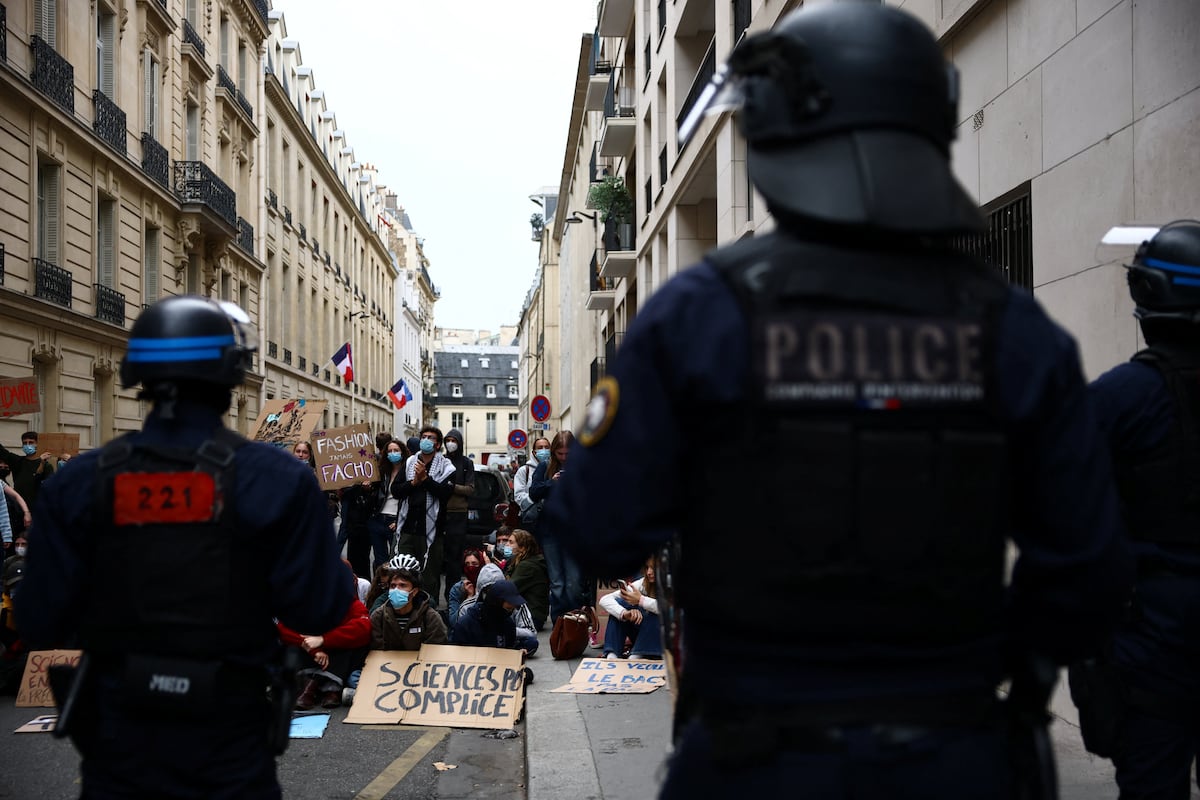
French PM announces budget cuts and aid to placate widespread protests
French Prime Minister Sébastien Lecornu announced a 54 billion euro budget adjustment, fuel price subsidies, and a 10-million-barrel oil release, attempting to placate widespread street protests that have left thousands arrested and hundreds injured as the country faces potential government collapse seven months before presidential elections, elpais.com reported.
Fifty Billion Euros in Budget Cuts and Deficit Targets
The French government aims to reduce its public deficit to 5 percent, despite projections showing it reaching 5.5 percent without intervention. Lecornu outlined a budget adjustment totalling 54 billion euro cuts across nearly all basic expenditures during a parliamentary address.
“Our country is aging and our system of pensions increases mechanically,” Lecornu stated, according to elpais.com. The prime minister appealed to the patriotism of political parties to share the burden equitably.
Opposition figures and critics, however, are threatening to collapse the executive branch over the fiscal tightening. The national budget must secure parliamentary approval through an autumn legislative session scheduled just as political tensions peak ahead of the April 18 presidential elections.
Fuel Subsidies and Emergency Energy Checks
To ease the pressure on household finances, Lecornu deployed targeted financial interventions during his appearance. The measures include a promised reduction on a liter of diesel fuel by between 12 and 18 cents.
Additional support includes drawing from a strategic petroleum reserve of 10 million barrels of crude. An energy check for lower-income families will be implemented in January.
Sector-specific relief packages were also promised for groups experiencing financial strains, including farmers and transport workers. Lecornu acknowledged public fatigue, stating that the government recognizes the exhaustion of citizens facing compounding difficulties.
Student Protests, Barricades, and Police Injuries
The unrest began on September 17 at a high school in Créteil on the outskirts of Paris, where students initially protested inadequate resources, a lack of teachers, and poor infrastructure. The movement rapidly evolved into a nationwide phenomenon.
By the time Lecornu spoke, demonstrations had brought between 266,000 and 450,000 protesters—including high schoolers, university students, teachers, and parents—into the streets. Educational institutions faced severe disruptions, with classes suspended in 528 high schools, affecting roughly 30,000 students whose facilities suffered physical damage.
Barricades featuring trash containers blocked entrances to prominent institutions such as the Hélène-Boucher and Voltaire high schools, as well as Sciences Po Paris. Ministry of Interior figures recorded 6,629 total arrests since the demonstrations began.
Violent clashes resulted in 761 police officers and gendarmes sustaining injuries. Meanwhile, 89 members of the teaching staff were harmed, including school directors and vice-principals.
Protests Against Police Tactics and Amputated Limbs
The confrontation between demonstrators and law enforcement drew intense political scrutiny over the methods used to disperse crowds. Interior Minister Laurent Nuñez addressed the National Assembly regarding controversial crowd control tools.
Nuñez announced the temporary ban of stun grenades and tear gas launchers to prevent further injuries. Official figures indicate that police actions resulted in 215 student injuries, which authorities described primarily as accidental or related to projectiles and mortars thrown by demonstrators.
Severe injuries among protesters fueled demands for harsher restrictions on police armaments. A student in Lens lost a hand after a stun grenade exploded, and a 14-year-old adolescent sustained a double fracture of the jaw in Saint-Ouen-l’Aumône after being struck by a tear gas launcher.
The officer responsible for that discharge was detained. Socialist leader Olivier Faure criticized the government’s concessions as insufficient, demanding an outright ban on flash-ball weapons and LBD rubber bullet launchers.