Francis Halzen Wins Nobel Prize in Physics for High-Energy Neutrino Discovery
The 2026 Nobel Prize in Physics has been awarded to Belgian physicist Francis Halzen for his decisive contributions to the IceCube Neutrino Observatory and the discovery of high-energy neutrinos originating from outside the solar system. 24 Notícias reported that the distinction honors decades of dedicated research that established an entirely new method for observing the cosmos.
Francis Halzen, 82, acknowledged the honor in a phone call following the announcement, describing the award as a major surprise. He first pitched his concept to capture neutrinos at the South Pole in 1988, paving the way for the IceCube observatory, which currently unites roughly 450 researchers, computer scientists, and engineers across 58 institutions and 14 countries, as detailed by Diário de Notícias.
Building IceCube in Antarctic Ice
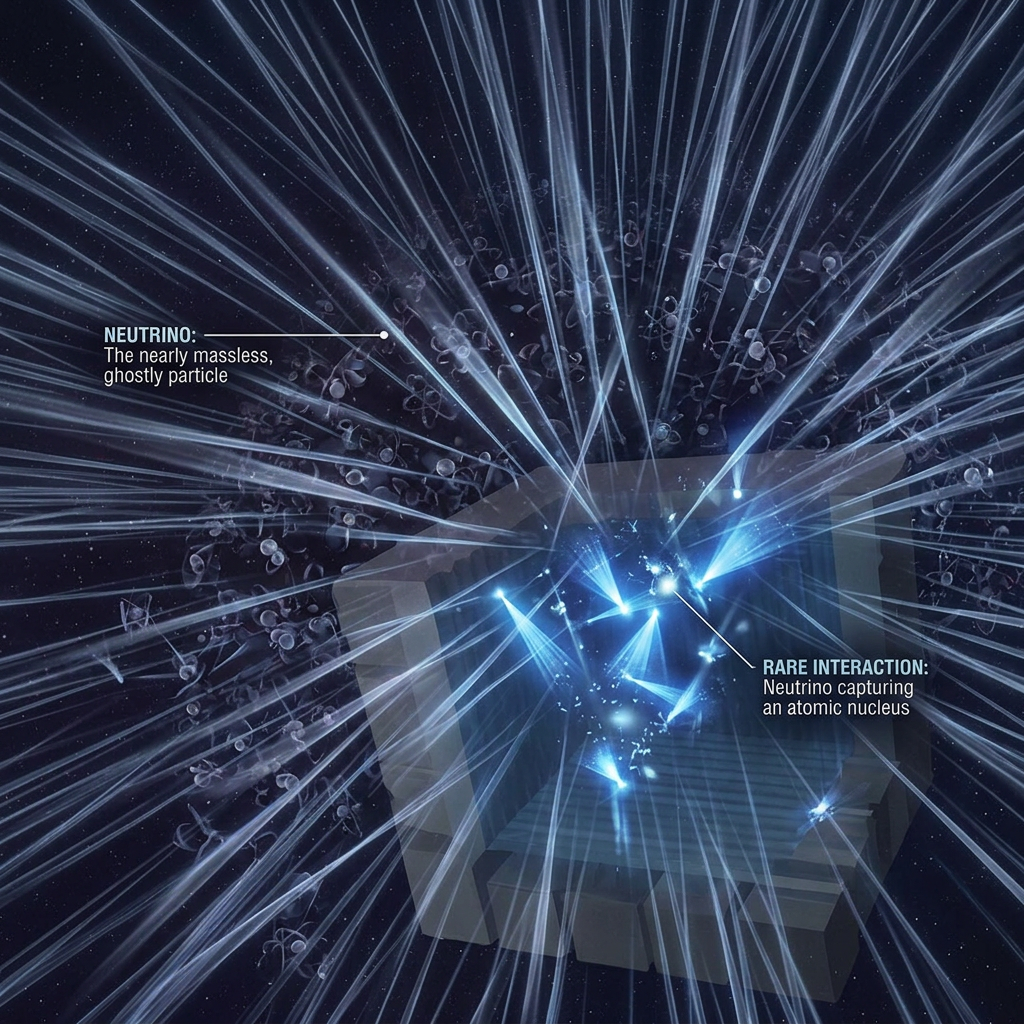
The IceCube facility stands as the largest neutrino detector in the world, anchored deep within the ice of Antarctica. The detector occupies a cubic kilometer of pristine ice at the South Pole, featuring 5,160 optical sensors buried more than a kilometer and a half below the surface. These instruments capture faint blue flashes of light produced when a neutrino collides directly with the ice.
Neutrinos travel through the Earth, oceans, and the human body without leaving a physical trace, a characteristic that earned them the descriptor of ghost particles in reports. Because they cross trillions of bodies every second without interacting with matter, Mauro Moreira Guerra explained that this elusive behavior makes them ideal messengers for looking back toward the early universe.
Opening a New Window on Extreme Cosmic Phenomena
In 2013, the IceCube collaboration detected 28 high-energy neutrinos originating from beyond the solar system, officially inaugurating the field of neutrino astronomy, according to Público. Following that initial detection, scientists tracking data from the observatory identified a cosmic neutrino source located 3.7 billion light-years away, as noted by Diário de Notícias.

Unlike visible light, which relies on standard electromagnetic radiation, high-energy neutrinos are subproducts of extreme collisions involving charged particles like protons or nuclei striking the interstellar medium.
Portuguese Scientists Collaborate on Neutrino Physics Projects
While Portuguese researchers do not participate directly in IceCube, local scientists maintain an active presence in neutrino physics through collaborations like SNO+ and DUNE, having previously contributed to the SNO experiment tied to the 2015 Nobel Prize won by Art McDonald, as highlighted by 24 Notícias. Mark Pearce, chair of the Nobel Committee for Physics, stated in announcements covered by Diário de Notícias that Francis Halzen’s tenacity and scientific vision forged a new kind of astronomy through an exceptional instrument.
These upcoming efforts aim to answer fundamental questions regarding the mass absolute value of neutrinos and the imbalance between matter and antimatter in the universe.