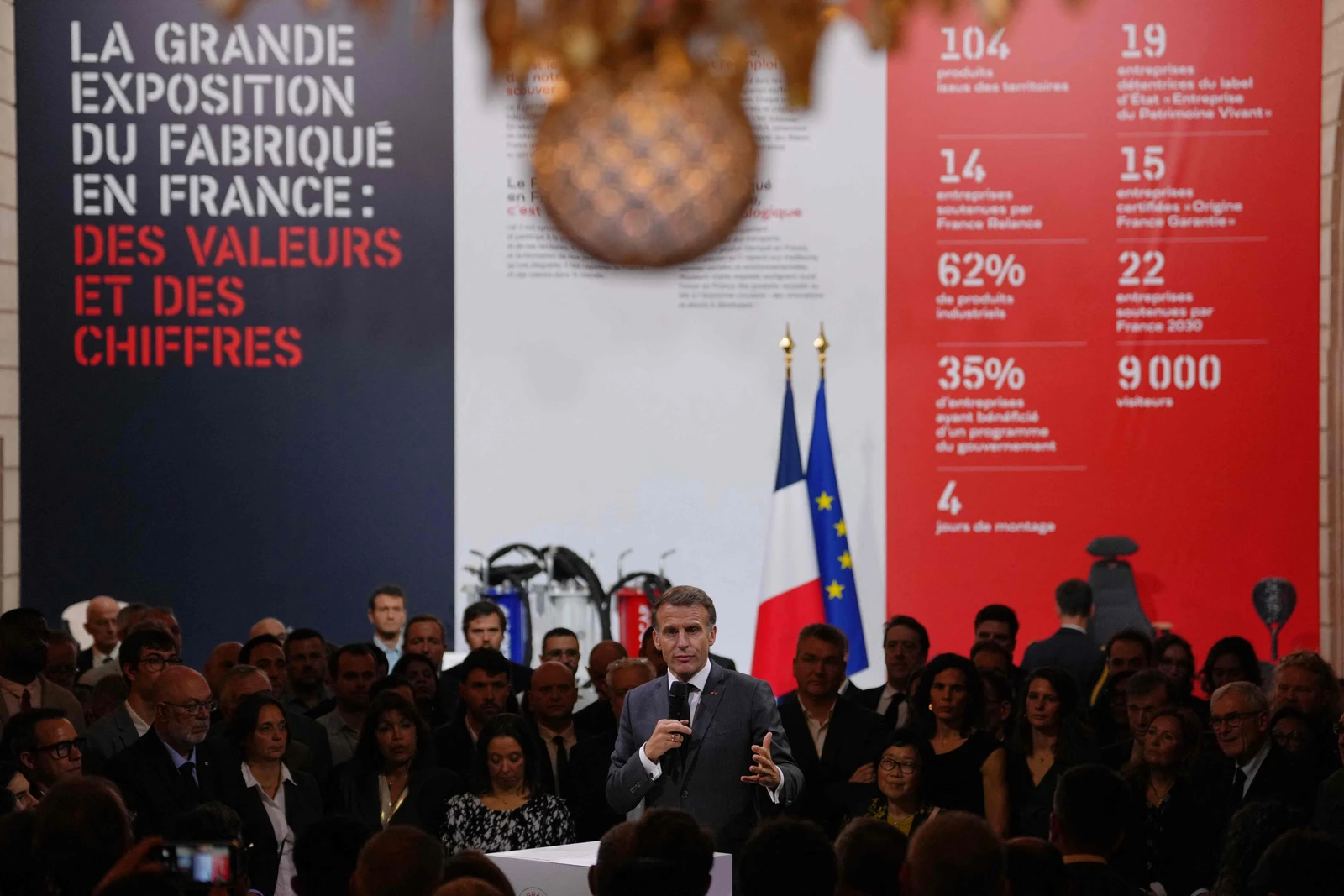
France Spotlights Domestic Firms at Choose France Summit Amid Recession
The French government will convene domestic business leaders on Monday, November 23, for the second “Choose France” edition, a summit focused on highlighting internal investments amid a period of national economic uncertainty, according to Latribune.
Key Clinical Takeaways:
- The summit brings together over 250 executives from companies ranging from CAC 40 giants to startups to discuss national investment projects.
- Recent data from the national statistics agency, Insee, indicates that business investment has stagnated, declining for four consecutive quarters.
- Minister of Industry Sébastien Martin reports that more than 50 new industrial projects will be presented during the event at the Cité internationale universitaire de Paris.
Summit Focus Shifts to Domestic Investment
While previous iterations of the Choose France summit prioritized attracting international capital, the current event emphasizes companies already established in France. According to Arab News, the gathering serves more as a platform to celebrate previously announced commitments than to break new records for investment volume. This pivot occurs as the French economy faces a technical recession, lagging behind its European neighbors.
The event is scheduled to host over 250 business leaders alongside the Minister of the Economy, Roland Lescure, and the Minister of Industry, Sébastien Martin, according to Arab News. Discussions are expected to center on sectors including energy, nuclear power, space, and healthcare, Arab News reported. Despite the scale of the gathering, the total financial value of new investments remains undisclosed.

Industrial Development Drives Regional Growth and Investment Projects
Minister Sébastien Martin said that the government has observed a consistent pace of industrial development, noting that one factory has opened every two days since he assumed his role, a trend corroborated by ministry data from June 2026, as reported by La Tribune. The summit aims to showcase these regional gains, with the “Grand Ouest” region alone accounting for 37 investment projects totaling 5.45 billion euros, according to Lescure.
Specific projects slated for recognition include MaiaSpace’s reusable rocket factory in the Eure department and NeoCem’s facility in the Oise department, which produces low-carbon cement ingredients for the construction sector, Arab News reported. These initiatives represent a broader effort to maintain momentum in industrial sectors despite the broader macroeconomic contraction.
Summit Showcases Economic Policies as Macron Prepares Aerospace Announcement
Launched in 2018, the summit has functioned as a primary exhibition for the government’s supply-side economic policies. With a presidential election approaching, President Emmanuel Macron is expected to visit an Airbus site in Toulouse on Monday to announce state support for the aerospace sector.
Lescure emphasized that while many of these investments were announced throughout the preceding months, the summit provides a necessary venue for a comprehensive review of the year’s industrial progress.
Sébastien Martin, born in 1977, brings extensive experience in local governance and national administration to his current role. Prior to his appointment as Minister Delegate for Industry in October 2025, he served as the president of Le Grand Chalon starting in 2014 and led Intercommunalités de France from 2020.
A graduate of Sciences Po Grenoble, he also held the position of first vice president of the Departmental Council of Saône-et-Loire beginning in 2015. Before his ministerial career, Martin was elected as a deputy for the 5th constituency of Saône-et-Loire in 2025.
Analysts continue to study whether this investment model is sustainable. While the government maintains a positive outlook based on the volume of projects, the underlying economic data from Insee confirms that the national investment climate is currently at a standstill. Whether the new announcements scheduled for Monday can offset the four-quarter decline in business spending remains the primary question for the French industrial sector.