
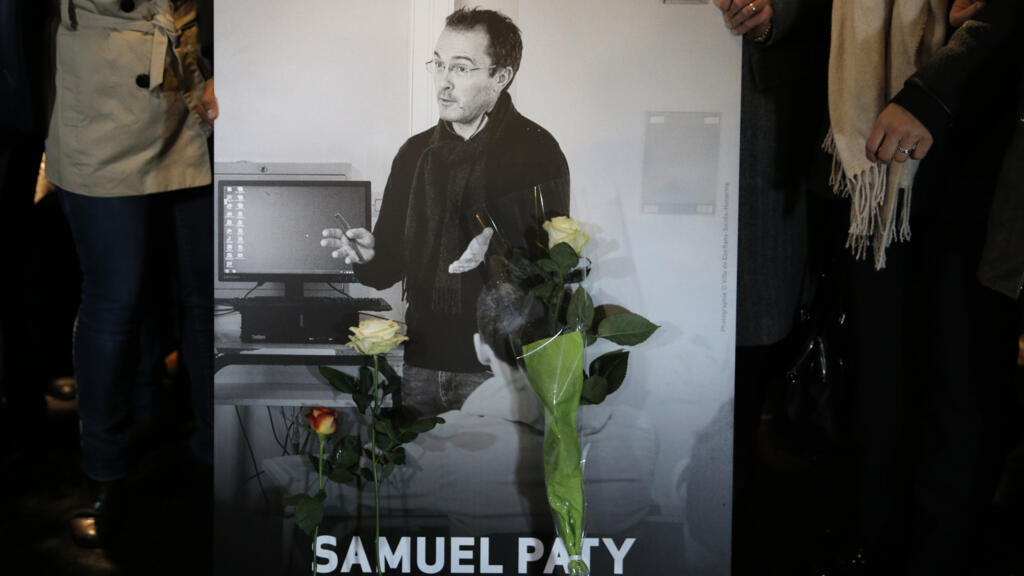
A French court on Monday reduced the prison sentences for three individuals convicted in connection with the 2020 beheading of Samuel Paty, a middle school teacher who was murdered after sharing cartoons depicting the Prophet Mohammed with his students. The reductions, delivered during an appeals trial, have reignited debate over France’s approach to countering Islamist extremism and the sentencing of those involved in terrorism-related offenses.
While the original sentences handed down in July 2022 varied, the appeals court in Paris significantly lessened the punishments. Naïm Ramdani, initially sentenced to 30 years in prison, will now serve 22 years. Abdoullah Zekri, previously given a 28-year sentence, will now be imprisoned for 20 years. And Aziz Djindo, who received a 28-year term, will now serve 18 years, according to France 24.
The case centers on Paty’s decision to show caricatures of the Prophet Mohammed during a lesson on freedom of expression. These images, originally published by the satirical magazine Charlie Hebdo, had previously sparked controversy, and protests. Following the lesson, a campaign of online harassment and threats against Paty was launched, fueled by misinformation and inflammatory rhetoric. Abdullakh Anzorov, an 18-year-old Chechen refugee, ultimately carried out the beheading in Conflans-Sainte-Honorine, a suburb of Paris.
Anzorov was killed by police shortly after the attack, but investigations led to the conviction of numerous individuals accused of assisting him or inciting the violence. Eight people were initially sentenced in connection with the murder, as reported by the BBC. The three whose sentences were reduced on Monday were not directly involved in the killing itself, but were found to have played roles in identifying Paty to Anzorov or providing logistical support.
The appeal trial, which opened in February, focused on the degree of each defendant’s involvement and the appropriate level of punishment. Prosecutors had sought to uphold the original sentences, arguing that the severity of the crime warranted lengthy imprisonment. Defense lawyers, though, contended that their clients had been unfairly punished and that their actions did not directly contribute to Paty’s death.
The reductions in sentencing have drawn criticism from some quarters, with concerns raised that they may send a message of leniency towards those who enable or support acts of terrorism. Others argue that the court’s decision reflects a more nuanced understanding of the complex factors involved in the case and a commitment to proportionality in sentencing. The original trial and subsequent appeals have taken place against a backdrop of heightened security concerns in France, following a series of Islamist-inspired attacks in recent years.
Further legal proceedings are still underway in relation to the Paty case. Several other individuals remain under investigation for potential involvement, and the broader implications of the attack continue to be debated within French society. The French government has also been grappling with how to balance freedom of expression with the need to protect citizens from incitement to violence and extremism.
