France Deploys Aircraft Carrier to Secure Strait of Hormuz
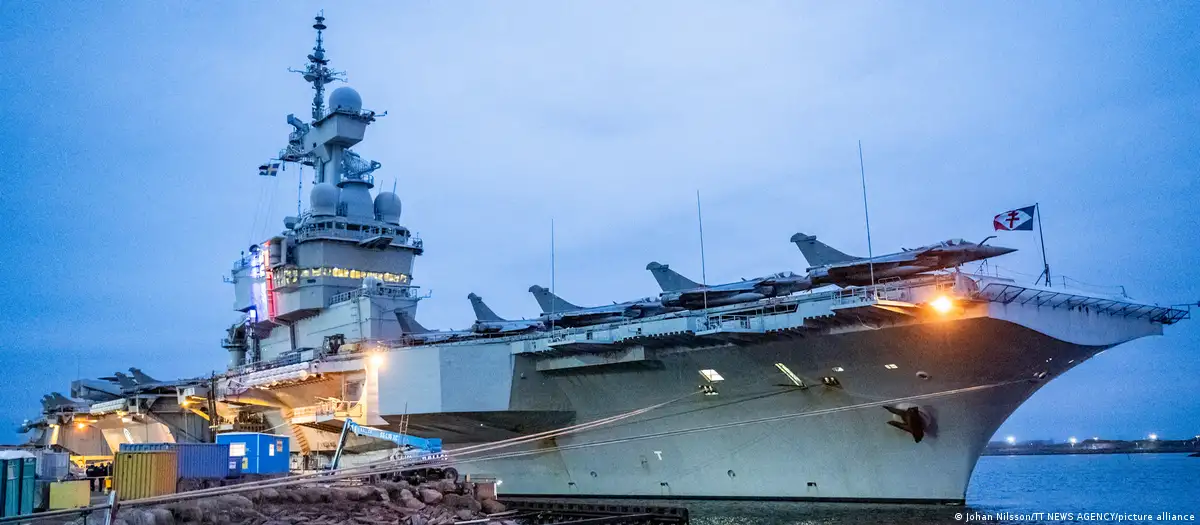
French President Emmanuel Macron has deployed the nuclear-powered aircraft carrier Charles de Gaulle through the Suez Canal into the Red Sea. This strategic movement prepares France for a potential joint mission with Britain to secure the Strait of Hormuz, aiming to restore maritime security and stabilize global oil shipping lanes.
This is not a mere naval exercise. It is a calculated assertion of European strategic autonomy at a moment of extreme volatility. By positioning Europe’s most powerful warship near the world’s most critical energy chokepoint, Paris is signaling that the security of the global oil market cannot rely solely on the shifting political whims of Washington.
The deployment arrives as the Strait of Hormuz becomes the epicenter of a broader conflict involving Iran, resulting in what the International Energy Agency describes as the largest supply disruption in the history of the global oil market. For the corporate world, this is a nightmare scenario: stranded vessels, skyrocketing insurance premiums and a fragile energy grid pushed to the brink.
The Architecture of Strategic Independence
The movement of the Charles de Gaulle and its escort fleet is intentionally distinct from the United States’ “Project Freedom.” While that American initiative faced an immediate pause by President Donald Trump, Macron is pursuing a parallel, defensive track. The goal is not to engage in active combat, but to create a security umbrella that allows commercial shipping to resume.
Macron’s strategy is a high-stakes diplomatic tightrope. On one side, he is maintaining open lines of communication with Iranian President Masoud Pezeshkian; on the other, he is coordinating with Trump. By framing the mission as a “French-British” effort to restore confidence among insurers and shipowners, France is positioning itself as the “rational actor” in a region defined by escalation.
This shift reflects a deeper trend in transnational security. As the U.S. Fluctuates between interventionism and isolationism, European powers are forced to develop their own rapid-response capabilities to protect their economic lifelines. For multinational corporations, this unpredictability creates a vacuum of stability that requires specialized global risk consultants to navigate the evolving threat landscape.
“The deployment of the Charles de Gaulle represents a pivot toward a ‘Europeanized’ security model in the Gulf. Paris is essentially betting that a multilateral, defensive posture will be more palatable to Tehran than a unilateral American strike, thereby lowering the risk of a total blockade.” — Analysis from the Council on Foreign Relations on Middle Eastern Maritime Security.
The Economic Toll of the Hormuz Chokepoint
The Strait of Hormuz is the world’s most important oil transit point. When security fails here, the ripple effects are felt instantly in the pricing of every barrel of Brent crude and every shipping container moving toward Asia. The “effective closure” of the strait does more than just stop oil; it triggers a systemic failure in maritime insurance.

Shipowners are currently facing “War Risk” premiums that can make a voyage cost-prohibitive. This is where the French-British mission seeks to intervene. By providing a military escort, they aim to lower the perceived risk, thereby reducing insurance costs and encouraging the flow of goods.
However, the legal complexities of such an operation are immense. Navigating the territorial waters of sovereign states while conducting “defensive” missions requires a sophisticated understanding of the International Maritime Organization (IMO) guidelines and the UN Convention on the Law of the Sea (UNCLOS). Firms caught in the crossfire are increasingly relying on maritime legal specialists to restructure their contracts and manage the liability of stranded assets.
The macro-economic impact is clear: the cost of energy is no longer just about supply and demand; it is about the cost of security. This has led to a surge in demand for commodity hedging strategies as firms attempt to insulate themselves from the inevitable price spikes associated with Hormuz volatility.
A Fragmented Coalition
Despite the French lead, Europe is not a monolith. While Britain is aligned with Paris, other nations are hesitant. Spain, for instance, has effectively ruled out participation in any operation to reopen the strait, highlighting a rift in the European Union’s approach to Middle Eastern intervention.
This fragmentation creates a chaotic environment for international trade. When some EU members provide security and others remain neutral, the resulting “patchwork” of protection makes it difficult for international logistics firms to plan reliable routes. The result is a shift toward longer, more expensive alternatives, such as rerouting around the Cape of Good Hope, which adds weeks to delivery times and increases carbon footprints.
The geopolitical tension is further complicated by the relationship between the EU and the North Atlantic Treaty Organization (NATO). While the French mission is distinct from U.S. Projects, it still operates within the shadow of the NATO security umbrella, creating a complex layer of command and control that can lead to dangerous miscalculations on the water.
The Corporate Fallout and the Path Forward
For the global C-suite, the message is clear: the era of “invisible” security is over. The assumption that the U.S. Navy would indefinitely guarantee the freedom of navigation in the Persian Gulf is a legacy thought. We are entering an era of fragmented security, where companies must account for the specific geopolitical alignments of the nations protecting their cargo.

This volatility forces a total rethink of the “just-in-time” supply chain. The risk of a total blockade in Hormuz means that strategic stockpiling and the diversification of energy sources are no longer optional—they are survival imperatives. As the Charles de Gaulle moves south, it carries with it the hope of stability, but also the reminder that the global economy is only as stable as the narrowest stretch of water in the Middle East.
The chessboard is shifting. Whether through a French-led coalition or a renewed American project, the battle for the Strait of Hormuz will define the energy prices and shipping costs of the next decade. For the global enterprise, the only defense against this volatility is expert guidance. Navigating these waters requires more than a map; it requires the strategic foresight found within the World Today News Directory, where the world’s leading international legal, financial, and security partners converge to solve the crises of a fragmented world.