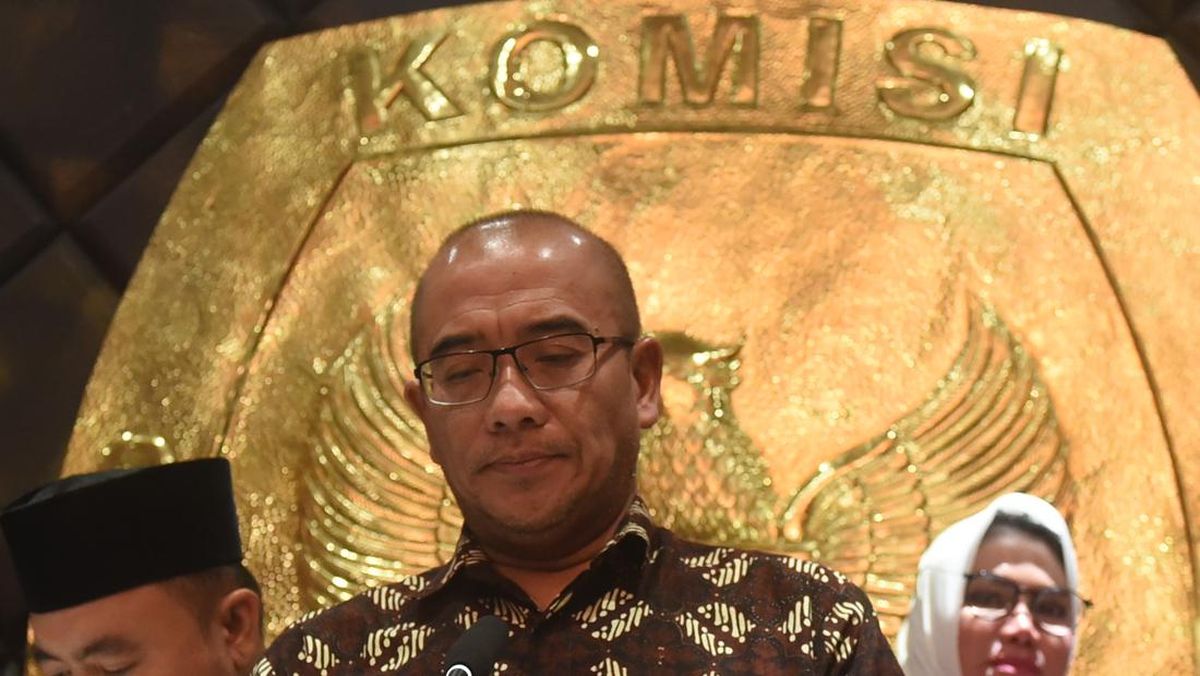
Former KPU Chief Hasyim Asyari Denies Smuggling of Pilpres 2024 Regulation Clause
Former General Elections Commission (KPU) Chief Hasyim Asy’ari publicly denied allegations that Article 18, Paragraph 3 of KPU Regulation (PKPU) Number 19 of 2023 was smuggled or drafted without committee consultation, targeting former House of Representatives (DPR) Commission II Chairman Ahmad Doli Kurnia in a stark escalation of political disputes on October 12, 2023.
The Clashing Accounts Over the 2023 Presidential Nomination Regulation
The controversy centers on whether parliamentary leaders formally reviewed the specific regulatory clause governing presidential and vice-presidential candidates ahead of the 2024 general election. CNN Indonesia reported that Hasyim responded directly to statements made by Ahmad Doli Kurnia, who previously asserted that the panel never discussed the contested provision during legislative hearings.
Doli maintained that the inclusion of the subsection caught officials off guard. Jadi sebetulnya setahu saya, sepengetahuan saya, memang ayat itu nggak ada, gitu loh, ya. Nah tapi sekali lagi, saya lagi konfirmasi ke mana-mana, ya, termasuk teman-teman di sekretariat karena waktu itu yang kita bahas murni hanya soal perubahan Mahkamah Konstitusi,
Doli stated to reporters at the DPR building.
DetikNews coverage noted that Doli spent subsequent days searching through legislative archives and consulting committee secretaries to trace the legislative origin of the clause. The regulation itself, consisting of 68 provisions, was formally signed by Hasyim on October 9, 2023, establishing the documentation standards for presidential tickets.

Chronology of the Legislative Consultation and Document Signatures
Hasyim countered the oversight claims by laying out a precise timeline of the consultative process. On September 19, 2023, the KPU transmitted the draft regulation to the DPR for review, explicitly including the candidacy guidelines. A formal hearing took place the following day on September 20.
Hasyim emphasized that the normalization process occurred when candidate outcomes remained entirely unpredictable under standard administrative rules.
The legislative record includes signed bipartisan agreement forms from that September consultation. Hasyim highlighted that the conclusion document bears the signatures of DPR Commission II Chairman Ahmad Doli Kurnia Tandjung, KPU Chief Hasyim Asy’ari, Bawaslu Acting Chief Herwyn Jefler Hielsa Malonda, DKPP Chief Heddy Lugito, and Home Ministry Political and Public Administration Director General Bahtiar.
The Ethical Complaints and Legal Scrutiny at the DKPP
The dispute spilled over into judicial and ethical forums following challenges regarding the eligibility of Vice President Gibran Rakabuming Raka. Legal counsel Bambang Widjojanto publicly criticized the regulation, arguing that the specific subsection functioned uniquely to facilitate Gibran’s candidacy.
Meanwhile, lawmakers are evaluating systemic revisions to prevent future statutory ambiguities. Muhammad Khozin, a Commission II member from the National Awakening Party (PKB), emphasized that future election laws require absolute textual clarity to eliminate interpretive grey areas.

Sharp Retorts and Moral Warnings Across Political Lines
Hasyim directed sharp criticism toward former legislative leaders present during the 2023 drafting sessions, invoking religious imagery previously raised during Constitutional Court proceedings. He questioned how Doli and former lawmaker Arsul Sani—now serving as a Constitutional Court justice—would answer basic questions regarding their active participation in reviewing the draft text.
Concluding his defense with a traditional religious axiom, Hasyim issued a direct public warning. Karena itu pada kesempatan ini saya ingin menyerukan kepada semua pihak, lupa boleh, munafik jangan,
Hasyim stated.
As administrative verifications proceed at the DKPP and parliamentary committees examine long-term legal reforms, the institutional accountability for regulatory texts drafted ahead of high-stakes national elections remains heavily contested by the very officials who signed them into effect.