
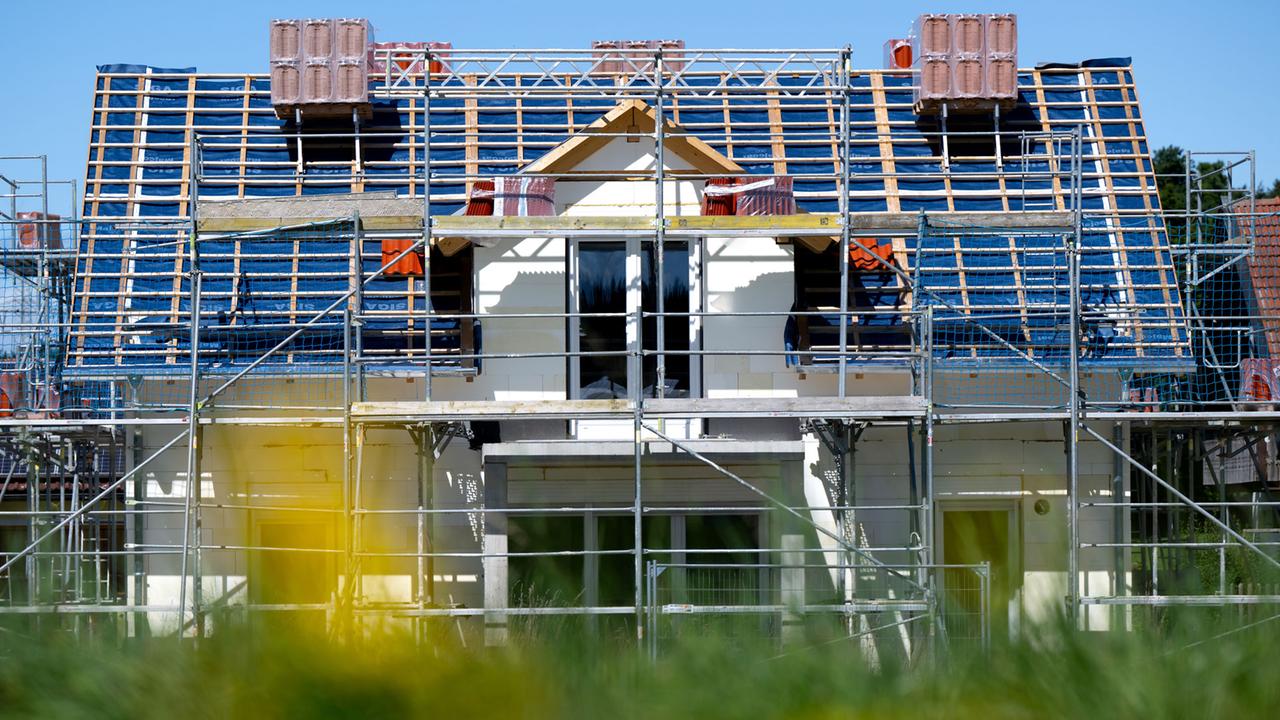
Folgen des Iran-Kriegs: Banken erhöhen die Bauzinsen
Geopolitical instability in the Middle East has triggered an immediate repricing of risk in the European sovereign debt market, pushing German 10-year Bund yields above the critical 3% threshold. This volatility has forced major lending institutions to hike construction mortgage rates by 20 to 30 basis points, effectively freezing liquidity for mid-market property developers and prospective homeowners. The spike reflects a broader flight to safety and inflation hedging, compelling borrowers to seek specialized mortgage brokerage firms capable of navigating the widening spread between interbank offers.
The market reaction was swift. Following the escalation of tensions involving Iran, capital flows rotated aggressively out of risk assets and into safe havens, but the inflationary implications of potential energy supply shocks drove bond yields higher, not lower. This counterintuitive move—yields rising amidst fear—signals that investors are pricing in a “stagflation” scenario where energy costs spike alongside economic stagnation. For the real estate sector, this is a direct hit to the cost of capital.
The Mechanics of the Rate Shock
Construction financing does not exist in a vacuum; it is tethered to the yield curve of sovereign debt. When the benchmark 10-year German Bund yield climbs, the refinancing costs for commercial banks increase proportionally. These institutions, acting as intermediaries, pass this increased cost of capital directly to the end borrower. The recent 0.2 to 0.3 percentage point increase in mortgage rates is not merely a bank profit grab; it is a mechanical pass-through of sovereign risk premiums.

Max Herbst, head of FMH Finanzberatung, noted that the market had priced in a sideways movement, making this sudden vertical shift a shock to liquidity planning. The disconnect between expectation and reality is where capital gets trapped. Borrowers who delayed locking in rates based on forecasts of stability are now facing a materially higher debt service burden.
Three Drivers of the Liquidity Crunch
The current tightening of credit conditions is driven by a convergence of three distinct macroeconomic forces. Understanding these vectors is critical for any CFO or private investor looking to secure funding in Q2 2026:
- Sovereign Yield Spikes: Per data from the European Central Bank, the yield on 10-year Bunds has breached the 3% mark, a level not seen in 15 years. This acts as the floor for all long-term lending rates in the Eurozone.
- Inflationary Hedging: Investors are demanding higher real yields to compensate for the risk of energy-driven inflation. As noted by Jörg Utecht of Interhyp, the conflict introduces massive energy cost risks, forcing the market to price in persistent inflation rather than temporary shocks.
- Refinancing Friction: Banks are tightening their own balance sheet constraints. As the cost of wholesale funding rises, lenders turn into more selective, favoring borrowers with significant corporate finance structures that demonstrate high equity ratios.
The math is unforgiving. On a standard loan volume of €340,000, a 20 basis point increase translates to an additional annual burden of approximately €600. While this may seem marginal in isolation, when aggregated across a development portfolio or viewed against the backdrop of rising construction material costs, it erodes project margins significantly.
The Equity Imperative
In a high-yield environment, leverage becomes toxic. The market is currently punishing low-equity borrowers with punitive rates, often pushing them above the 4% threshold. This bifurcation of the market creates a clear divide: those with substantial liquidity can still access capital at near-par rates, while those reliant on high loan-to-value (LTV) ratios are being priced out.
“The era of cheap money is structurally over. We are seeing a reversion to the mean where risk must be compensated. Borrowers without significant skin in the game are facing a credit wall.”
This dynamic forces a strategic pivot. Homebuyers and developers can no longer rely on the “best rate” advertised by major retail banks. The dispersion in pricing has widened dramatically. Data from FMH indicates a spread of 1.55 percentage points between the cheapest and most expensive offers for 10-year fixed terms. In a €500,000 loan scenario, this variance represents tens of thousands of euros in interest over the lifecycle of the debt.
Strategic Capital Allocation
Waiting for rates to retreat is a speculative gamble that few balance sheets can afford. The consensus among institutional strategists is that the current levels, while elevated, remain historically moderate compared to the volatility of the early 2020s. The priority must shift from timing the market to optimizing the capital structure.
For corporate entities and high-net-worth individuals, this environment necessitates the engagement of specialized financial consulting firms. These entities possess the leverage to negotiate across the entire banking spectrum, accessing wholesale rates that are invisible to the retail consumer. The complexity of the current yield curve requires a navigator, not just a lender.
the volatility suggests that fixed-rate instruments are preferable to variable exposure. Locking in certainty, even at a premium, protects the asset from further geopolitical shocks. As the Deutsche Bundesbank monitors the situation, any further escalation in the region could trigger another leg up in yields, rendering current “high” rates look attractive in hindsight.
The window for passive financing is closed. Active management of debt procurement is now a core competency for survival in the 2026 property market. Those who fail to audit their financing options against the full spectrum of available lenders will find their projects stranded by the cost of capital. For a curated list of vetted partners capable of navigating this volatility, consult the World Today News Financial Services Directory to secure the advisory support necessary for the quarters ahead.