
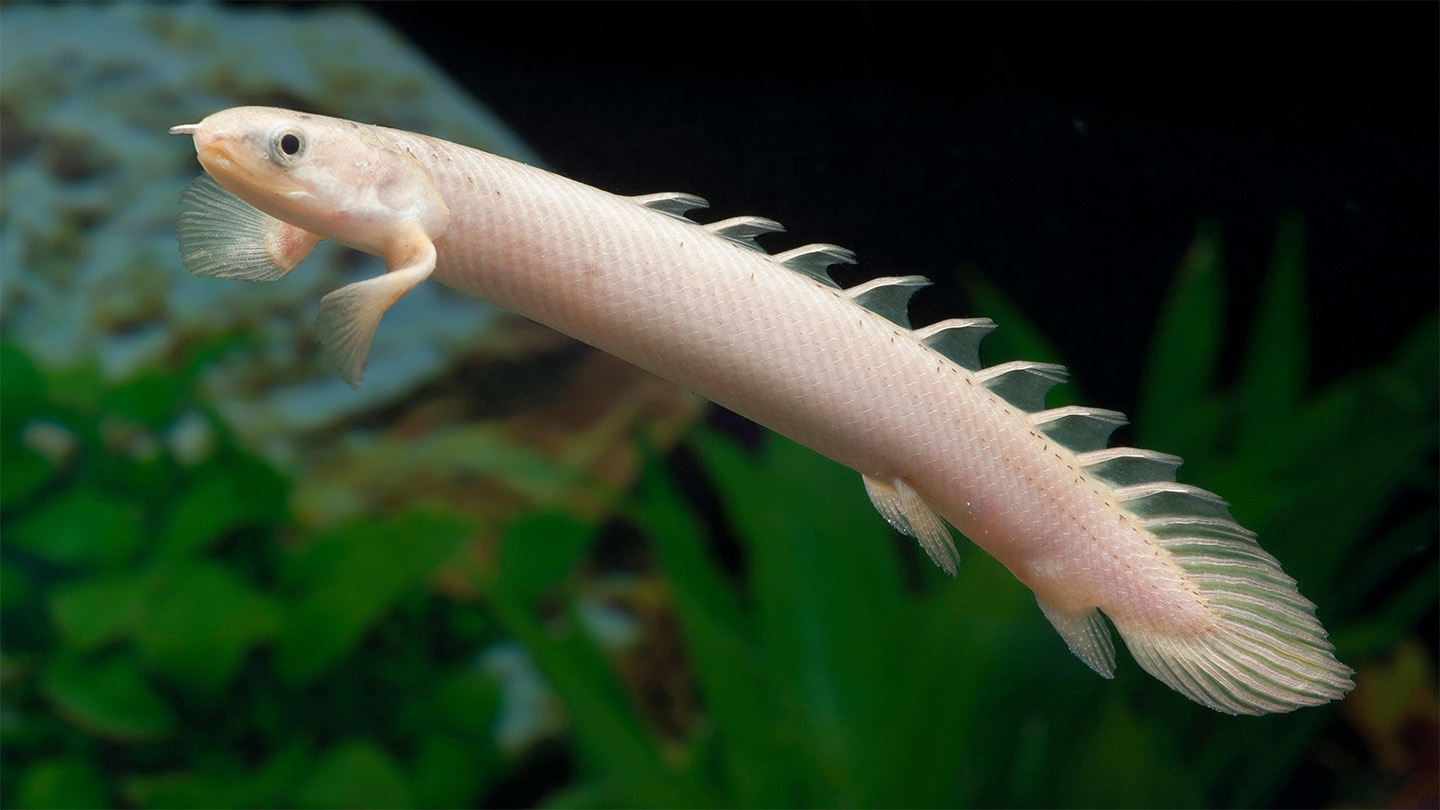
Scientists have uncovered a shared genetic and cellular toolkit for regenerating appendages in fish and salamanders, offering new clues about the evolutionary history of regeneration in vertebrates. The findings, published January 22 in Nature Communications, detail how these animals orchestrate the complex process of regrowth after limb loss, a capability largely lost in mammals.
The research focused on three species: the Senegal bichir, a fish considered a “living fossil” due to its position at the base of the modern bony fish family tree; the axolotl, a salamander renowned for its ability to regenerate entire limbs; and the zebrafish, which can regrow the bony tips of its fins. Igor Schneider, an evolutionary developmental biologist at Louisiana State University in Baton Rouge, led a team that tracked gene activity at wound sites in bichirs over one, three, and seven days after fin amputation.
The study revealed a common initial response across all three species: a rapid influx of immune cells to the injury site. While this initial immune response is typical in all vertebrates, including humans, the bichir and axolotl exhibited a crucial difference. Their immune systems quickly suppressed further inflammation, preventing the formation of scar tissue – a major obstacle to regeneration in mammals.
Researchers similarly found that cells at the wound site shifted to a metabolic pathway that didn’t rely on oxygen, providing energy for regrowth even with disrupted blood supply. Unexpectedly, both fish species showed a significant increase in red blood cells at the amputation site, reaching up to 20 percent of all cells present, a stark contrast to their typical 2 percent representation in healthy tissue. These red blood cells, unlike those in mammals, retained their nuclei, and within those nuclei, genes related to immune response and oxygen levels showed increased activity.
“It’s enticing to reckon [the red blood cells] are giving instructive signals” to other cells, Schneider said. The team also observed the activation of genes involved in limb building and DNA repair, with two distinct groups of repair cells forming – one near the base of the regenerating limb and another near the tip.
Ji-Feng Fei, a developmental biologist at the Guangdong Academy of Medical Sciences in Guangzhou, China, who was not involved in the study, described the work as “a big step in understanding how regeneration is coordinated.” The shared mechanisms observed across these distantly related species, which diverged approximately 400 million years ago, suggest that the capacity for regeneration is an ancient trait.
Schneider’s team plans to extend this research to lizards, which can regenerate their tails but not their limbs, hoping to further unravel the complexities of regenerative biology. He noted, with a nod to popular culture, that the fictional Dr. Curt Connors, who transforms into “The Lizard” in The Amazing Spider-Man after experimenting with reptilian DNA, “might have been more successful with salamander DNA, unless he wanted to regrow a tail.”
