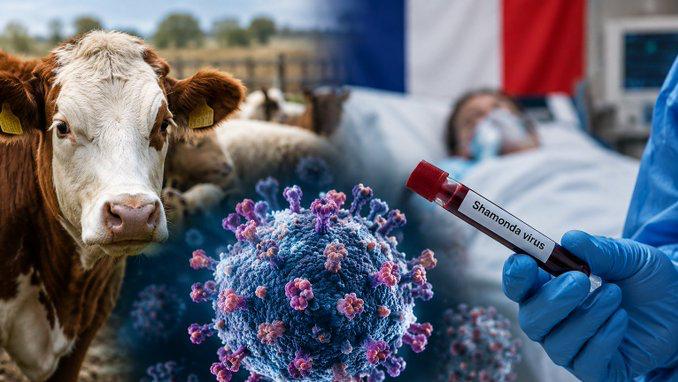
First Human Case of Shamonda Virus Reported After Death in France
A patient in eastern France has died after contracting the Shamonda virus, marking the first documented case of human infection globally. French health authorities announced the fatality on October 22, 2026, noting that the virus—previously known to circulate among livestock such as cattle, sheep, and goats—was detected following an atypical neurological presentation.
- Global First: The October 2026 death in France represents the first recorded instance of human infection with the Shamonda virus.
- Underlying Risk: The patient was receiving treatment for a severe underlying condition and experienced significant immune system suppression prior to infection.
- Public Health Assessment: The World Health Organization and the European Centre for Disease Prevention and Control emphasize that this is an isolated incident with a low risk of widespread transmission.
Unprecedented Detection in an Immunocompromised Patient
The patient, a man in his sixties residing in the Lyon region, passed away in early October 2026 at a local hospital, according to regional reporting detailed by Le Progres. At the time of his death, the patient was in a state of severe immune system suppression while undergoing treatment for a serious illness, as confirmed by the European Centre for Disease Prevention and Control (ECDC). In the late stages of his illness, the patient developed atypical neurological inflammation and brain complications. Molecular biology polymerase chain reaction testing of his blood and spinal fluid returned positive results for the Shamonda virus.
First human case of Shamonda virus detected in France, officials say https://t.co/OkCRtr1Ewn
Gregory Emery, the Director General of Health in France, stated to media that from a scientific and virological perspective, the case is unprecedented and likely linked to the patient's severely compromised immune system. Emery added that from a medical and public health standpoint, no crisis is currently underway and the public need not panic.
Infected Midges Transmit Shamonda Virus from Animals
Preliminary investigations by French authorities indicate that the patient likely contracted the pathogen through a bite from an infected blood-sucking midge during the spring and summer months when the virus circulated widely among animal populations in eastern France. The Shamonda virus belongs to the Orthobunyavirus genus and is transmitted primarily by biting insects. While cattle serve as the primary reservoir, the virus has also been identified in sheep, goats, alpacas, and horses, according to data from the World Organisation for Animal Health.
🟡 Fransa’da çiftlik hayvanlarında görülen Shamonda virüsü ilk kez bir insanda tespit edildi. Virüsün tespit edildiği hastanın hayatını kaybettiği bildirildi. pic.twitter.com/n6MkxIsyqr
The virus was first discovered in Nigeria in the mid-1960s and has since been detected sporadically among cattle in parts of Africa and Japan. In late July 2026, genomic testing confirmed the presence of the Shamonda virus in Europe for the first time, following detections in sick cattle in southern Germany, Switzerland, and eastern France. According to a weekly animal health monitoring bulletin in France, the virus has since been detected in Austria, Belgium, Ireland, Italy, Liechtenstein, Luxembourg, the Netherlands, Portugal, Slovenia, Spain, and Jersey in the United Kingdom.
Economic Impacts on European Livestock and Ongoing Surveillance
The circulation of the Shamonda virus across European farms has created measurable agricultural disruption. An evaluation of nine dairy farms in France conducted by veterinary authorities revealed that milk yields in infected dairy herds dropped by as much as 75 percent. Affected cattle typically exhibit symptoms including sudden high fever, diarrhea, weakness, loss of appetite, and abdominal discomfort. The UK Animal and Plant Health Agency noted that infections during gestation in cows can lead to congenital abnormalities and pregnancy loss.
Despite its spread through animal populations in multiple European countries, the Shamonda virus is not classified as a statutory notifiable disease under the European Union Animal Health Law, meaning it is not subject to mandatory official control measures. Laboklin Laboratory, a veterinary diagnostic facility, confirmed that no commercial vaccines are currently available to prevent Shamonda virus infections. The ECDC continues to monitor the situation in coordination with French health authorities to determine the precise route of transmission and to evaluate whether the virus directly caused or contributed to the patient’s death.
Disclaimer: The information provided in this article is for educational and scientific communication purposes only and does not constitute medical advice. Always consult with a qualified healthcare provider regarding any medical condition, diagnosis, or treatment plan.
More on Shamonda
The first human case of the Shamonda virus has been detected in France in a person who later died, according to authorities.https://t.co/ETxN0pq9Q6