
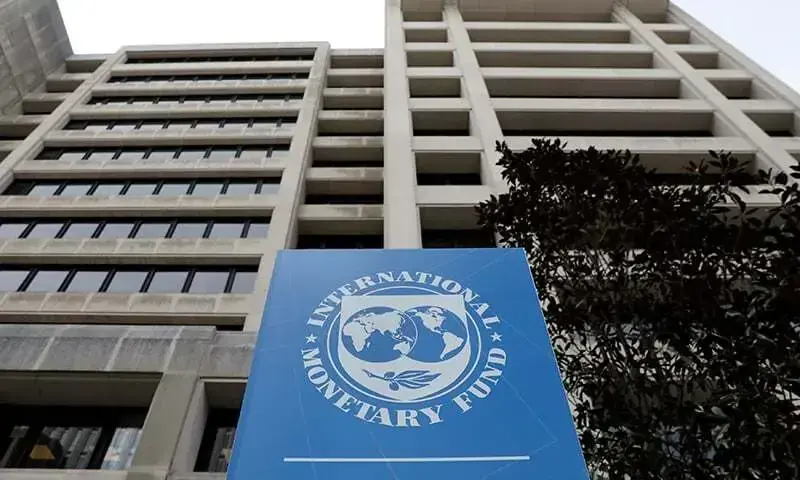
Pakistan is now at the center of a structural shift involving its IMF‑backed reform agenda. The immediate implication is a tighter fiscal trajectory that underpins the next tranche of $1.2 bn financing and shapes investor confidence.
The Strategic Context
As 2024 Pakistan has been engaged in a $7 bn Extended fund facility (EFF) with the International Monetary Fund,a program designed to steer medium‑term structural reforms and restore macro‑economic stability. The programme follows a phased “Memorandum of Economic and Financial Policies” (MEFP) that ties disbursements to the completion of predefined benchmarks. The latest staff‑level agreement, culminating in a $1.2 bn disbursement, adds eleven revised targets that the finance ministry frames as continuations of an already‑agreed reform trajectory.This occurs against a backdrop of persistent fiscal deficits, a volatile external financing environment, and heightened scrutiny from sovereign‑credit markets.
Core Analysis: Incentives & Constraints
Source Signals: The finance ministry states that the eleven “new conditions” are extensions of existing reforms, not abrupt impositions. The measures include additional tax initiatives,expenditure cuts,asset‑declaration rules for civil servants,strengthening of the national Accountability Bureau,AML/CFT alignment,remittance facilitation,local‑currency bond market study,sugar‑industry deregulation,a comprehensive FBR roadmap,privatization of distribution companies,corporate‑compliance amendments,and a SEZ‑act revision.Completion of two prior actions and acceptance of the revised benchmarks enabled IMF staff‑level approval and the $1.2 bn disbursement on 9 December.
WTN Interpretation: The timing reflects Pakistan’s need to demonstrate fiscal resilience before the next IMF review and to pre‑empt a potential funding gap. By framing the targets as “continuity”, the government seeks to preserve domestic political legitimacy while satisfying IMF conditionality. The IMF, in turn, leverages the disbursement to enforce a sequenced reform path that mitigates its exposure to sovereign risk. Constraints include limited fiscal space, political resistance to tax hikes, and the operational capacity of agencies like the NAB and FBR to implement reforms swiftly. External constraints involve global financing conditions, commodity price volatility, and the appetite of private investors for local‑currency bonds.
WTN Strategic insight
“When a sovereign frames IMF‑driven benchmarks as a natural extension of its own agenda, it buys political cover at home while keeping the external financing tap open – a classic balancing act in emerging‑market crisis management.”
Future Outlook: Scenario Paths & Key Indicators
Baseline Path: If the government adheres to the phased implementation schedule, the $1.2 bn tranche will be fully disbursed,fiscal deficits will narrow,and external financing conditions will improve. Accomplished rollout of the tax‑policy office, asset‑declaration compliance, and bond‑market study will bolster credit ratings, encouraging private‑sector inflows and stabilizing the rupee.
Risk Path: If political pushback stalls tax reforms or if implementation delays undermine the NAB and FBR action plans, the IMF may withhold subsequent disbursements. A failure to meet the bond‑market benchmark could curtail access to local‑currency financing,forcing reliance on higher‑cost external debt and heightening balance‑sheet stress.
- Indicator 1: Outcome of the upcoming Finance Ministry budget presentation (expected within the next 4‑6 weeks) – particularly the inclusion of the 5 % excise duty on fertilizers and the medium‑term tax reform strategy.
- Indicator 2: IMF staff mission report due in the next quarter, which will assess progress on the two prior actions and the newly added benchmarks.
